Pillar
Taxes
Tax planning is not about last-minute scrambling in March — it is about understanding the system well enough to make better decisions all year. This hub covers Indian income tax in plain language, current for Assessment Year 2026-27: choosing between the old and new regimes, claiming the right deductions, filing your ITR correctly, and keeping the documentation that protects you. It is for salaried employees, freelancers, and small-business owners who want to pay exactly what they owe — no more, no less — without buying poor products just for a deduction. By the end you should be able to compare the two regimes on your own numbers, use 80C and HRA correctly when they apply, separate genuine planning from last-minute tax saving, and file with records that hold up if anyone ever asks. Rules and section numbers are being renumbered under the Income-tax Act, 2025 (effective 1 April 2026) — guides here are updated to reflect both the current and new references where relevant.
What this pillar teaches
- Old vs new tax regime — which costs you less
- Section 80C, 80D and the main deductions
- Reading Form 16, Form 26AS and the AIS
- Filing your ITR and avoiding common mistakes
- Capital gains tax on shares, funds and property
- TDS, advance tax, and staying compliant
Start here — beginner path
How to work through Taxes
- Understand the basics — start with the beginner path above so the core ideas are clear before you act.
- Set up a system — use the calculators and templates here to put your own numbers into the idea.
- Apply it to real life — make one concrete decision or change, not ten at once.
- Review on a rhythm — revisit monthly or quarterly so the system keeps working as your situation changes.
All Taxes guides
Form 16 vs AIS vs Form 26AS: How to Match Tax Details Before Filing ITR for AY 2026-27
Understand Form 16, AIS and Form 26AS, learn how to match salary, TDS and investment details, and fix mismatches before filing your AY 2026-27 ITR.

Advance Tax When You Have Salary Plus Side Income
Your employer's TDS covers salary, but freelance, rent and capital gains slip through. Here is how salaried people with side income calculate advance tax.

Advance Tax: Who Needs to Pay It, When, and How
If annual tax exceeds ₹10,000 after TDS, you must pay advance tax in quarterly instalments. Missing them attracts interest under Sections 234B and 234C.

Capital Gains Tax in India: What You Owe When You Sell Investments
Selling shares, mutual funds or property triggers capital gains tax. Learn how STCG and LTCG work by asset type, current rates, and how to plan for them.
Crypto Tax in India: The 30% Rule and 1% TDS Explained
Crypto and other virtual digital assets are taxed at a flat 30% with no loss set-off and a 1% TDS. Here is how it works for FY 2025-26 in India.
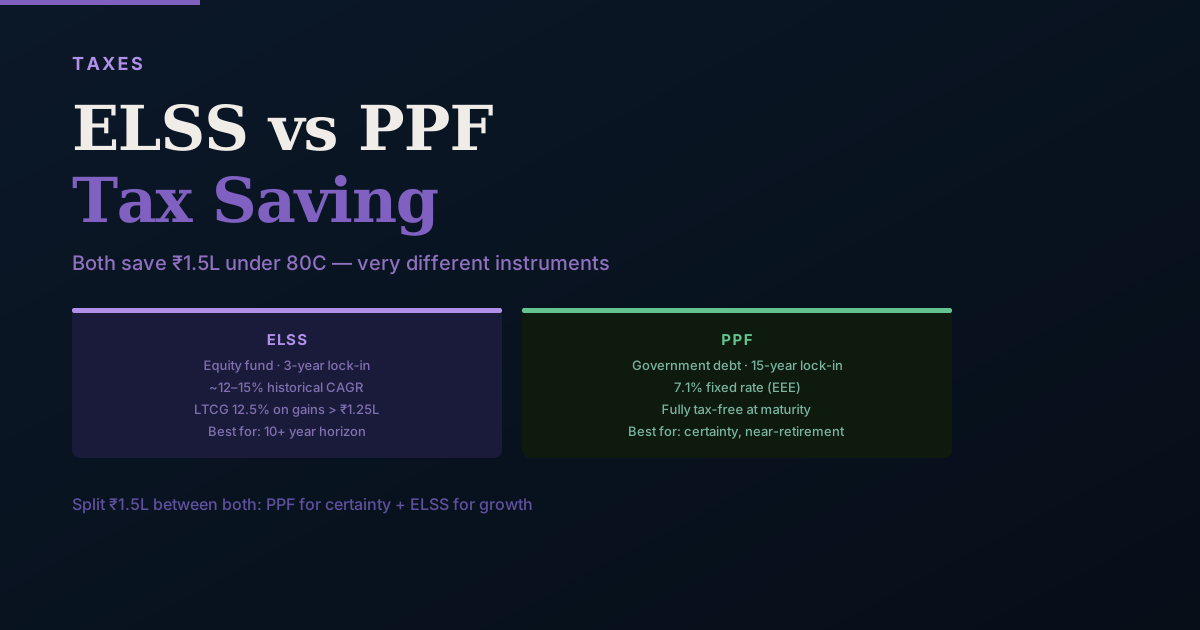
ELSS vs PPF: Which Tax-Saving Investment Should You Choose?
ELSS and PPF both save tax under 80C but are fundamentally different instruments. The right choice depends on your time horizon and return expectations.

The Financial Documents Every Indian Household Should Keep — and Where to Keep Them
A disorganized document setup delays ITR filings, loses deductions and complicates loans and emergencies. What Indian households keep, why and how long.
Form 15G and 15H: Avoiding Unnecessary TDS
If your income is below the taxable limit, banks should not deduct TDS on your interest. Form 15G and 15H stop it. Here is who can file, when, and how.
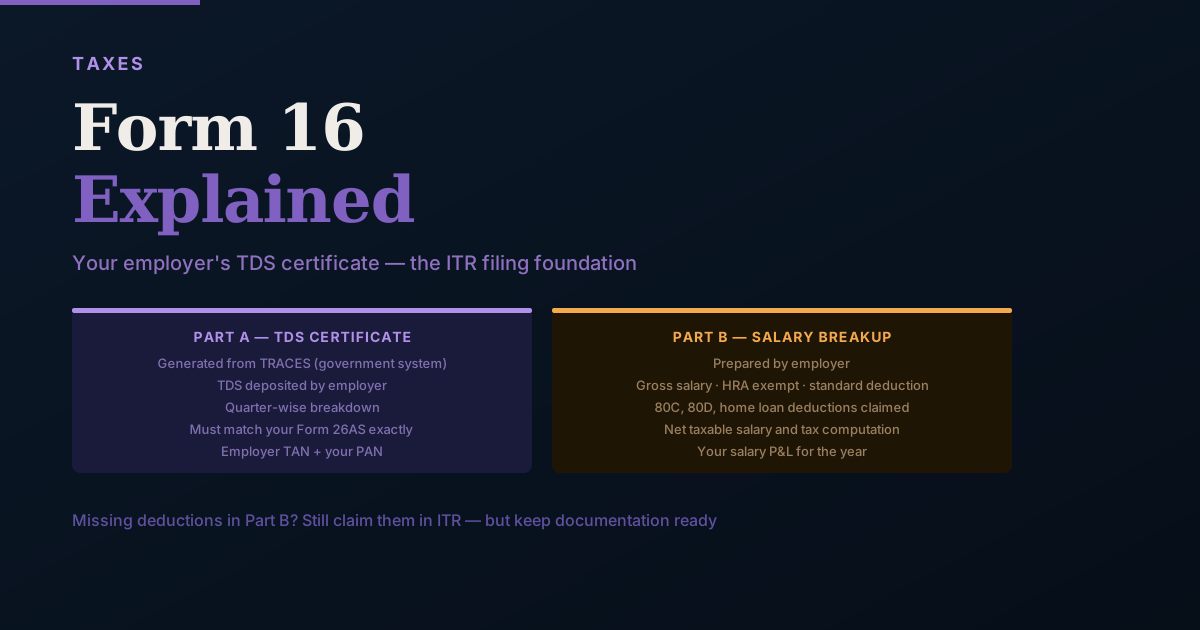
Form 16 Explained: What It Is and How to Use It for ITR Filing
Form 16 is the salary TDS certificate your employer must give you. Understanding its two parts helps you file your ITR accurately and claim deductions.
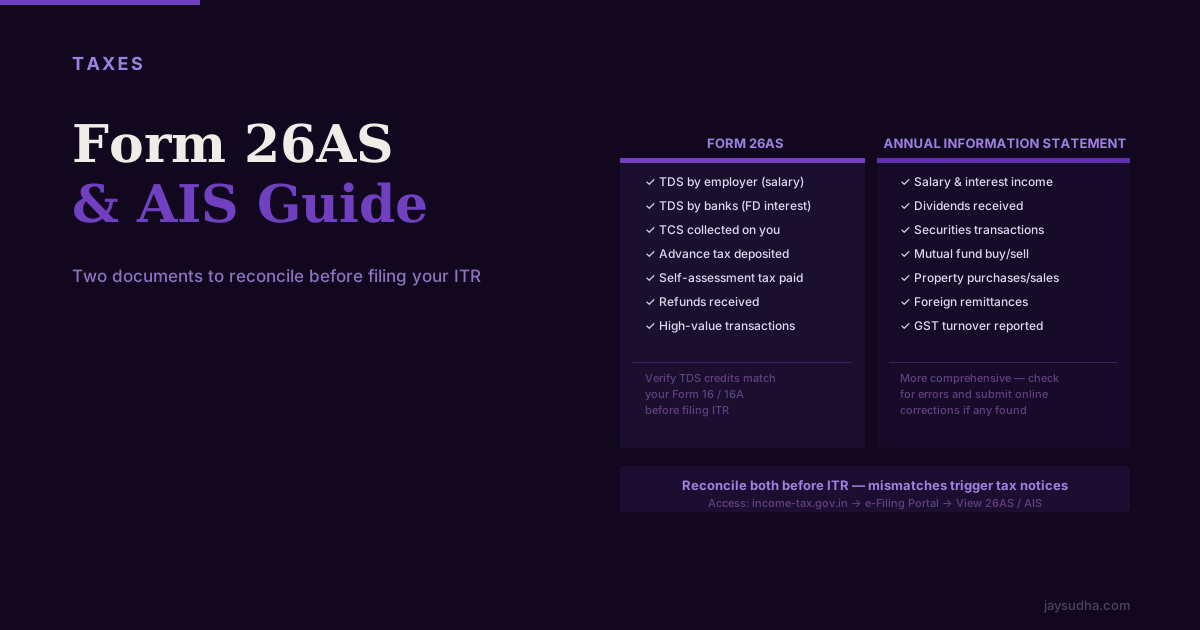
Form 26AS and AIS: Your Tax Credit Statement Explained
Form 26AS shows tax deducted on your behalf; the AIS shows your full financial activity reported to the department. Reconcile both before filing ITR.

Tax on Gratuity and Leave Encashment
Gratuity is exempt up to ₹20 lakh and leave encashment up to ₹25 lakh for private employees. Here is how these exemptions work when you leave a job.
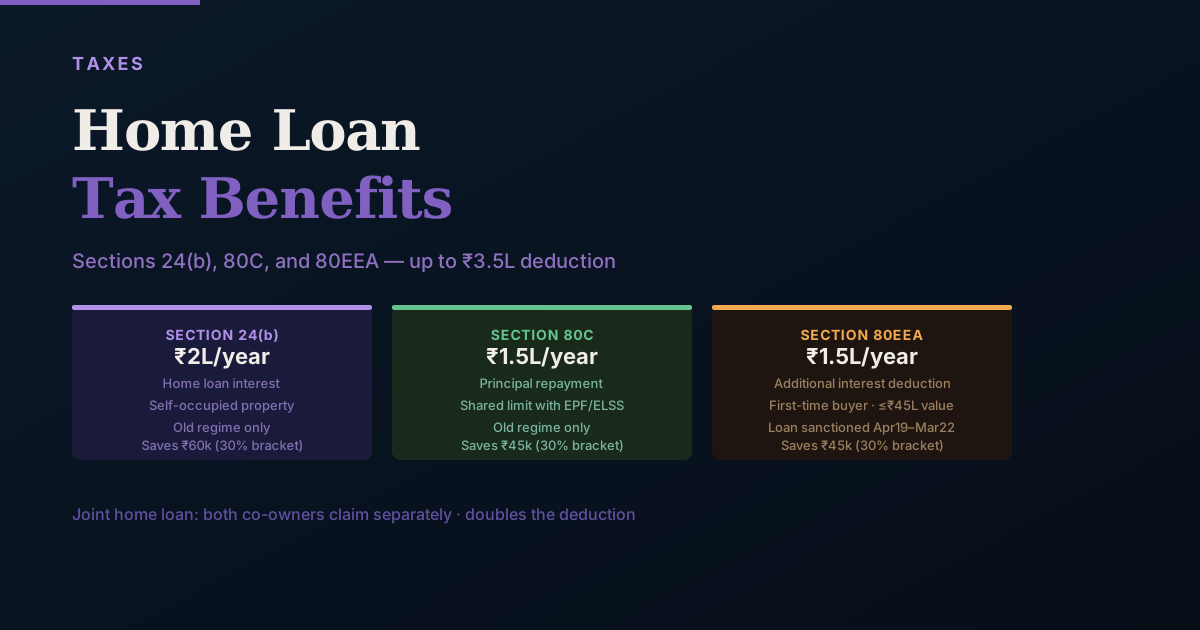
Home Loan Tax Benefits: Sections 24(b), 80C, and 80EEA Explained
A home loan provides tax benefits on both principal and interest payments. Understanding how each section works helps you maximise what you can claim.

How to File Your ITR Online: A Step-by-Step Guide
Filing your income tax return online is simple once you know the steps. A guide to documents, the right form, pre-filled data and e-verification.
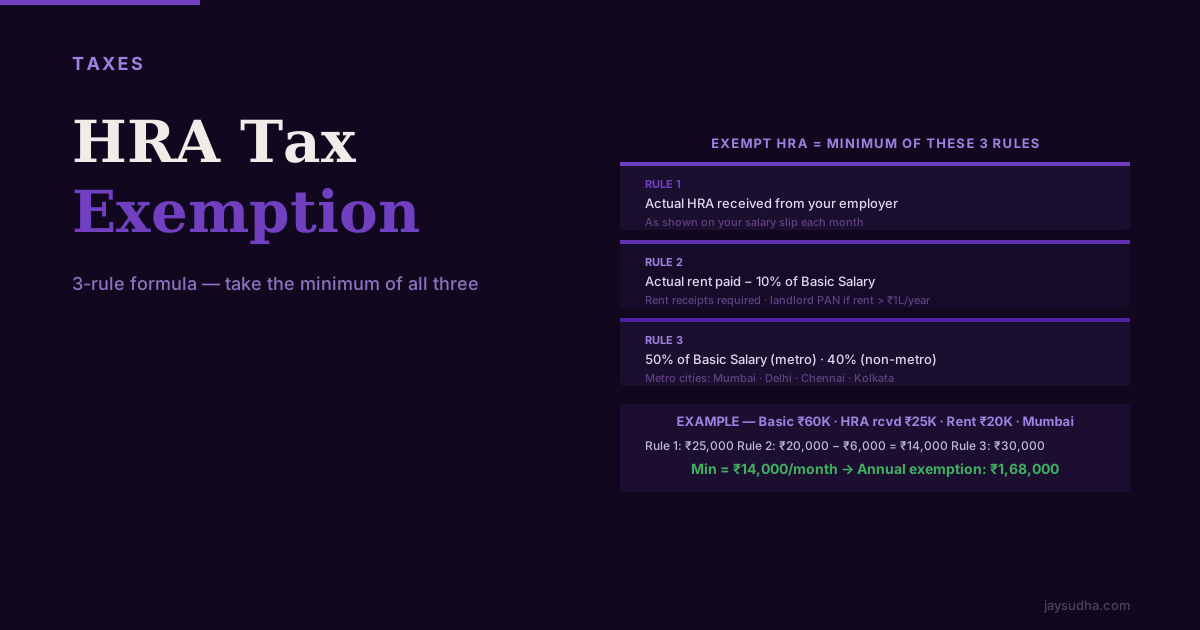
HRA Exemption: How to Calculate It and Maximise What You Keep
House Rent Allowance exemption can cut your taxable income if you pay rent. Learn the formula, the documents required and when HRA does not apply.

HUF: How a Hindu Undivided Family Saves Tax
An HUF is a separate taxpayer with its own PAN and basic exemption. Learn how it works, what income it can hold, the tax it saves, and the rules and pitfalls.
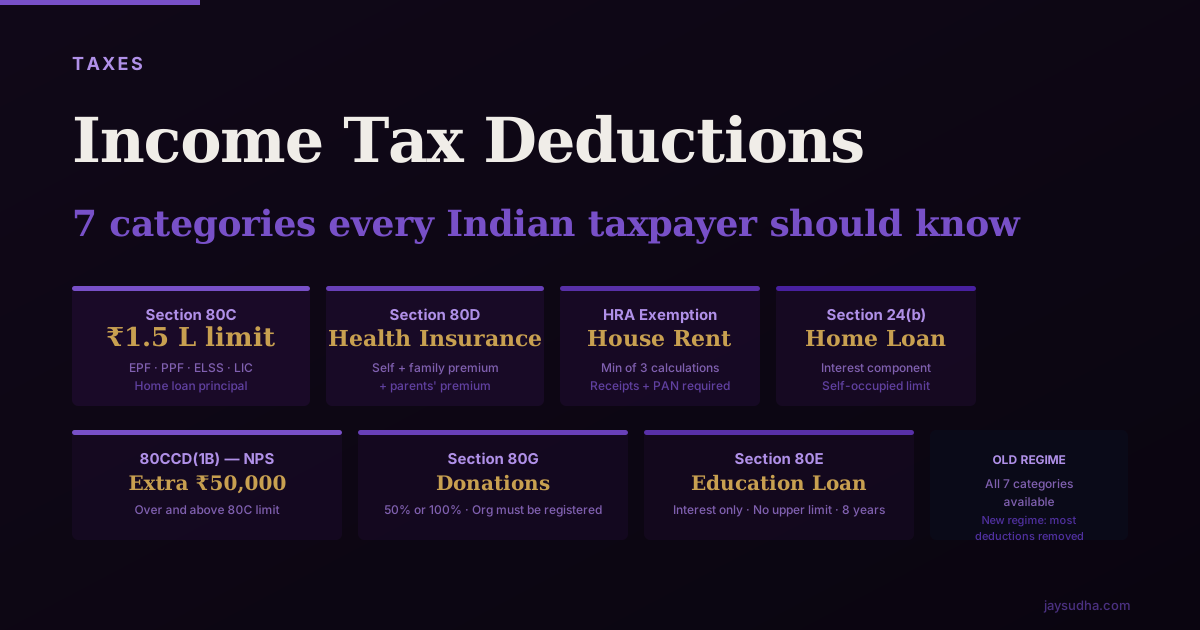
Income Tax Deductions: 7 Categories Every Indian Taxpayer Should Understand
Income tax deductions cut your taxable income legally. A clear guide to the major deduction categories under the old regime for Indian taxpayers.
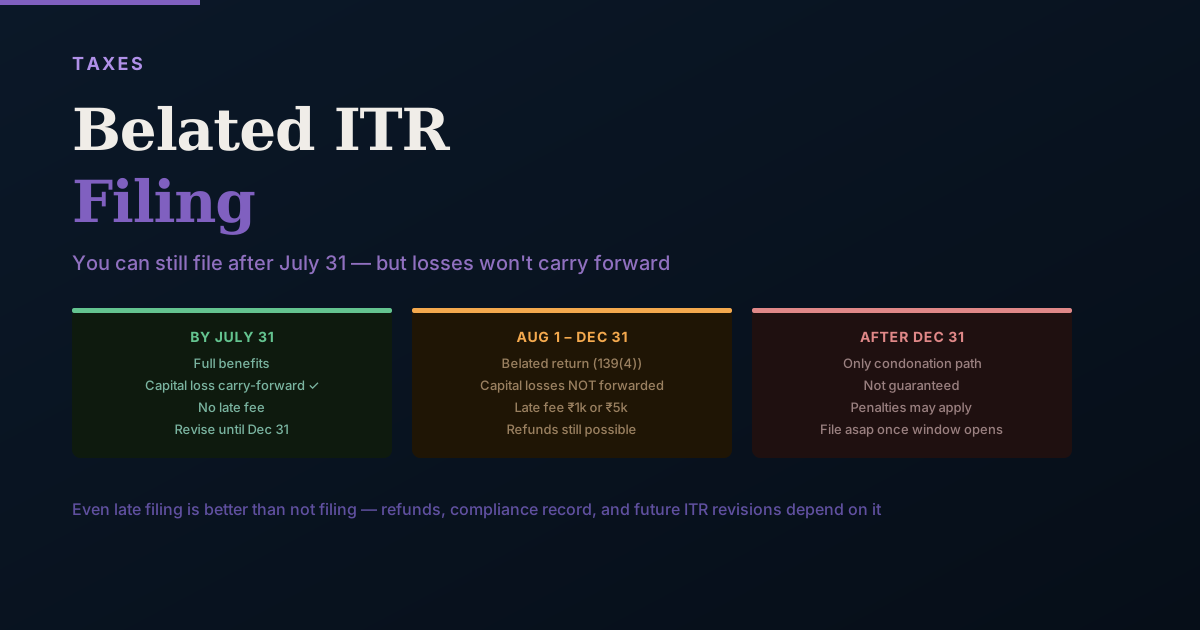
Belated ITR Filing: What You Lose and How to File After July 31
You can file your income tax return after the July 31 deadline, but you lose some rights and pay a late fee. Here is what changes and how to file.
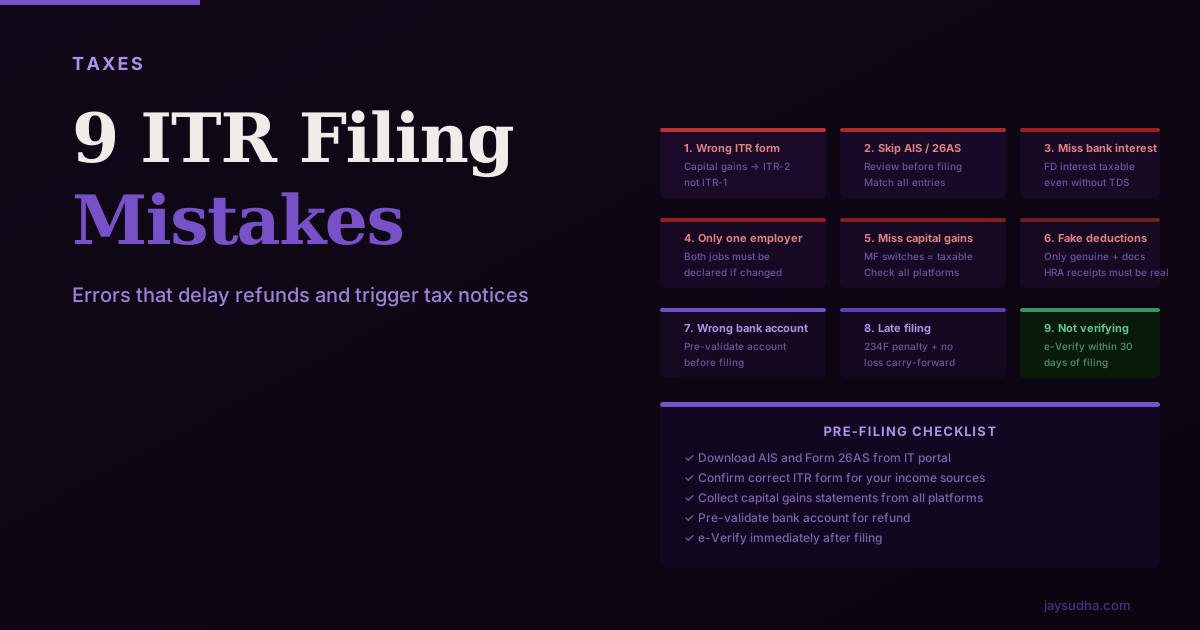
ITR Filing Mistakes 2026: 17 Errors That Can Delay Your Refund
Filing ITR for AY 2026-27? Here are 17 common ITR filing mistakes in 2026 that cause AIS mismatches, refund delays and notices — and how to fix each one.
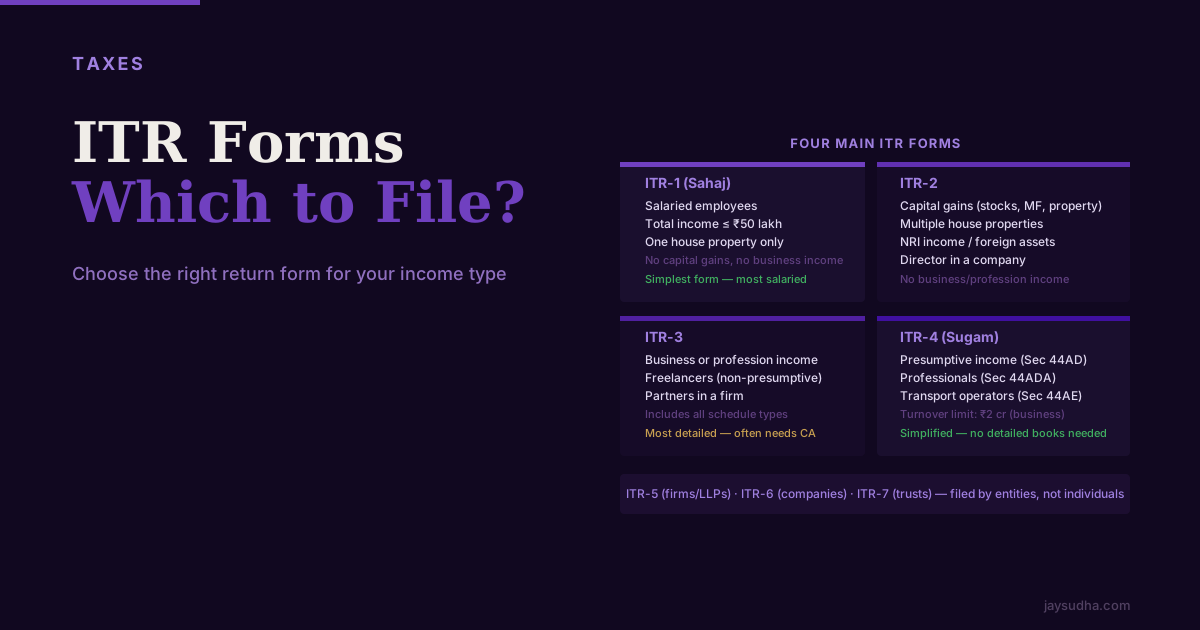
Which ITR Form Should You File? A Plain-English Guide for Individuals
ITR-1, ITR-2, ITR-3 and ITR-4 each apply to different income types. Find out which one you need based on your income sources and financial activity.

LTCG and STCG on Stocks and Mutual Funds: A Plain-English Guide
Selling shares or equity funds triggers capital gains tax. Understand the holding period, the ₹1.25 lakh LTCG exemption, and the 12.5% and 20% equity rates.
NPS Tax Benefits: 80CCD(1), 80CCD(1B) and 80CCD(2)
NPS offers three distinct tax deductions. The extra ₹50,000 under 80CCD(1B) and the employer route under 80CCD(2) are the most valuable. See how each works.

NRI Taxation in India: A Practical Primer
NRIs are taxed only on income earned or received in India. Learn how residential status works, NRE vs NRO accounts, NRI TDS rates, and DTAA relief rules.
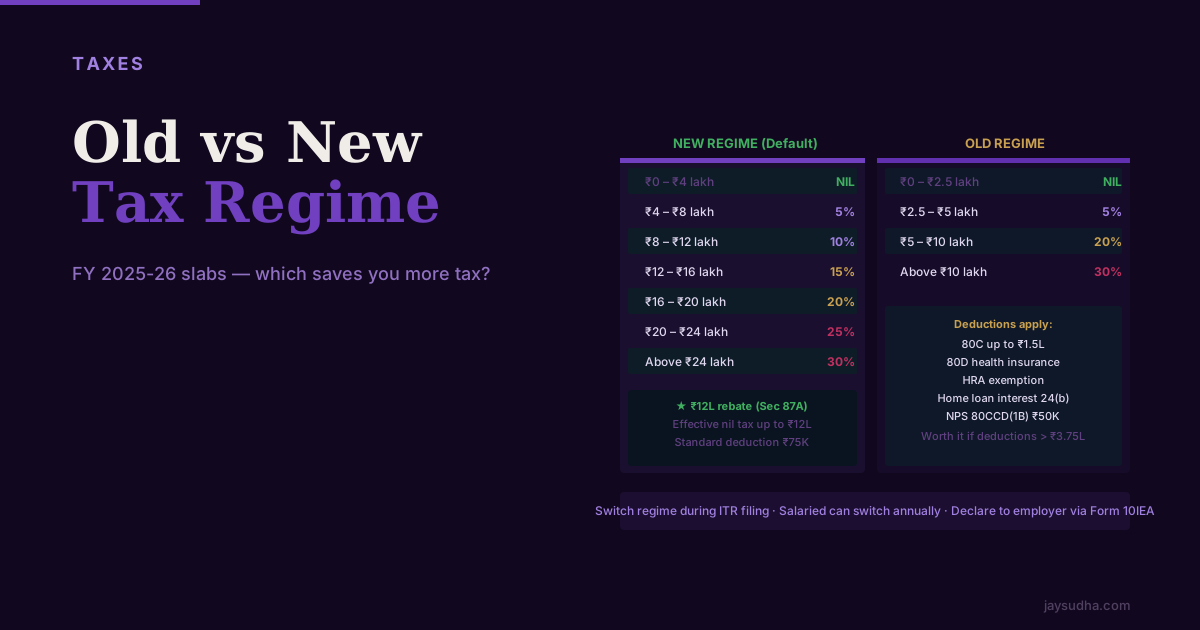
Old vs New Tax Regime: How to Choose the One That Saves You More
The new tax regime has lower rates but few deductions; the old allows 80C, HRA and more. The right choice depends on your income and deductions claimed.
Presumptive Taxation (44AD & 44ADA): Simpler Tax for Freelancers and Small Business
Sections 44AD and 44ADA let small businesses and professionals declare income at a fixed rate and skip audited accounts. How they work for FY 2025-26.
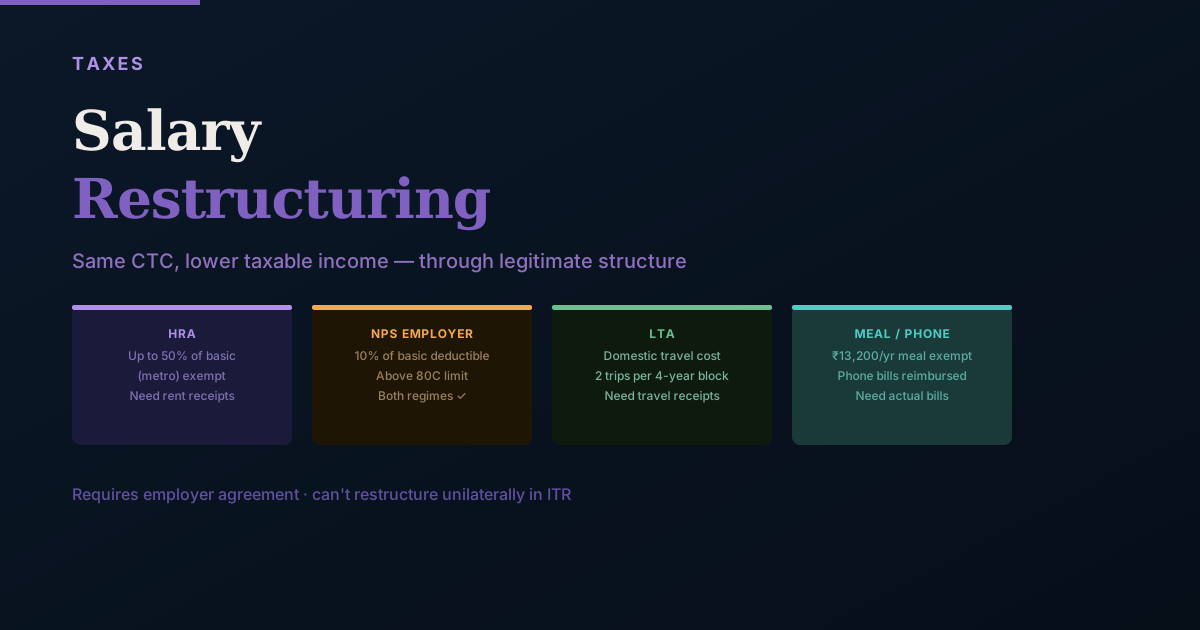
Salary Restructuring for Tax Savings: What Employees Can Legitimately Do
Your salary structure decides how much tax you pay. Knowing which components are tax-exempt helps you negotiate smarter, within what the law allows.
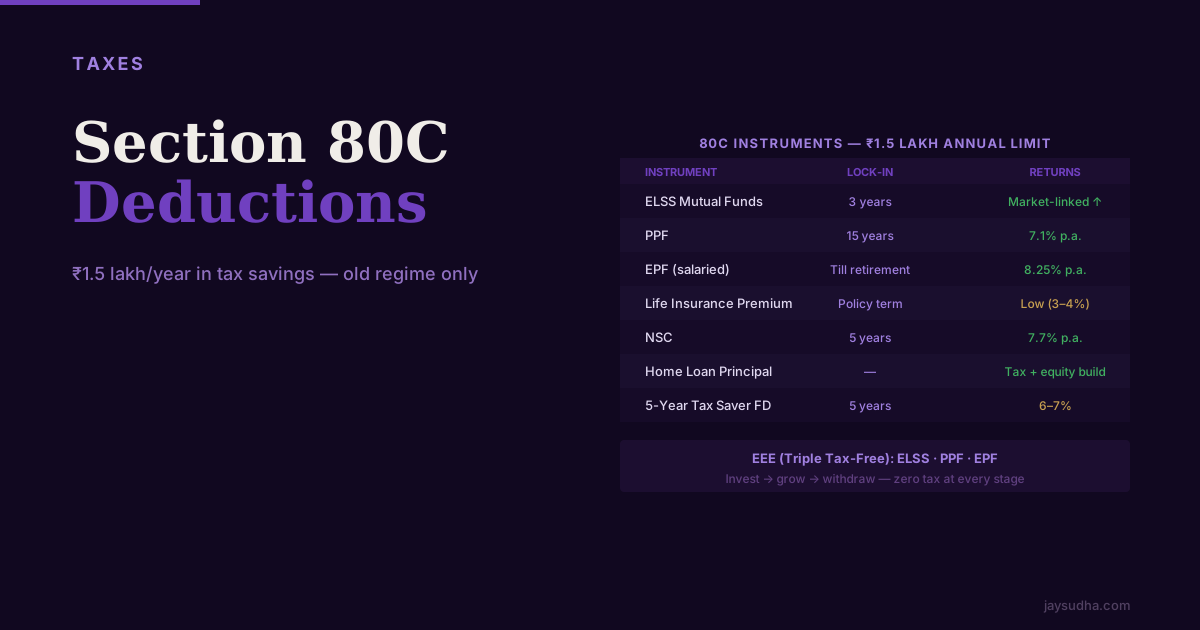
Section 80C Deductions: The Complete Guide for Salaried Indians
Section 80C lets you cut taxable income by up to ₹1.5 lakh via investments and expenses. Learn what qualifies and how to use it without locking up cash.

Section 80D: Maximise Your Health Insurance Tax Deduction
Section 80D lets you deduct health insurance premiums from taxable income. The exact FY 2025-26 limits, the senior-citizen rules, and what people miss.
Section 80G: Tax Deduction on Donations
Donations to approved funds and charities cut taxable income under Section 80G. Learn the 50% vs 100% rules, the qualifying limit and the cash limit.
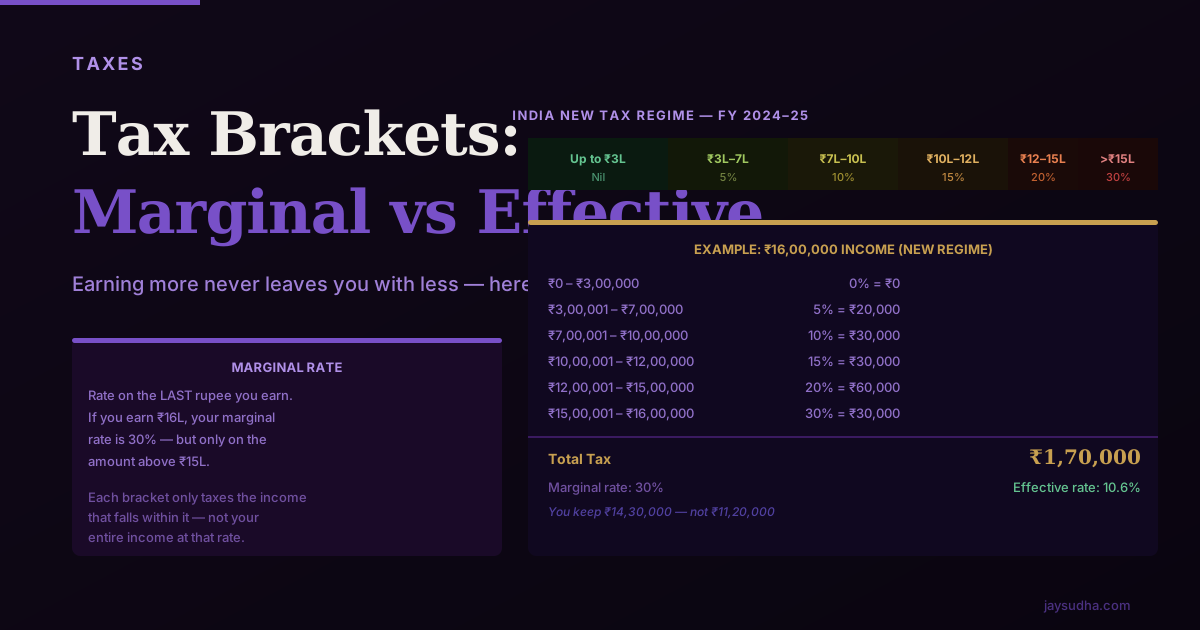
Tax Brackets Explained: Marginal vs. Effective Rate in India
A common myth is that a higher tax slab can leave you worse off. It cannot. How India's marginal slabs work and why marginal vs effective rate matters.

Tax-Loss Harvesting: Cutting Capital Gains Tax Legally
Booking losses to offset capital gains is fully legal in India — there is no wash-sale rule. Learn the set-off rules, carry-forward limits, and timing.
How Dividends Are Taxed in India Now
Since 2020, dividends are taxed in your hands at slab rates, with 10% TDS above ₹5,000. Learn how it works for shares and mutual funds, plus deductions.

How ESOPs Are Taxed in India
ESOPs are taxed twice: as a salary perquisite when you exercise, and as capital gains when you sell. Here is how each stage works, with a worked example.

Tax on FD and Savings Account Interest in India
Fixed deposit interest is fully taxable at your slab rate, and savings interest gets a small exemption. Here is how TDS, 80TTA and 80TTB actually work.

Tax on Gifts in India: What Is Exempt and What Is Not
Gifts above ₹50,000 from non-relatives are taxable, but gifts from relatives, on marriage, or by inheritance are exempt. Here it is with clear examples.

Tax on Selling Gold and Jewellery in India
Selling gold, jewellery, or gold ETFs triggers capital gains tax — long-term after 24 months at 12.5%. Learn how to compute gains and claim exemptions.

Tax on Mutual Funds in India: A Complete Guide
Mutual fund taxation depends on fund type and holding period. Knowing the rules helps you plan exits, avoid surprises, and keep more of your returns.

Tax on Rental Income in India: How It's Taxed and What You Can Deduct
Rental income is taxable, but the 30% standard deduction and home loan interest cut it. How to compute house property income and claim deductions.

Tax When You Sell Property in India
Selling a house triggers 12.5% LTCG after 24 months. Learn how to compute the gain, claim Section 54 and 54EC exemptions, and handle the 1% TDS.

Tax Planning in India: 9 Smart Rules for Cleaner Financial Decisions
Tax planning in India means informed, year-round decisions on income, deductions and investments, not a February scramble. Here is how to do it right.

Tax Planning vs Tax Saving: Why Most People Do the Wrong One
Most Indians scramble to save tax in January and February. Tax planning is different: it runs all year and gives better outcomes with far less stress.

Tax Saving Beyond 80C: 8 Deductions People Forget
Section 80C is just the start. NPS, health insurance, home loan and education loan interest, and donations cut tax further for FY 2025-26 in India.
Form 16A and TDS Certificates Explained
Form 16A is the TDS certificate for non-salary income like interest, rent, and fees. Learn how it differs from Form 16 and how to use it when filing your ITR.
TDS on Property Purchase: Section 194-IA Explained
Buying property worth ₹50 lakh or more? You must deduct 1% TDS and deposit it via Form 26QB. Here is who deducts, how to file, and what causes penalties.
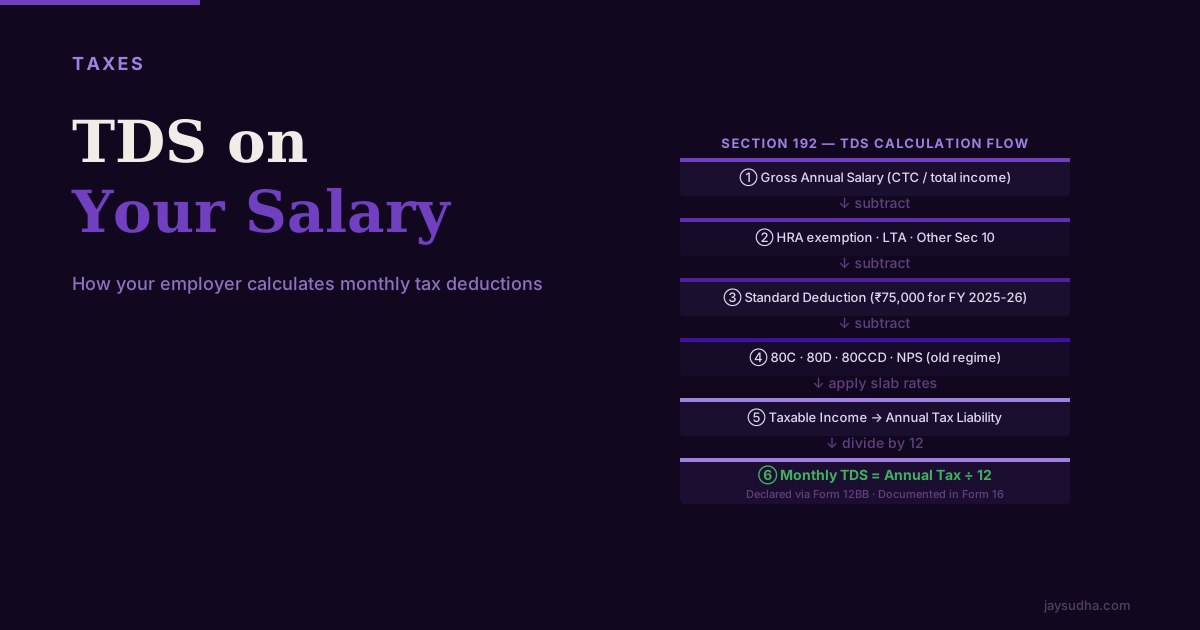
TDS on Salary: How It's Calculated and What You Can Do About It
Your employer deducts TDS from salary monthly based on projected annual income. How it is calculated, what to declare to reduce it, and excess refunds.
Common mistakes in taxes
- Waiting until filing season, then making rushed, poor tax-saving decisions
- Mixing tax saving with bad investments — buying a product only for the deduction
- Ignoring documentation, then being unable to substantiate a claim later
- Not separating business and personal expenses, which makes everything harder to prove
- Choosing a regime out of habit instead of comparing old vs new on your actual numbers