Pillar
Wealth
Building wealth in India is not about hot tips — it is about a few durable decisions repeated for years: spend less than you earn, invest the gap, let compounding work, and avoid blow-ups. This hub takes you from understanding your net worth to building a diversified, low-cost portfolio you can hold through every market mood. It is written for the salaried professional, the freelancer, and the business owner who would rather own a simple, repeatable plan than chase the best-performing fund. By the time you have worked through it, you should be able to size your emergency fund, start or fix your SIPs, set an allocation across equity, debt, gold, and EPF/PPF, and judge any product on cost, liquidity, and fit — not on last year's returns.
What this pillar teaches
- How compounding actually builds wealth over decades
- Tracking net worth as your real scorecard
- Asset allocation across equity, debt, gold, EPF/PPF
- Index funds, mutual funds and SIPs for beginners
- Financial independence and realistic retirement math
- Managing risk and inflation, not chasing returns
Start here — beginner path
How to work through Wealth
- Understand the basics — start with the beginner path above so the core ideas are clear before you act.
- Set up a system — use the calculators and templates here to put your own numbers into the idea.
- Apply it to real life — make one concrete decision or change, not ten at once.
- Review on a rhythm — revisit monthly or quarterly so the system keeps working as your situation changes.
Calculators for wealth
All Wealth guides

SBI Funds Management IPO: Allotment, Listing Outcome and GMP Reality Check
A post-listing case study of the SBI Funds Management IPO — final allotment status, listing-day outcome, GMP miss, OFS structure, valuation context, and what investors can learn.

Arbitrage Funds: Low-Risk Returns With Equity Taxation
How arbitrage funds work in India: they exploit cash-futures price gaps for low-risk returns while being taxed as equity. A practical guide for parking money.

Asset Allocation: How to Split Your Investment Portfolio
Asset allocation is not about picking the best investment. It's about deciding how much of each kind of risk you want to carry.

Balanced Advantage Funds: Auto-Adjusting Equity and Debt
How balanced advantage funds dynamically shift between equity and debt, who they suit, their tax treatment as equity funds, and where they fit in a portfolio.

Compound Interest: The Math Behind Long-Term Wealth
Compound interest turns consistent saving into long-term wealth. How it works, why time is the critical variable, and what derails it in practice.

Compounding for Beginners: 9 Simple Lessons That Make Money Growth Clear
Compounding for beginners explained with Indian SIP examples and real numbers. Why time matters more than amount, and the mistakes that slow you down.

Corporate Bonds and NCDs in India: Higher Yield, Real Risks
How corporate bonds and NCDs work in India, why they offer higher yields than bank FDs, the credit and liquidity risks involved, and how they are taxed.

Debt Mutual Funds in India: When They Beat FDs (and When They Don't)
Debt mutual funds offer liquidity and tax deferral, but FDs win on certainty. A clear, practical comparison for Indian investors after the 2023 tax change.

Direct vs Regular Mutual Funds: The Hidden Cost of Convenience
Direct mutual funds cut out distributor commission, saving 0.5-1% a year. Over decades that gap can cost lakhs. Here's how to decide and how to switch.

Dividend Investing in India: Income vs Growth Trade-offs
Should you invest for dividends or total return in India? A clear look at the income-versus-growth trade-off, dividend tax, and where payouts fit a portfolio.
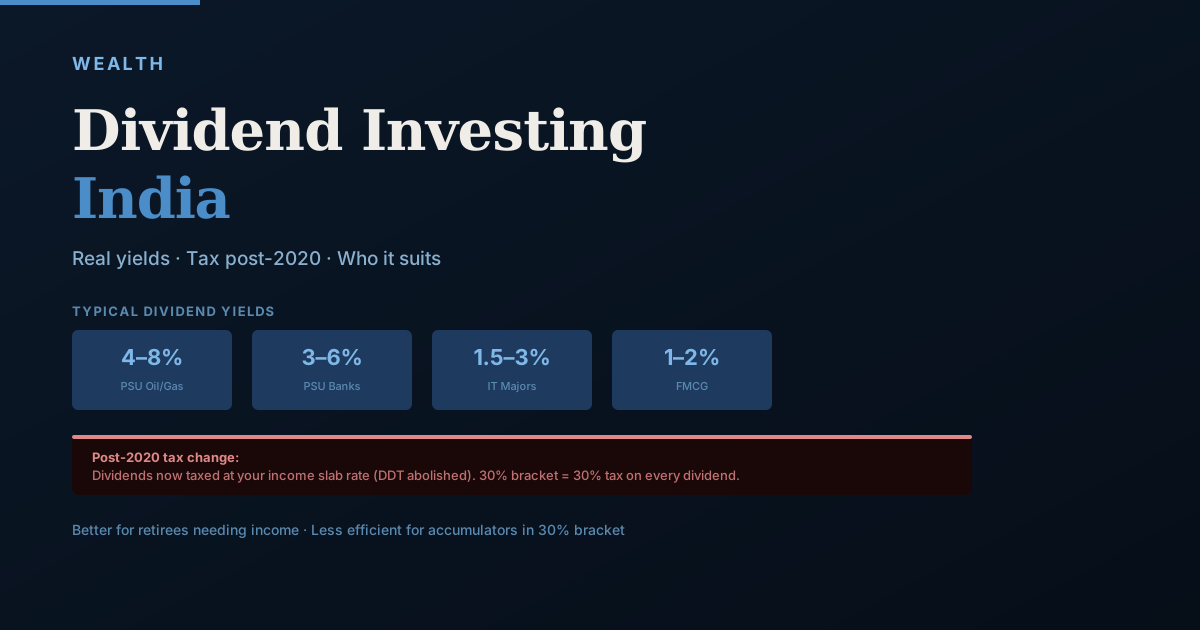
Dividend Investing India: What Dividend Stocks Actually Pay and Whether They Suit You
The reality of dividend yields in India, how dividends are taxed post-2020, and when dividend investing makes sense versus a total-return equity approach.

Emergency Fund Before Investing: Why Sequence Matters in Personal Finance
Why an emergency fund comes before investing: the forced-sale problem, how much to save, where to keep it, and how to build it alongside your SIPs.
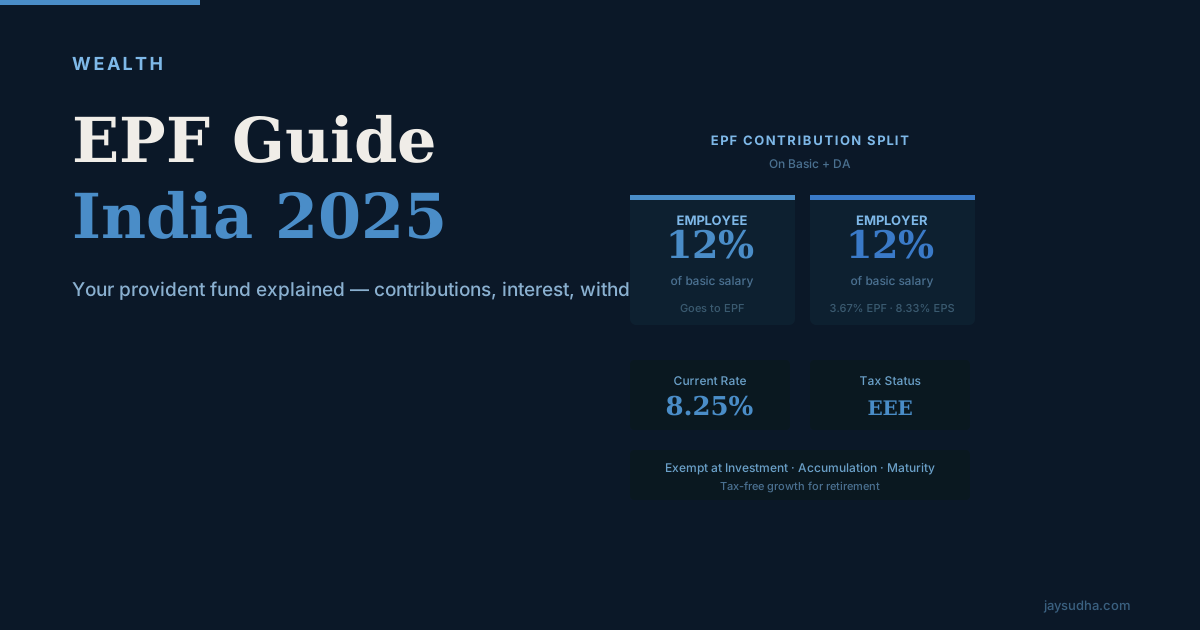
EPF Complete Guide: Contributions, Interest, Withdrawal, and UAN
EPF is one of India's most underused wealth-building tools. Here's exactly how it works, what you earn, and when you can access it.

Financial Independence India: 8 Practical Steps to Freedom from Money Pressure
Financial independence in India means your assets cover living costs without a job. What it actually takes: the numbers, timeline, and the real trade-offs.

Gold ETF vs Sovereign Gold Bonds vs Digital Gold
A practical comparison of Gold ETFs, Sovereign Gold Bonds and digital gold for Indian investors — covering costs, liquidity, the 2.5% SGB interest and tax.
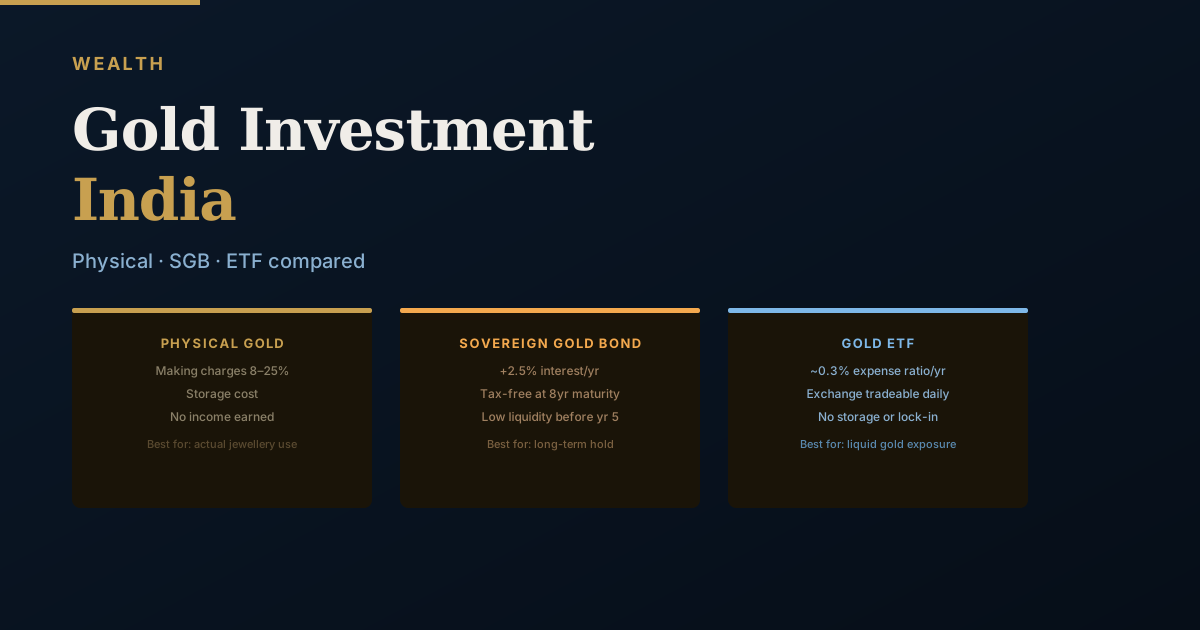
Gold Investment India: Physical Gold, Sovereign Gold Bonds, and Gold ETFs Compared
How to invest in gold in India — the real differences between physical gold, SGBs, and Gold ETFs — with costs, liquidity, and tax treatment explained.

How Much Money Do You Actually Need to Retire in India?
A practical, India-specific way to calculate your retirement corpus — accounting for inflation, longevity, and the limits of the 4% rule, with examples.

How to Read a Mutual Fund Factsheet
A line-by-line guide to reading a mutual fund factsheet in India: AUM, expense ratio, portfolio, top holdings, ratios, and the numbers that actually matter.

How to Start Investing in India: A First-Principles Framework
Before picking an investment, you need to answer four questions. Most people skip straight to step four — and pay for it.

Building a Simple Index Fund Portfolio in India
A beginner's blueprint for a low-cost index fund portfolio in India — which indices to use, how many funds you need, allocation, costs and rebalancing.

Index Funds vs Active Mutual Funds: The Case for Passive Investing in India
Most active funds underperform their benchmark over the long run. Here's the evidence, the exceptions, and how to decide for yourself.

How to Invest in US and Global Stocks From India
The practical routes to invest in US and global stocks from India — feeder funds, index funds and direct broking via LRS — with costs and tax explained.

Large-Cap vs Mid-Cap vs Small-Cap Funds: How to Choose
Large-cap, mid-cap and small-cap funds differ sharply in return and volatility. Here's how SEBI defines them and how to build the right mix for your goals.

Lump Sum vs SIP: Does Timing the Market Beat Averaging?
Lump sum or SIP for a large sum in India? What the maths says about timing the market vs rupee-cost averaging, and how to deploy a windfall sensibly.

Expense Ratio and the Real Cost of a Mutual Fund
What a mutual fund expense ratio really costs you in India: how SEBI caps it, how direct plans cut it, and how a 1% fee quietly compounds away your wealth.

Mutual Funds for Beginners India: A Plain-Language Introduction
What mutual funds are, the main types, how NAV and SIP work, and what expense ratio means — explained without jargon for first-time Indian investors.

How to Think About Net Worth Before You Think About Investing
Net worth is the foundation of every financial decision. Before picking stocks or mutual funds, understand what the number tells you and what it doesn't.
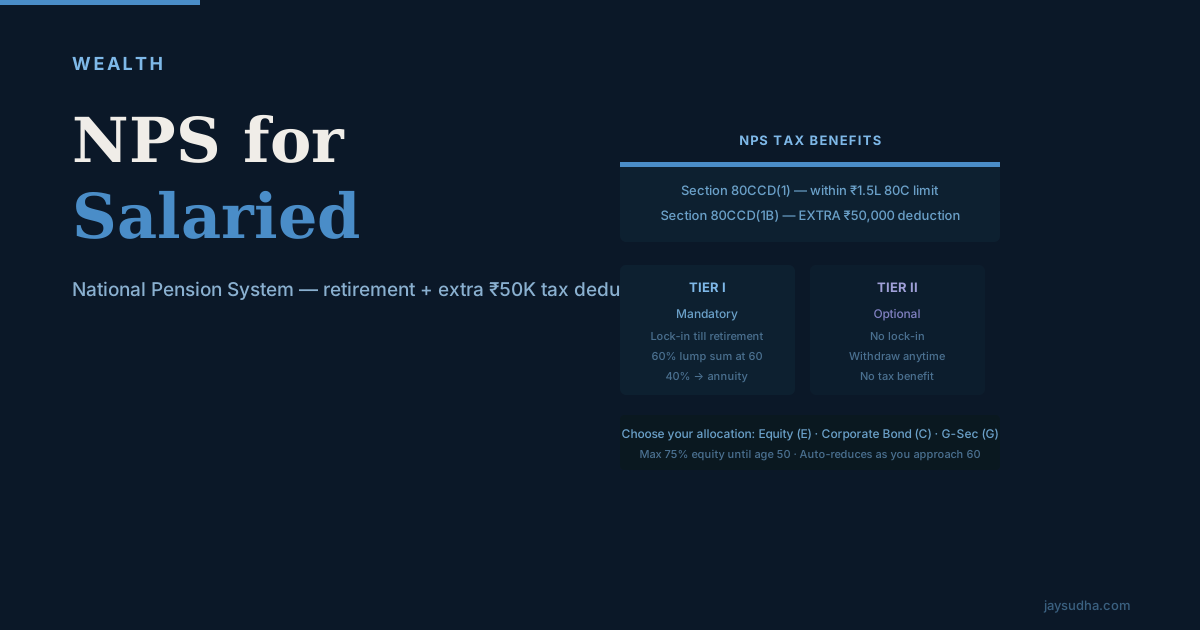
NPS for Salaried Employees: Tier 1, Tier 2, and the Real Tax Benefit
NPS has three distinct tax advantages that most salaried employees miss. Here's how the scheme works and what it actually delivers.

NPS vs PPF vs EPF: Which Retirement Vehicle Wins?
A clear-eyed comparison of NPS, PPF and EPF for Indian retirement savings — returns, tax, lock-in and liquidity, and how to combine all three sensibly.

Post Office Savings Schemes: NSC, KVP, MIS and SCSS
A clear guide to India Post small savings — NSC, KVP, Monthly Income Scheme and SCSS. How interest, tenure, tax and safety actually compare for savers.
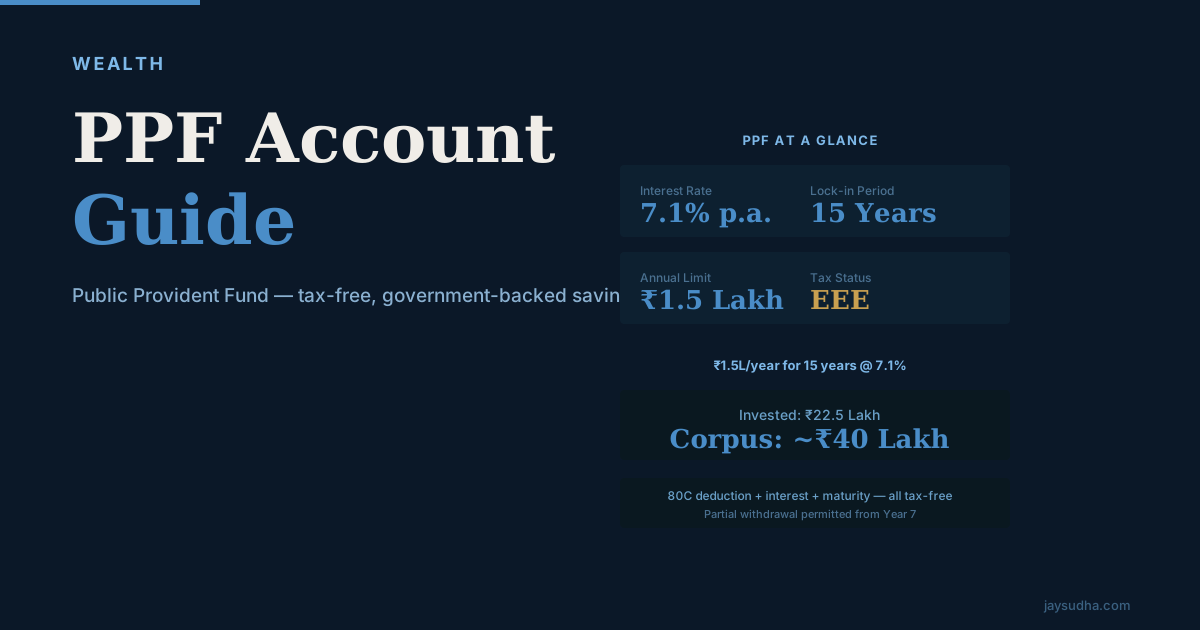
PPF Account: Interest Rate, Lock-in, Partial Withdrawal, and When It Fits
PPF is a 15-year government-backed investment with tax-free returns. Here's what it actually offers, and when it makes sense to use it.

Real Estate vs Mutual Funds India: How to Think About the Trade-offs
A clear comparison of real estate and mutual funds in India: liquidity, leverage, rental yield, total cost, and how to decide what belongs in a portfolio.

REITs and InvITs: Investing in Real Estate Without Buying Property
REITs and InvITs let you own income-producing real estate and infrastructure from your demat account, with small amounts and liquidity. Here's how they work.

Investment Options for Senior Citizens in India: Features and Risks
A calm guide to retiree investing in India: SCSS, MIS, senior-citizen FDs, debt funds, SWPs and annuities — how to build safe, steady income after 60.

SIP in Mutual Funds: A Practical Guide to Systematic Investing in India
SIP is not just an investment — it's a behaviour system. Here's how systematic investing works, what to watch for, and how to use it well.

Sovereign Gold Bonds (SGB): How They Work, Costs, and Tax in India
Sovereign Gold Bonds pay 2.5% annual interest, track the gold price, and make maturity gains tax-free. Here's how SGBs work and when they beat physical gold.

Step-Up SIP: The Simple Habit That Can Transform Your Corpus
A step-up SIP raises your investment a little each year as income grows. The compounding effect is dramatic — here's the maths and how to set it up.

Sukanya Samriddhi Yojana: A Complete Guide for Parents
A practical SSY guide for parents of a girl child: eligibility, the 80C and EEE tax benefit, deposit rules, the 21-year maturity, and how to use it well.

Term Insurance India: How Much Cover You Need and How to Choose
How to size term-insurance cover in India, compare policy conditions, read IRDAI claim data, and understand tax and disclosure limits before buying.

Why Wealth Building Is a Decision Problem, Not an Investing Problem
Most people treat wealth building as which investments to pick. The harder question is which decisions to make, in what order, and how to approach them.

Wealth Building in India: 7 Practical Rules for Strong Long-Term Money Decisions
Wealth building in India is not about picking the best stocks. It is a system built on savings discipline, protection, and steady asset accumulation.

When Should You Actually Sell a Mutual Fund?
The genuinely valid reasons to sell a mutual fund in India — and the bad ones — covering underperformance, goals, rebalancing, taxes and exit loads.

Investing for Women in India: Building Independent Wealth
A practical guide for women investing in India: why financial independence matters, planning around career breaks, and building wealth on your own terms.
Common mistakes in wealth
- Chasing returns before building a cash surplus to invest in the first place
- Investing the moment money arrives, with no emergency fund behind you
- Confusing insurance with investment — and buying products that do neither well
- Ignoring liquidity: locking everything away, then borrowing at high rates in a crunch
- Reacting to every market headline instead of holding one plan through the noise