Articles
285 articles across wealth, budgeting, credit, taxes, systems, and business — built around trade-offs, not quick fixes.

Does Anant Ambani Really Have Less Control? Reliance Succession Plan Explained
Does Anant Ambani really have less control than Akash and Isha? Understand Reliance's succession plan, ownership, board roles and business division.

Kisan Credit Card Guide 2026: Limit, Rate and How to Apply
A practical guide to the Kisan Credit Card: eligibility, how the limit is worked out, current interest rules, documents and how to apply in 2026.

Kisan Credit Card vs Kisan Gold Scheme: Which Fits Your Need?
KCC or Kisan Samriddhi Yojana (Kisan Gold Scheme)? A practical, decision-focused comparison of crop working capital versus land-backed farm investment credit.

Kisan Gold Scheme (Kisan Samriddhi Yojana): Land, Not Jewellery
Kisan Gold Scheme is now called Kisan Samriddhi Yojana at PNB — a land-backed farm investment loan, not a gold-jewellery loan. Here's how it actually works.

How to Organise Business Documents and Compliance Records
A folder structure, a renewal tracker, and a backup habit — the three pieces that turn a pile of registration certificates into a system you can actually rely on.

Business Document Checklists by Business Type
One index, organised by what you actually do — proprietor, trader, manufacturer, retailer, freelancer, online seller — instead of one long undifferentiated list.

Business PAN, Personal PAN, TAN and GSTIN Explained
Four numbers, four purposes: which PAN to use as a proprietor, when you need a separate TAN, and how to read your own GSTIN in ten seconds.

Business Registrations and Licences in India: The Complete Map
GST, Udyam, Shops & Establishments, FSSAI, EPFO, trademark — most small businesses need only 3-5 of the ~15 registrations that exist. Here is the map.
Central vs State vs Municipal Business Approvals: Who Regulates What
The same business can answer to Delhi, its state capital, and its local municipal ward simultaneously. Here is which layer handles what, and why they don't coordinate.

Consent to Establish vs Consent to Operate: Pollution Clearance Explained
Two separate approvals, in a fixed order, from your State Pollution Control Board — and which one you need at all depends on which of four colour categories your activity falls into.
Documents Required for an Agricultural Trader in India
APMC licensing is the one requirement most generic checklists get wrong — it applies in some states, has been deregulated in others, and depends entirely on what you trade and where.

Documents Required Before Starting a Business in India
Not a reference list — a sequence. What to have ready before day one, what to get in the first month, and what genuinely waits until you grow.

Documents Required for a Manufacturing Business in India
Manufacturing pulls in more of the compliance map than almost any other activity — factory licence, pollution consent, and labour law all trigger at once. Here is the real list.

Documents Required for a Retail Shop in India
The most common physical business type, and the most commonly under-documented — most shop owners have GST and stop there, missing two or three other genuine requirements.

EPFO Registration Applicability: The 20-Employee Threshold Explained
The headcount rule hasn't changed, but what counts as a covered establishment has — the November 2025 labour codes widened EPF's reach even as the '20' stayed the same.

ESIC Registration Applicability: Two Different Thresholds That Get Confused
One threshold decides if your establishment must register. A completely different one decides which of your employees are actually covered. Most confusion comes from mixing the two up.

Fire NOC for Businesses: When You Need It and Why It Blocks Everything Else
Without a valid Fire NOC, your occupancy certificate, trade licence, and health licence typically will not be issued either — it sits upstream of almost everything.

FSSAI Registration vs State Licence vs Central Licence
The turnover bands changed dramatically from 1 April 2026 — registration now covers businesses up to ₹1.5 crore, not ₹12 lakh. Here is the current framework.
GST Registration Documents for a Proprietorship
The exact document list for a sole proprietor registering for GST — identity, address, bank, and photograph proof — with the common rejection reasons.

Import Export Code (IEC): When You Need It and the Annual Trap
IEC has lifetime validity, which sounds like 'get it once and forget it' — except it deactivates automatically if you miss a free annual update window.

Mandatory vs Optional Business Registrations in India
Some registrations are legal obligations with real penalties for skipping them. Others are voluntary and only cost you the benefit of not having them. Here is which is which.

Registration vs Licence vs Certificate vs NOC: What's the Difference?
These four words get used interchangeably in India, but they mean different legal things — and knowing the difference tells you what you can lose and how.

Shops and Establishments Registration: What It Is and Why It's Easy to Skip
No central law, no turnover threshold in most states, no automatic enforcement trigger — which is exactly why this registration gets skipped until a bank or inspector asks for it.

Sole Proprietorship Documents in India: The Complete List
A proprietorship has no separate legal identity, which makes 'what documents do I need' a genuinely confusing question. Here is the actual answer.

Trade Licence vs Shops and Establishments Registration
Both come from your premises. Both feel similar on the application form. They are issued by different authorities for different reasons — and most businesses need both, not either/or.

SBI Funds Management IPO: Allotment, Listing Outcome and GMP Reality Check
A post-listing case study of the SBI Funds Management IPO — final allotment status, listing-day outcome, GMP miss, OFS structure, valuation context, and what investors can learn.
Form 16 vs AIS vs Form 26AS: How to Match Tax Details Before Filing ITR for AY 2026-27
Understand Form 16, AIS and Form 26AS, learn how to match salary, TDS and investment details, and fix mismatches before filing your AY 2026-27 ITR.
Zoho Books vs TallyPrime: Which Is Better for Indian Businesses in 2026?
Compare Zoho Books vs TallyPrime for GST, invoicing, inventory, pricing, mobile access and accounting to choose the right software for your Indian business.

Arbitrage Funds: Low-Risk Returns With Equity Taxation
How arbitrage funds work in India: they exploit cash-futures price gaps for low-risk returns while being taxed as equity. A practical guide for parking money.

Asset Allocation: How to Split Your Investment Portfolio
Asset allocation is not about picking the best investment. It's about deciding how much of each kind of risk you want to carry.

Balanced Advantage Funds: Auto-Adjusting Equity and Debt
How balanced advantage funds dynamically shift between equity and debt, who they suit, their tax treatment as equity funds, and where they fit in a portfolio.

Compound Interest: The Math Behind Long-Term Wealth
Compound interest turns consistent saving into long-term wealth. How it works, why time is the critical variable, and what derails it in practice.

Compounding for Beginners: 9 Simple Lessons That Make Money Growth Clear
Compounding for beginners explained with Indian SIP examples and real numbers. Why time matters more than amount, and the mistakes that slow you down.

Corporate Bonds and NCDs in India: Higher Yield, Real Risks
How corporate bonds and NCDs work in India, why they offer higher yields than bank FDs, the credit and liquidity risks involved, and how they are taxed.

Debt Mutual Funds in India: When They Beat FDs (and When They Don't)
Debt mutual funds offer liquidity and tax deferral, but FDs win on certainty. A clear, practical comparison for Indian investors after the 2023 tax change.

Direct vs Regular Mutual Funds: The Hidden Cost of Convenience
Direct mutual funds cut out distributor commission, saving 0.5-1% a year. Over decades that gap can cost lakhs. Here's how to decide and how to switch.

Dividend Investing in India: Income vs Growth Trade-offs
Should you invest for dividends or total return in India? A clear look at the income-versus-growth trade-off, dividend tax, and where payouts fit a portfolio.
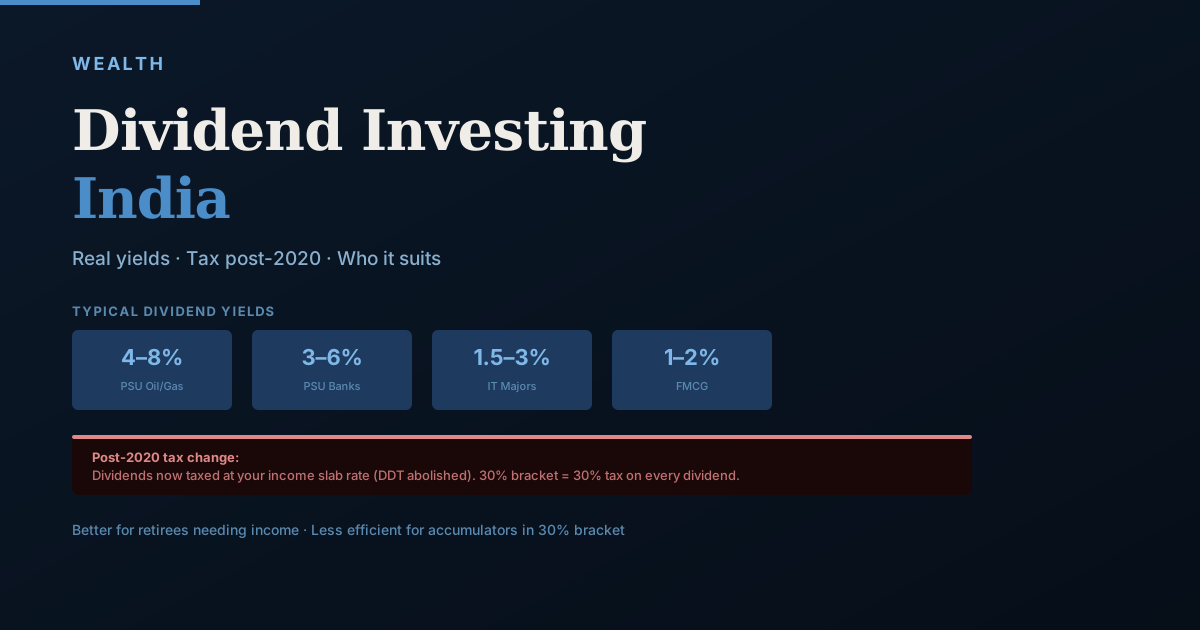
Dividend Investing India: What Dividend Stocks Actually Pay and Whether They Suit You
The reality of dividend yields in India, how dividends are taxed post-2020, and when dividend investing makes sense versus a total-return equity approach.

Emergency Fund Before Investing: Why Sequence Matters in Personal Finance
Why an emergency fund comes before investing: the forced-sale problem, how much to save, where to keep it, and how to build it alongside your SIPs.
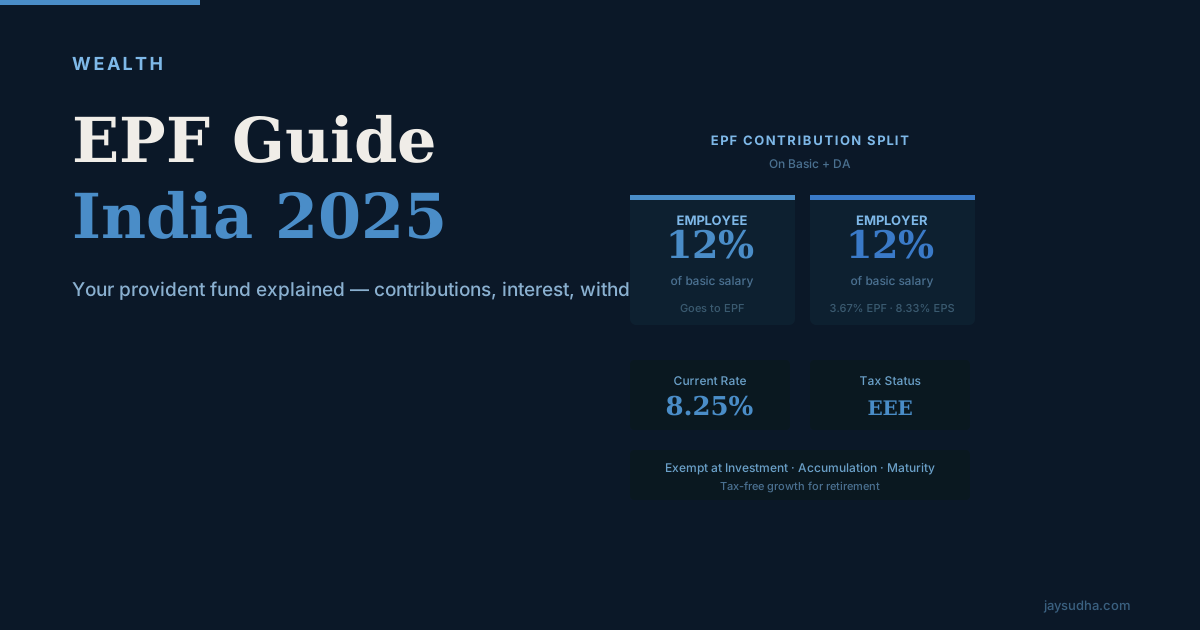
EPF Complete Guide: Contributions, Interest, Withdrawal, and UAN
EPF is one of India's most underused wealth-building tools. Here's exactly how it works, what you earn, and when you can access it.
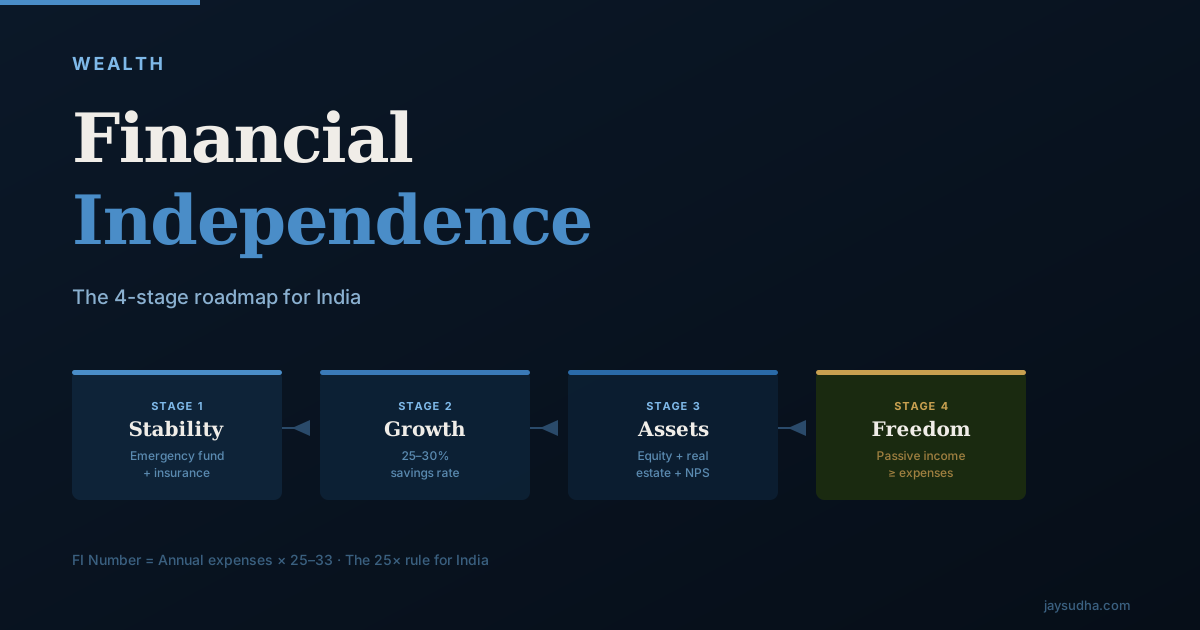
Financial Independence India: 8 Practical Steps to Freedom from Money Pressure
Financial independence in India means your assets cover living costs without a job. What it actually takes: the numbers, timeline, and the real trade-offs.

Gold ETF vs Sovereign Gold Bonds vs Digital Gold
A practical comparison of Gold ETFs, Sovereign Gold Bonds and digital gold for Indian investors — covering costs, liquidity, the 2.5% SGB interest and tax.

Gold Investment India: Physical Gold, Sovereign Gold Bonds, and Gold ETFs Compared
How to invest in gold in India — the real differences between physical gold, SGBs, and Gold ETFs — with costs, liquidity, and tax treatment explained.

How Much Money Do You Actually Need to Retire in India?
A practical, India-specific way to calculate your retirement corpus — accounting for inflation, longevity, and the limits of the 4% rule, with examples.

How to Read a Mutual Fund Factsheet
A line-by-line guide to reading a mutual fund factsheet in India: AUM, expense ratio, portfolio, top holdings, ratios, and the numbers that actually matter.

How to Start Investing in India: A First-Principles Framework
Before picking an investment, you need to answer four questions. Most people skip straight to step four — and pay for it.

Building a Simple Index Fund Portfolio in India
A beginner's blueprint for a low-cost index fund portfolio in India — which indices to use, how many funds you need, allocation, costs and rebalancing.

Index Funds vs Active Mutual Funds: The Case for Passive Investing in India
Most active funds underperform their benchmark over the long run. Here's the evidence, the exceptions, and how to decide for yourself.

How to Invest in US and Global Stocks From India
The practical routes to invest in US and global stocks from India — feeder funds, index funds and direct broking via LRS — with costs and tax explained.

Large-Cap vs Mid-Cap vs Small-Cap Funds: How to Choose
Large-cap, mid-cap and small-cap funds differ sharply in return and volatility. Here's how SEBI defines them and how to build the right mix for your goals.

Lump Sum vs SIP: Does Timing the Market Beat Averaging?
Lump sum or SIP for a large sum in India? What the maths says about timing the market vs rupee-cost averaging, and how to deploy a windfall sensibly.

Expense Ratio and the Real Cost of a Mutual Fund
What a mutual fund expense ratio really costs you in India: how SEBI caps it, how direct plans cut it, and how a 1% fee quietly compounds away your wealth.

Mutual Funds for Beginners India: A Plain-Language Introduction
What mutual funds are, the main types, how NAV and SIP work, and what expense ratio means — explained without jargon for first-time Indian investors.

How to Think About Net Worth Before You Think About Investing
Net worth is the foundation of every financial decision. Before picking stocks or mutual funds, understand what the number tells you and what it doesn't.
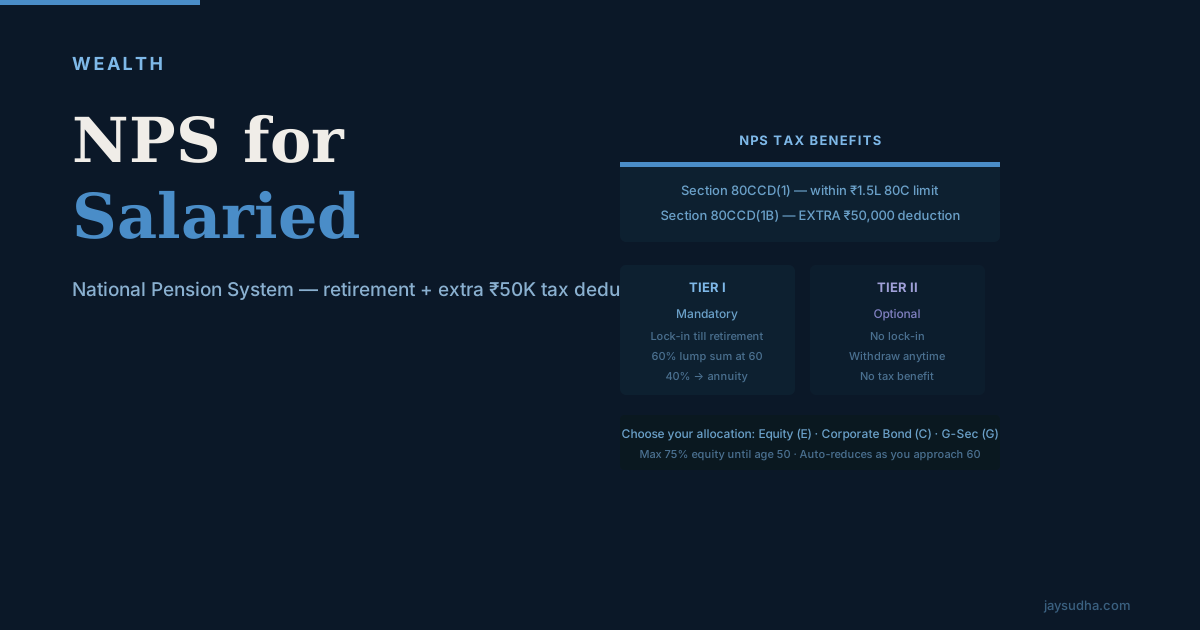
NPS for Salaried Employees: Tier 1, Tier 2, and the Real Tax Benefit
NPS has three distinct tax advantages that most salaried employees miss. Here's how the scheme works and what it actually delivers.
NPS vs PPF vs EPF: Which Retirement Vehicle Wins?
A clear-eyed comparison of NPS, PPF and EPF for Indian retirement savings — returns, tax, lock-in and liquidity, and how to combine all three sensibly.

Post Office Savings Schemes: NSC, KVP, MIS and SCSS
A clear guide to India Post small savings — NSC, KVP, Monthly Income Scheme and SCSS. How interest, tenure, tax and safety actually compare for savers.
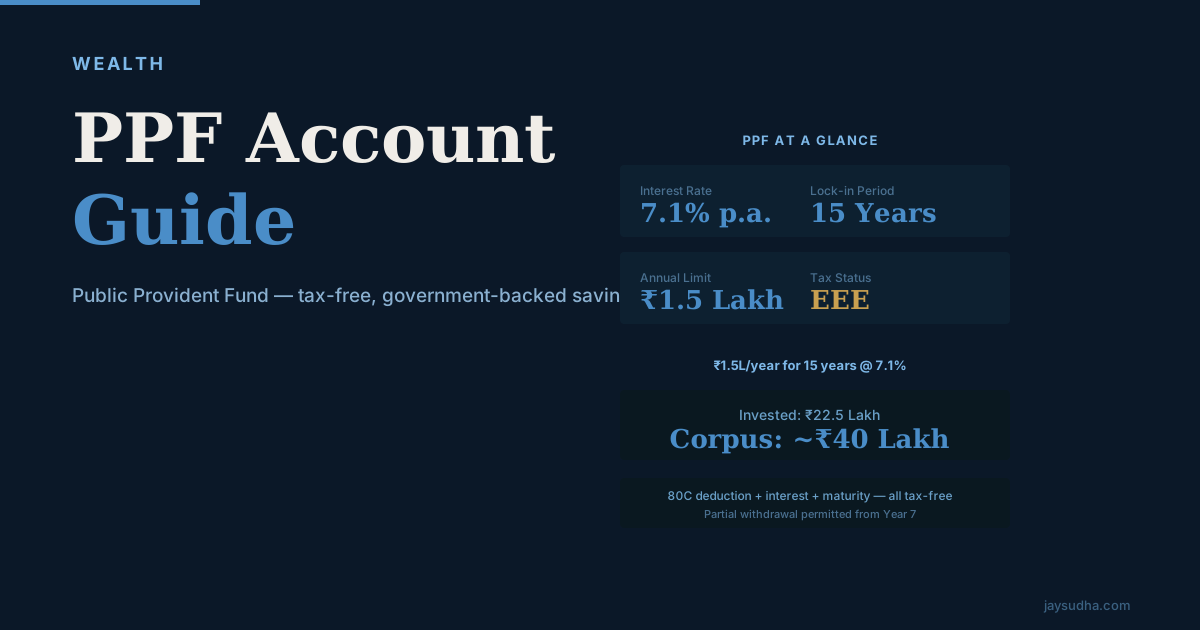
PPF Account: Interest Rate, Lock-in, Partial Withdrawal, and When It Fits
PPF is a 15-year government-backed investment with tax-free returns. Here's what it actually offers, and when it makes sense to use it.

Real Estate vs Mutual Funds India: How to Think About the Trade-offs
A clear comparison of real estate and mutual funds in India: liquidity, leverage, rental yield, total cost, and how to decide what belongs in a portfolio.

REITs and InvITs: Investing in Real Estate Without Buying Property
REITs and InvITs let you own income-producing real estate and infrastructure from your demat account, with small amounts and liquidity. Here's how they work.

Investment Options for Senior Citizens in India: Features and Risks
A calm guide to retiree investing in India: SCSS, MIS, senior-citizen FDs, debt funds, SWPs and annuities — how to build safe, steady income after 60.

SIP in Mutual Funds: A Practical Guide to Systematic Investing in India
SIP is not just an investment — it's a behaviour system. Here's how systematic investing works, what to watch for, and how to use it well.

Sovereign Gold Bonds (SGB): How They Work, Costs, and Tax in India
Sovereign Gold Bonds pay 2.5% annual interest, track the gold price, and make maturity gains tax-free. Here's how SGBs work and when they beat physical gold.

Step-Up SIP: The Simple Habit That Can Transform Your Corpus
A step-up SIP raises your investment a little each year as income grows. The compounding effect is dramatic — here's the maths and how to set it up.

Sukanya Samriddhi Yojana: A Complete Guide for Parents
A practical SSY guide for parents of a girl child: eligibility, the 80C and EEE tax benefit, deposit rules, the 21-year maturity, and how to use it well.

Term Insurance India: How Much Cover You Need and How to Choose
How to size term-insurance cover in India, compare policy conditions, read IRDAI claim data, and understand tax and disclosure limits before buying.

Why Wealth Building Is a Decision Problem, Not an Investing Problem
Most people treat wealth building as which investments to pick. The harder question is which decisions to make, in what order, and how to approach them.

Wealth Building in India: 7 Practical Rules for Strong Long-Term Money Decisions
Wealth building in India is not about picking the best stocks. It is a system built on savings discipline, protection, and steady asset accumulation.

When Should You Actually Sell a Mutual Fund?
The genuinely valid reasons to sell a mutual fund in India — and the bad ones — covering underperformance, goals, rebalancing, taxes and exit loads.

Investing for Women in India: Building Independent Wealth
A practical guide for women investing in India: why financial independence matters, planning around career breaks, and building wealth on your own terms.
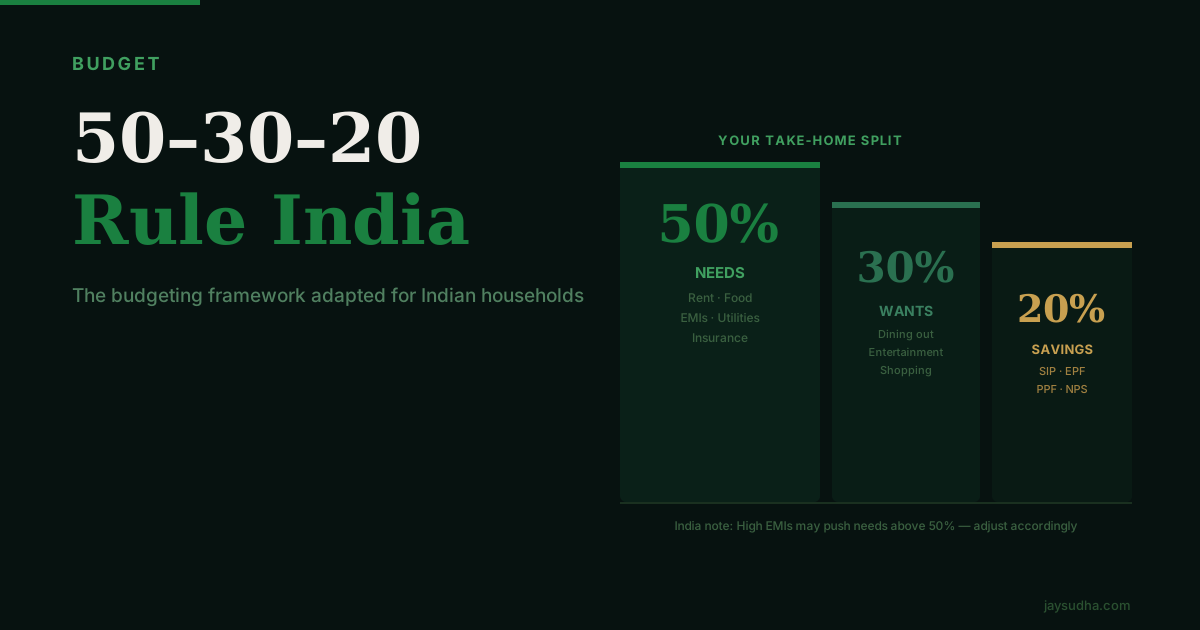
The 50/30/20 Rule: How It Works for Indian Incomes
The 50/30/20 rule is a starting framework for budgeting — but applying it to Indian incomes requires adjustments for EMIs, taxes, and cost of living.

Annual Financial Planning: Setting Goals and Building Your Budget for the Year
A year-end review and next-year plan takes 2-3 hours but shapes every financial decision for the next 12 months. Here's exactly what to cover.

How to Budget After a Job Loss
Losing a job means switching to a survival budget fast. A calm, step-by-step plan to cut to essentials, stretch your emergency fund, and protect what matters.

Budgeting as a Couple: Joint, Separate, or Both?
Joint, separate, or a mix? A clear framework for Indian couples to manage money together, split expenses fairly, and avoid the most common money fights.

Budgeting for a New Baby in India
A practical guide to budgeting for a new baby in India — splitting one-time from recurring costs, planning for delivery, and adjusting the family budget.

How to Budget for an Indian Wedding Without Going Into Debt
Indian weddings are costly and emotional. Set a realistic budget, allocate it across the main categories, and celebrate fully without taking on any debt.

Budgeting for a Home Renovation in India
A home renovation almost always costs more than the first estimate. Build a budget with a real contingency, phase the work, and avoid cost overruns.

Budgeting for Irregular Annual Expenses
Insurance, festivals, school fees, car service — irregular annual expenses wreck budgets. Here is how to turn them into small, manageable monthly amounts.

Budgeting for Medical Expenses and Health Costs
Health insurance covers hospitalisation, but much medical spending falls outside it. Budget for premiums, a health buffer, and the gaps insurance leaves.

Money Management in Your 20s in India
Your 20s are when money habits are cheap to build. A calm guide to managing money early — habits, an emergency fund, and avoiding lifestyle creep in India.

Money Management in Your 30s in India
Your 30s bring family, a home loan, and competing goals at once. How to budget the busiest financial decade — balancing EMIs, children, and investing.

How to Budget on a Low Income in India
Budgeting on a low income is about priorities, not percentages. A judgement-free system to cover essentials, build a safety net, and find breathing room.

Buffer Fund vs Emergency Fund: Why You Might Need Both
Emergency and buffer funds solve different problems. Confusing them leads to under-saving for real emergencies or over-saving in low-yield instruments.

Cash Flow Management: 6 Reliable Systems for Personal and Business Money Control
Cash flow management is about timing and predictability, not just income and spending. Build buffers so money pressure does not run your decisions.

The Conscious Spending Plan, Adapted for India
The conscious spending plan replaces guilt-driven budgeting with deliberate choices. Here is how to adapt the four-bucket framework for Indian incomes.

Cutting Grocery and Food Bills Without Feeling Deprived
Cut your grocery and food delivery bills in India without joyless dieting. Practical tactics on planning, kirana vs online, and curbing food delivery spend.
The Envelope Budgeting System (Digital and Cash)
The envelope budgeting system caps each spending category before the month starts. Here is how to run it with cash, multiple bank accounts, or UPI in India.
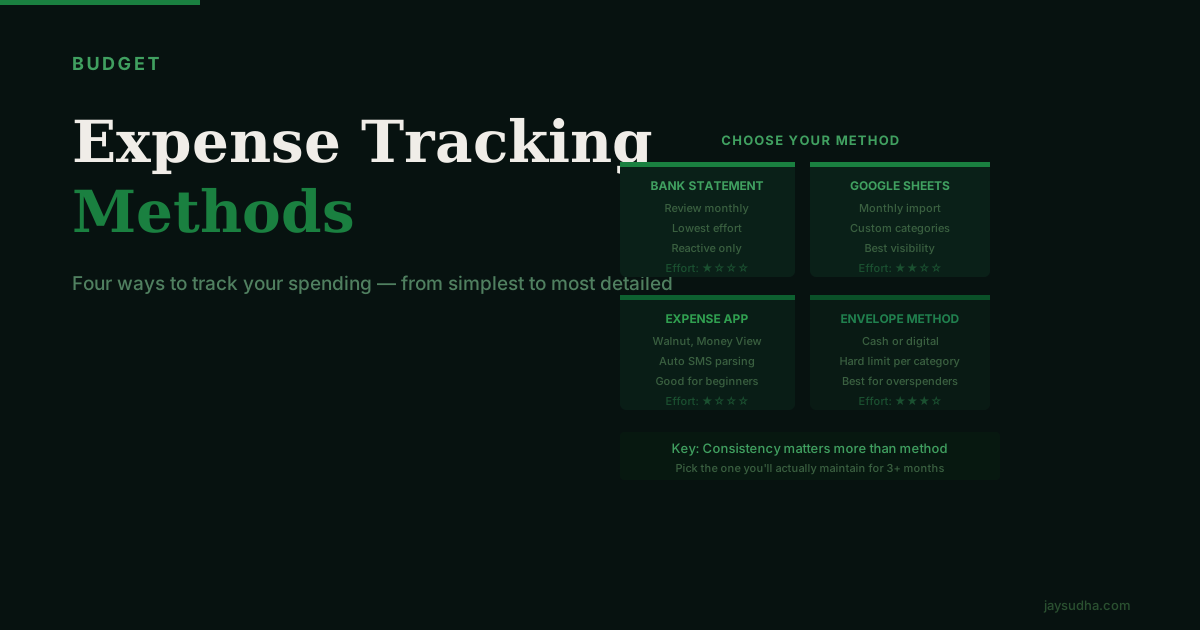
Expense Tracking: Pen and Paper, Apps, or Spreadsheets — Compared
There's no perfect expense tracking method. There's only the one you'll actually use consistently. Here's an honest comparison to help you pick.

Setting Financial Goals India: From Vague Intentions to Funded Targets
How to turn vague financial intentions into specific, time-bound, funded goals — with the monthly savings math and prioritisation for Indian households.
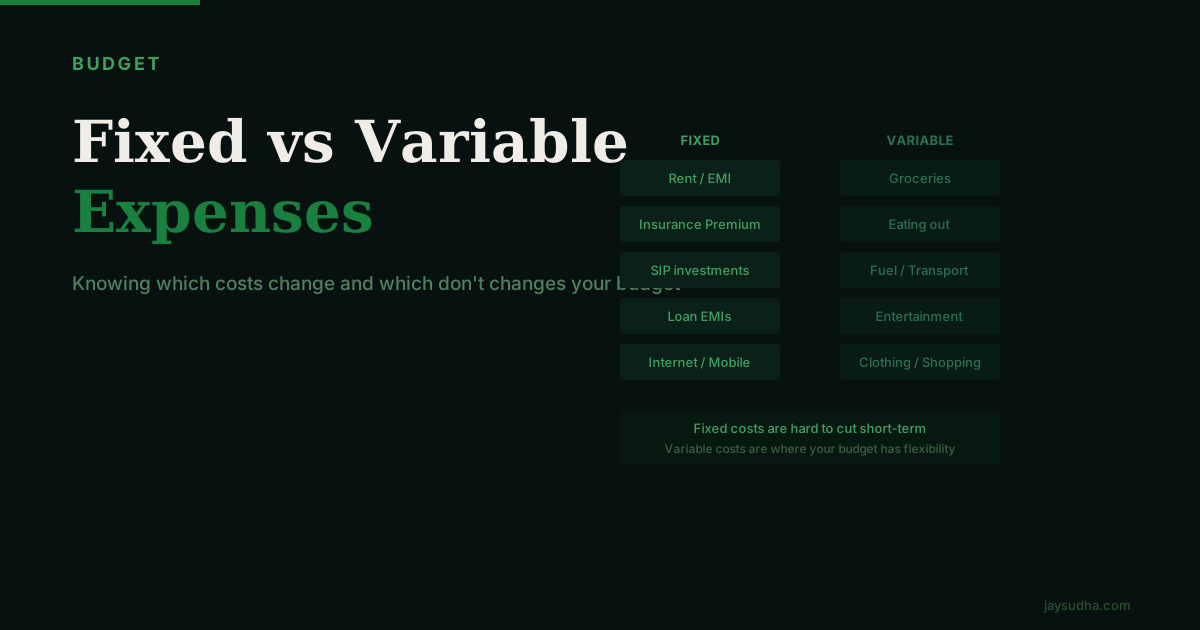
Fixed vs Variable Expenses: The Structure Behind Your Spending
Understanding which of your expenses are fixed and which vary month to month is the first step to building any budget that works.

How to Build a Cash Flow Statement for Your Household
A household cash flow statement shows exactly where money comes in and goes out. It's more useful than a budget because it reflects what actually happened.

How Much Emergency Fund Do You Actually Need?
The '3-6 months of expenses' rule is a starting point, not an answer. How to calculate the right emergency fund for your situation, with India in mind.

How to Save for a House Down Payment in India
A house down payment is far more than 20% of the price. Calculate the real number, set a realistic timeline, and save for it without derailing your money.
How to Stop Impulse Spending: A Practical System
Impulse spending is a design problem, not a willpower one. A practical system to stop unplanned buys, beat one-click triggers, and keep your budget intact.

How to Use Your Annual Bonus Wisely
An annual bonus can move your finances forward fast, or vanish into spending. A calm way to split it between debt, investing, and one deliberate reward.

Lifestyle Inflation India: How Income Growth Gets Absorbed Without Wealth Growth
Why salaries grow but savings don't — lifestyle inflation explained, how it compounds silently, and the practical fix to keep wealth growing alongside income.

What to Do With Your Money After a Salary Hike
A salary hike is the easiest money to save, if you act fast. A plan to split a raise so it builds real wealth instead of just a more expensive lifestyle.
Money Management for College Students in India
A practical money guide for Indian college students — budgeting an allowance, managing part-time income, avoiding debt traps, and building habits that last.
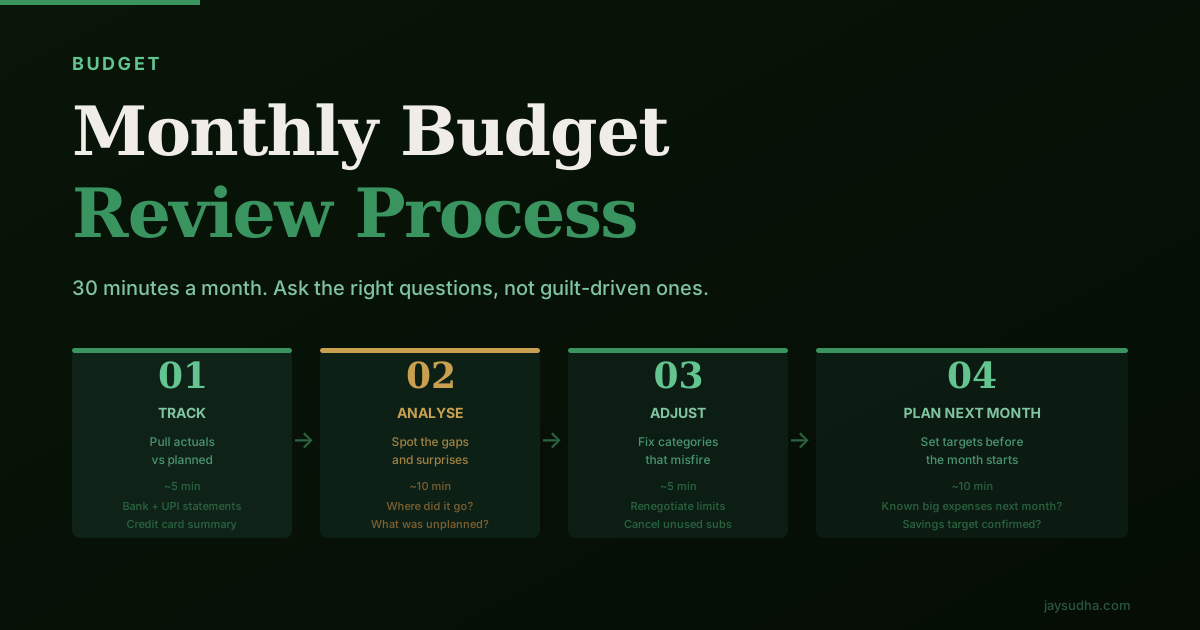
A Monthly Budget Review That Actually Works
Most budget reviews fail by asking the wrong questions. A practical 30-minute process for reviewing your money monthly, built around decisions not guilt.
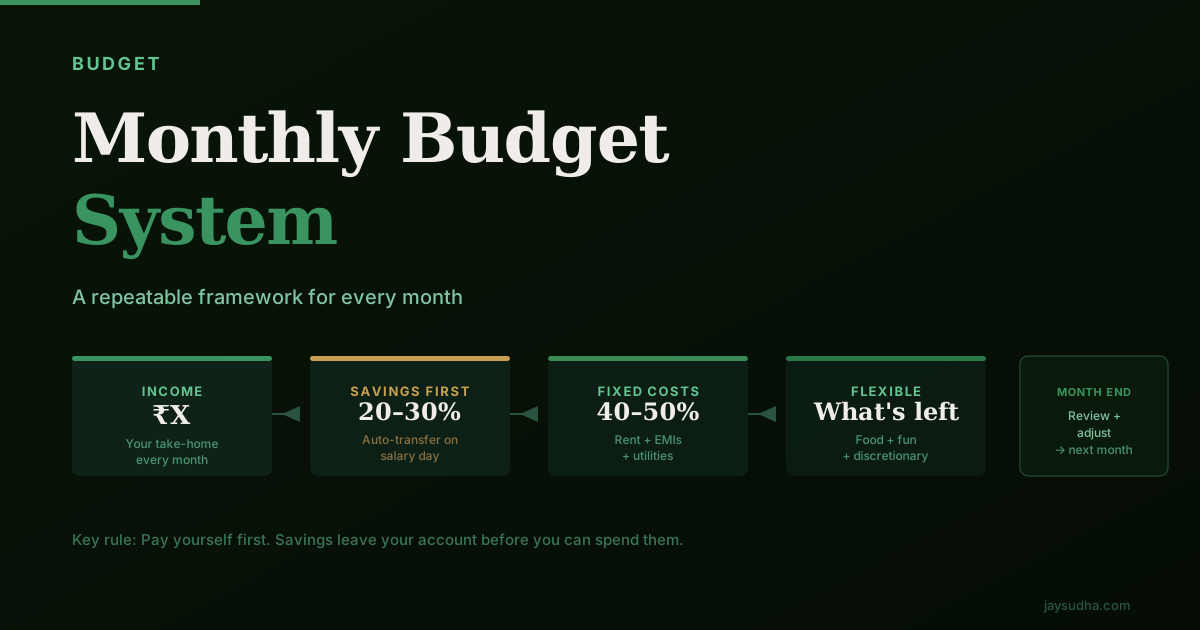
Monthly Budget System: 8 Practical Steps for Better Cash Flow Control
A monthly budget system that works is not about cutting everything. It is about designing money flow so savings happen first and spending is predictable.

Needs vs Wants: A Framework That Holds Up Under Pressure
The needs vs wants line blurs exactly when money is tight. A framework that holds up under pressure, with a clear test for sorting household expenses.

The No-Spend Challenge: What It Is, How to Run One, and What to Do With the Savings
A no-spend challenge is not about deprivation — it is a structured way to spot mindless spending and redirect that money. How to run one well in India.

Breaking the Paycheck-to-Paycheck Cycle India: What Is Actually Keeping You Stuck
Why the paycheck-to-paycheck cycle persists even at high salaries, the structural triggers that maintain it, and a step-by-step approach to breaking out.

Budgeting in Retirement: Making the Corpus Last
Retirement budgeting turns a fixed corpus into a lifelong income. How to set a safe withdrawal rate, bucket your money, and make savings last for decades.
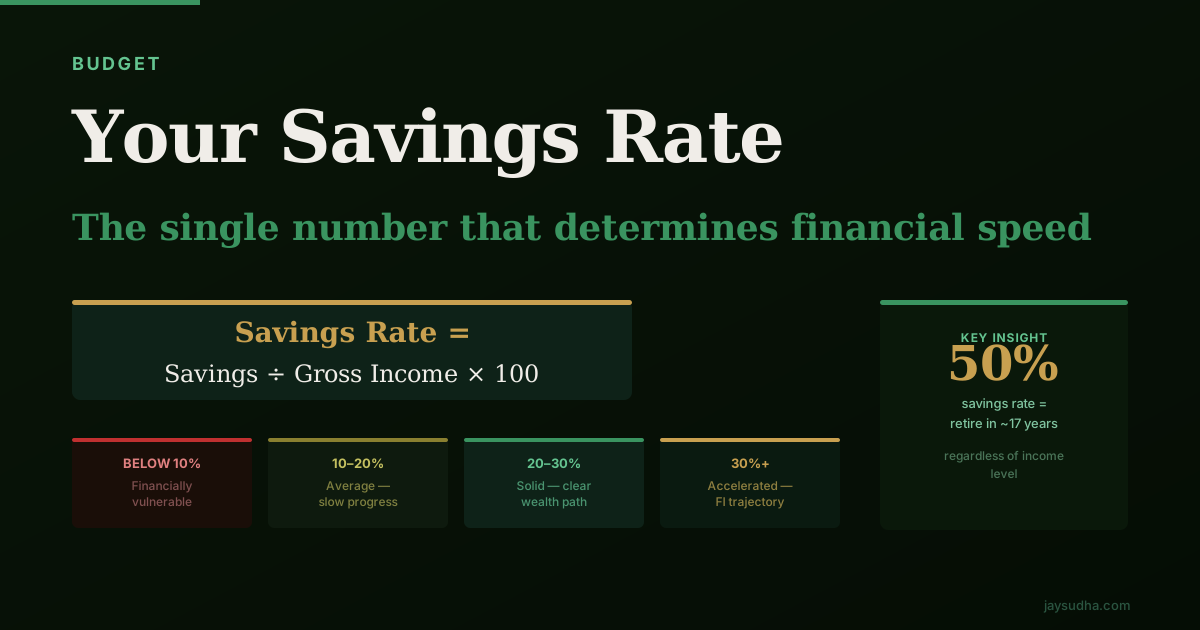
Savings Rate: 7 Key Principles That Determine How Fast Your Wealth Grows
Your savings rate is the most controllable driver of long-term wealth. How to calculate it, what a good rate looks like in India, and how to improve it.

Budgeting for a Single-Income Family
Running a household on one income means thinner margins and one point of failure. How to budget with a larger buffer, protected savings, and resilience.

Sinking Funds: The Budgeting Trick That Ends Money Surprises
A sinking fund turns big, irregular bills into small monthly amounts. Set them up so insurance, festivals, and repairs never blow up your budget again.

The Spending Audit: How to Review 3 Months of Expenses and Find What to Cut
A practical method to audit three months of bank and card statements, categorise spending, and decide what to keep, reduce, or cut for Indian households.
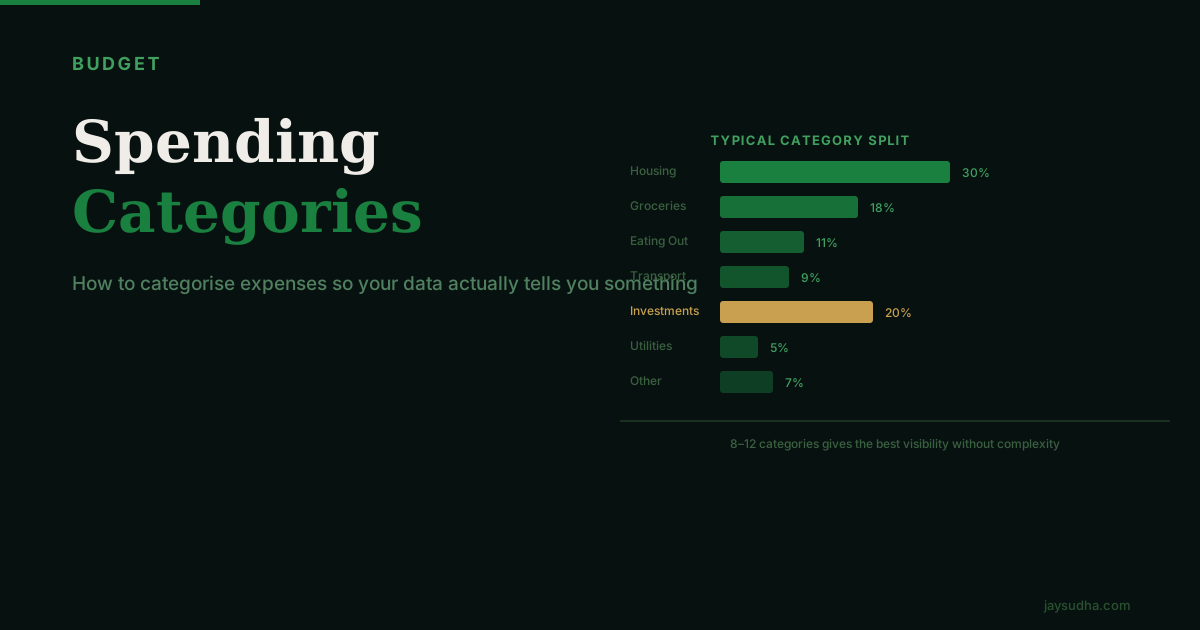
How to Categorise Your Expenses and What the Data Tells You
Categorising expenses is the foundation of every working budget. Learn which categories to use, how to handle tricky transactions, and what spending shows.

Subscription Audit: How to Find and Cut the Recurring Costs You Forgot About
Most households pay for 5-10 subscriptions they barely use. A structured process to find them, evaluate each one, and cut what does not earn its keep.
How to Budget for Travel and Vacations in India
A vacation should not arrive on a credit-card bill. How to budget for travel with a dedicated sinking fund, a realistic trip estimate, and no debt.
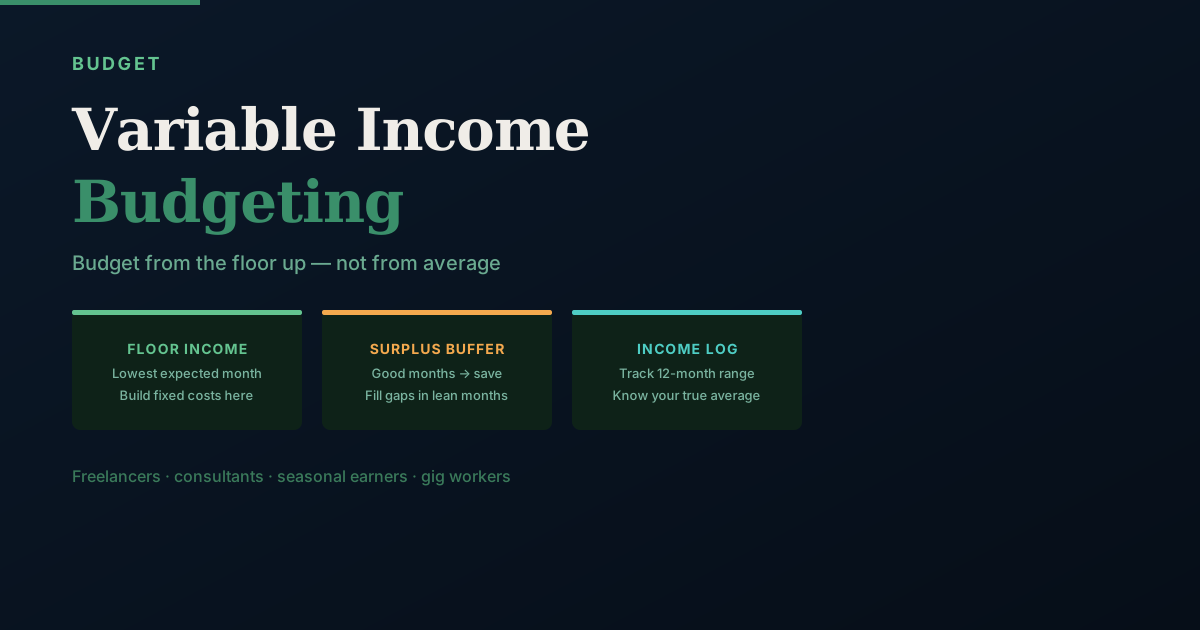
Budgeting on Variable Income India: A System for Freelancers and Self-Employed
How to build a budget that works when income changes month to month — the floor income method, income smoothing, and advance tax for Indian freelancers.
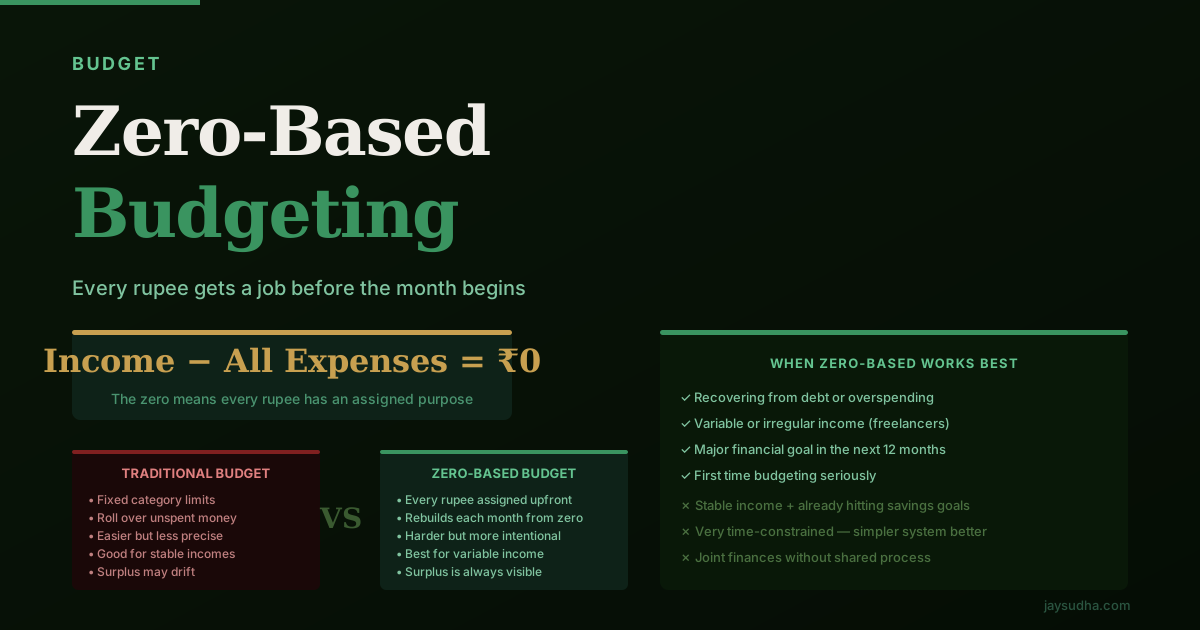
Zero-Based Budgeting: What It Is and When It Works
Zero-based budgeting assigns every rupee a purpose before the month starts. The method, its trade-offs, and where it beats simpler budgeting approaches.

Balance Transfer Credit Cards: When They Help and When They Don't
A balance transfer moves high-interest debt to a lower-rate card. It works — if you understand the fees, the window, and what it demands of your behaviour.

Balance Transfer vs Personal Loan for Clearing Debt
Balance transfer or personal loan to clear credit card debt? Compare cost, tenure, and risk with Indian numbers to pick the cheaper, safer route.
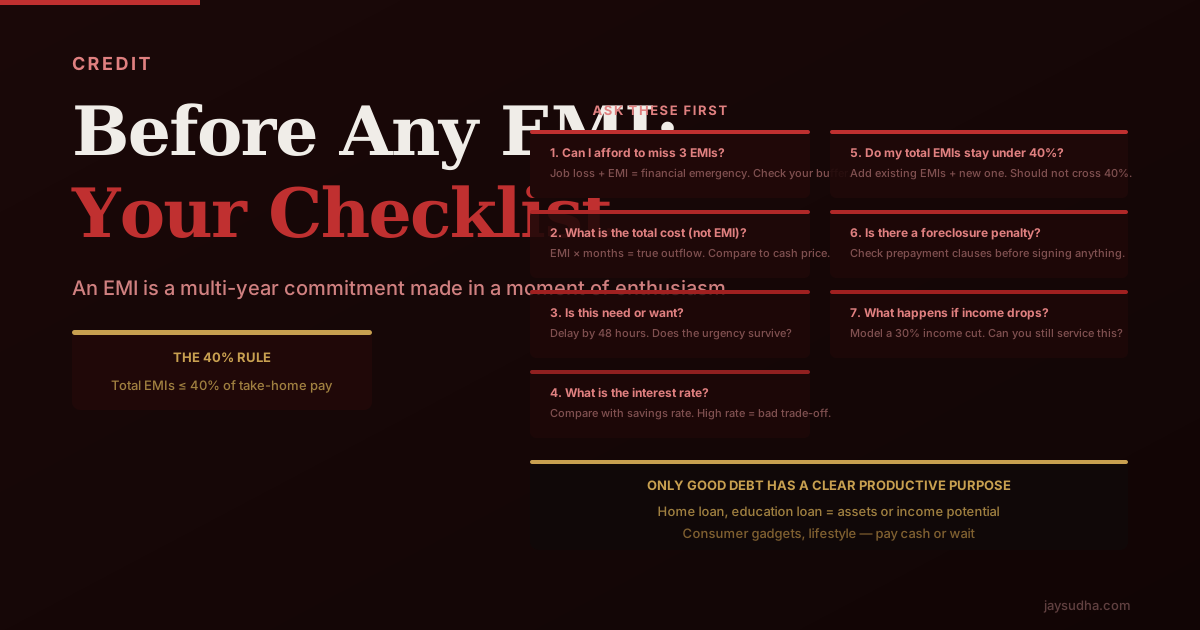
The Checklist Before You Take Any EMI
An EMI is a multi-year commitment made in a moment of enthusiasm. These are the questions worth asking before you sign — not after.

Buy Now Pay Later in India: The Hidden Costs
BNPL feels free at checkout, but it is credit — reported to bureaus, with steep late fees and a quiet pull on your score. Here is what really happens.

Car Loan vs Paying Cash: The Real Math
Car loan or pay cash for a car in India? This guide runs the real numbers on interest, opportunity cost, and depreciation so you decide with eyes open.

Co-Applicant vs Guarantor: What You're Really Signing Up For
Co-applicant and guarantor are not the same. Both put your money and CIBIL score at risk. This guide explains the difference and what you actually take on.

How a Credit Card Billing Cycle Actually Works
Understand your credit card billing cycle, statement date, due date, and grace period in India so you maximise interest-free days and avoid interest.
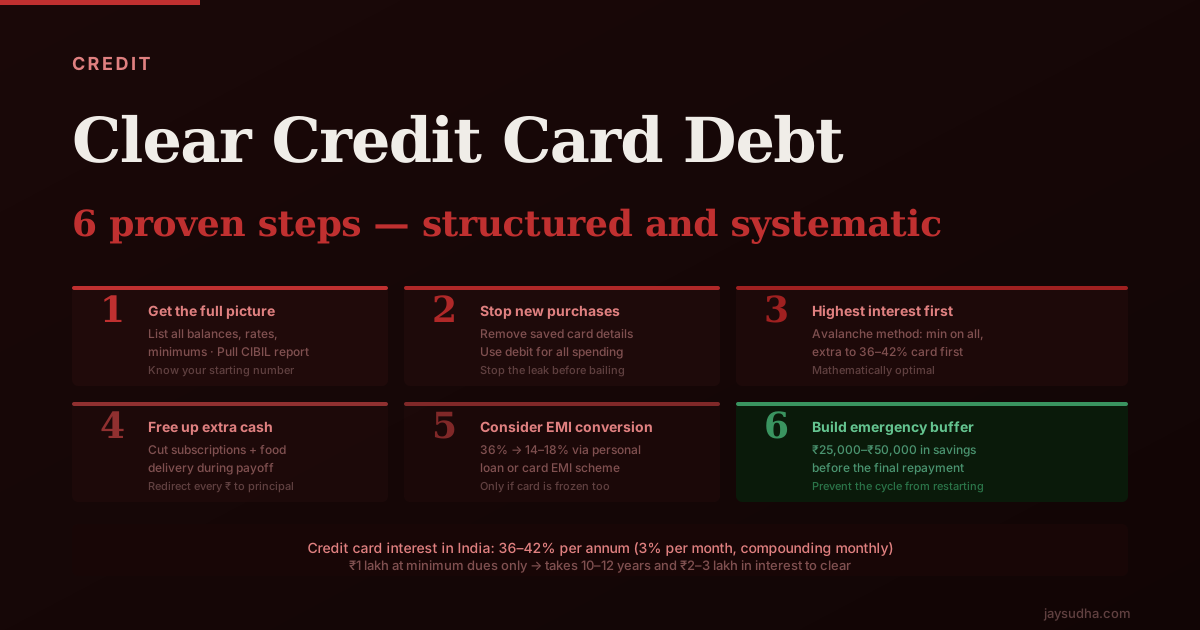
Credit Card Debt Strategy: 6 Proven Steps to Clear Debt Without Panic
Credit card debt is dangerous, but a structured repayment plan clears it. Here is how to pay it off systematically and avoid falling back into it.

Credit Card EMI vs Personal Loan: Which Is Cheaper?
Converting a credit card purchase to EMI feels easy, but a personal loan may cost less. Compare the real rates, fees, and hidden charges with worked examples.

Credit Card Rewards in India: How They Work and How to Value Them
Credit card rewards have real value, but only when you pay in full and avoid interest. How to calculate the net benefit and pick a card sensibly.

Rebuilding Your Credit Score After a Loan Settlement
A loan settlement marks your credit report 'settled' for years. Here is how to recover: convert to closed if you can, then rebuild with disciplined credit.
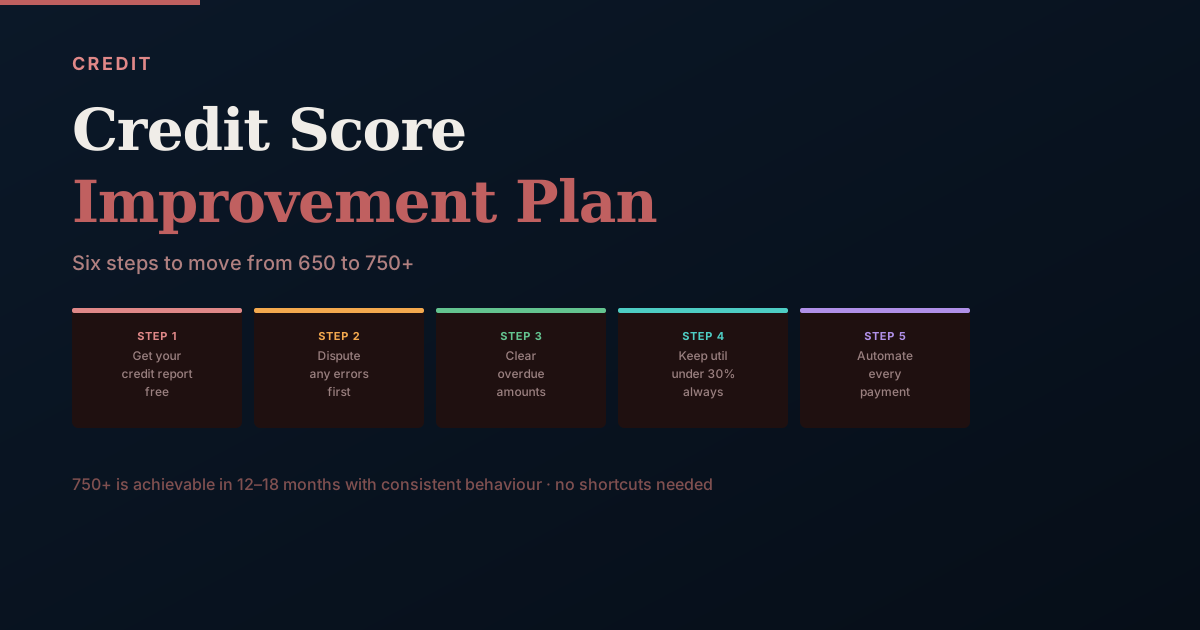
Credit Score Improvement Plan: A Step-by-Step Guide
Improving your credit score is straightforward once you understand what it's built from. No tricks — just fixing what's dragging it down.

Credit Score in India: 7 Critical Factors That Shape Your Borrowing Power
Your credit score in India shapes loan approvals, interest rates, and terms. Learn what it means, what affects it, and how to build it correctly.

7 Credit Score Myths That Are Quietly Costing You
Believing the wrong things about your CIBIL score leads to costly decisions. Here are 7 common Indian credit score myths debunked, with what is actually true.
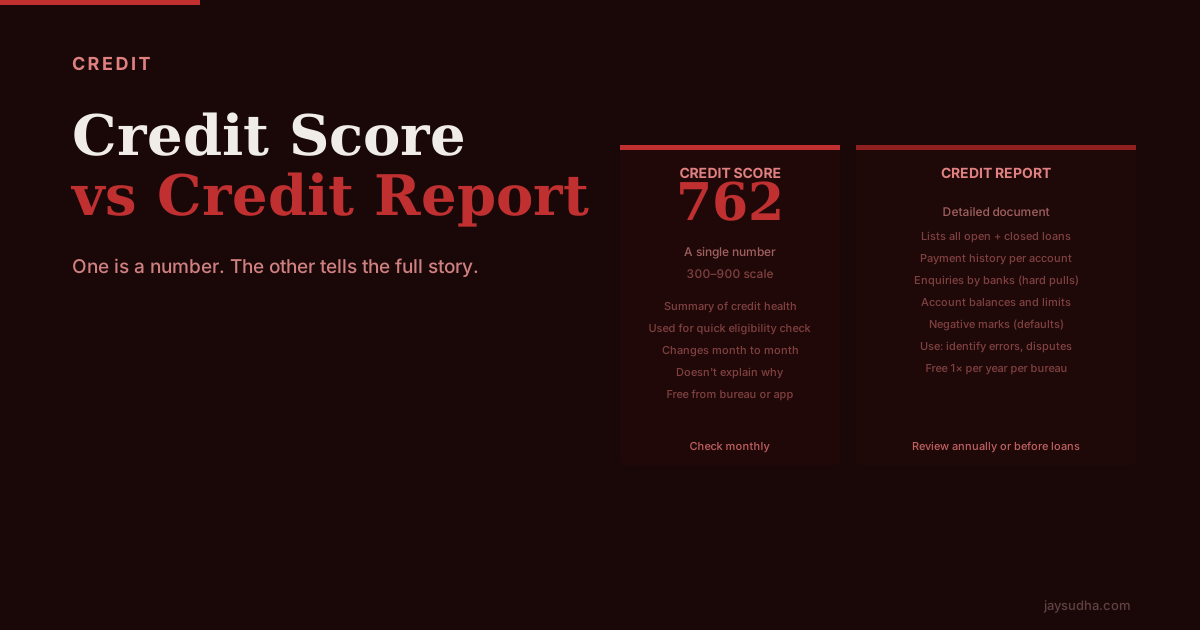
Credit Score vs Credit Report: What's the Difference and Why Both Matter
A credit score is a number. A credit report is the full story. Both matter when you apply for a loan — here's how they work together.
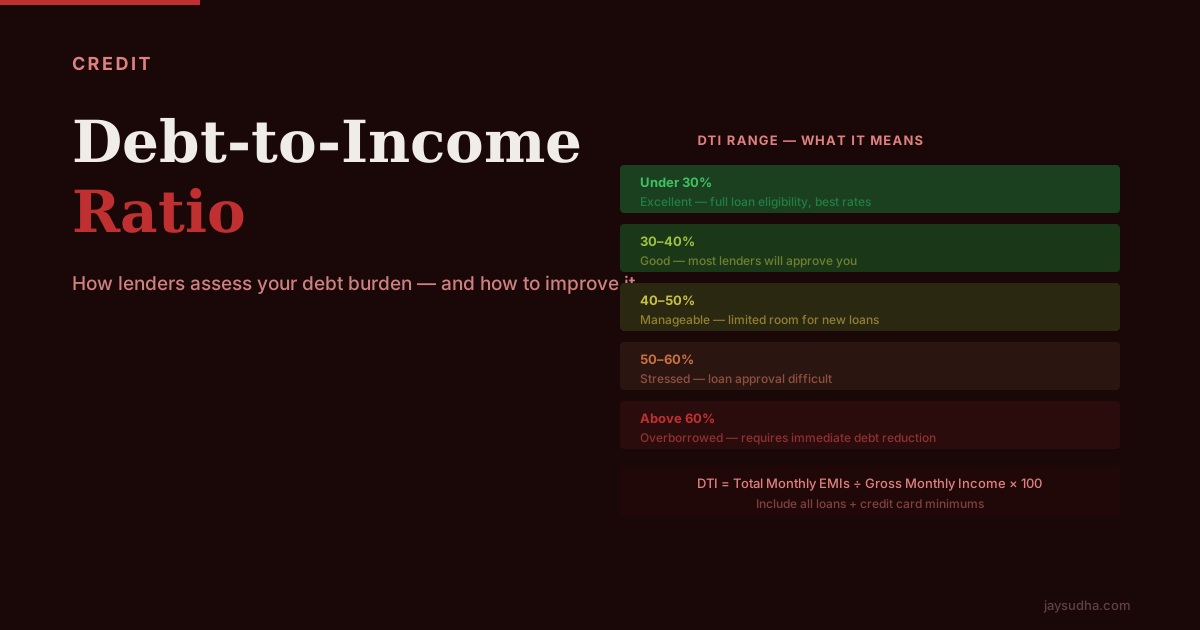
Debt-to-Income Ratio: What It Is and Why Banks Use It for Loan Approval
Banks calculate your debt-to-income ratio before approving any loan. Understand what it means, how it's calculated, and what a healthy ratio looks like.
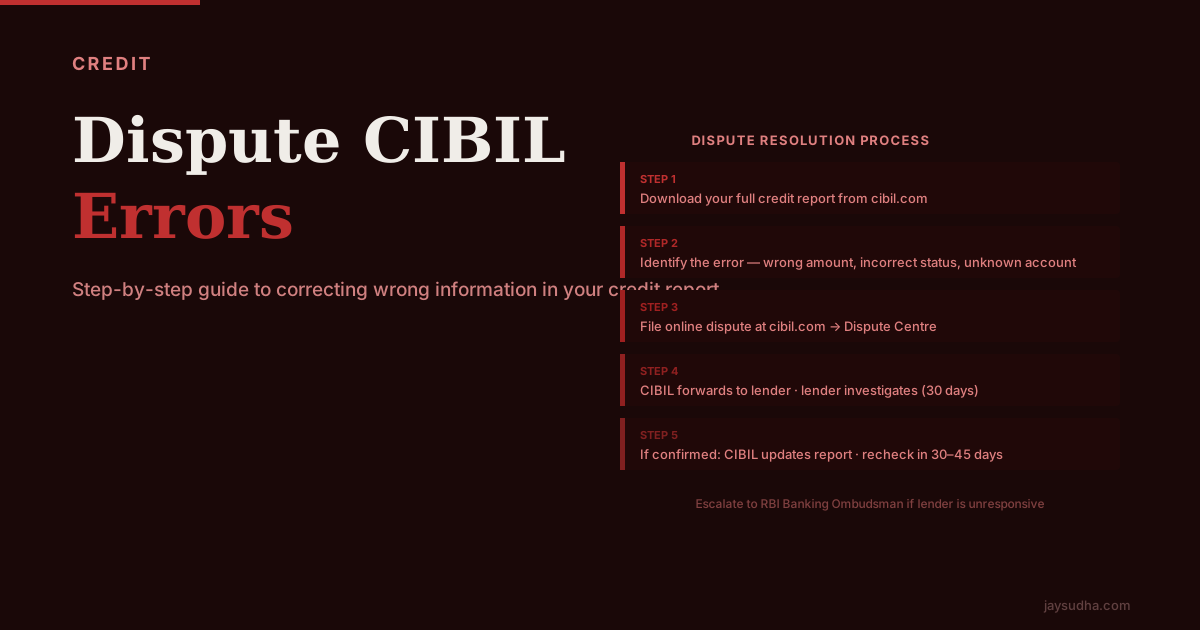
How to Dispute Errors on Your CIBIL Report (Step by Step)
Credit report errors are more common than people realise. Here's the exact process to dispute incorrect entries and get them corrected.

Education Loan in India: Costs, Tax Benefits, Repayment
A clear guide to education loans in India — interest rates, collateral, the Section 80E tax deduction, moratorium periods, and how to repay without strain.
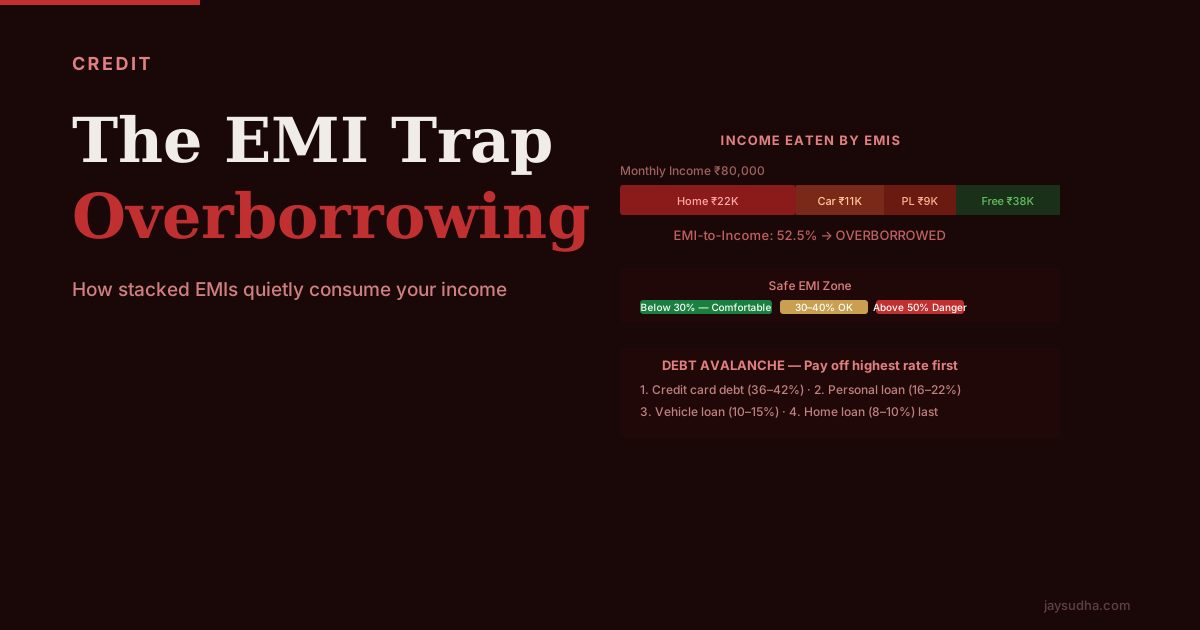
The EMI Trap: When Monthly Installments Become a Debt Burden
EMIs feel affordable alone but stack up across loans and cards. Learn to calculate your true debt burden, spot overborrowing, and find a way out.

How to Get Your Free Credit Report in India From All Four Bureaus
Every Indian is entitled to one free credit report per year from each bureau. Here's exactly how to get them and what to look for.

Gold Loan in India: Costs, Risks, and When It Makes Sense
A gold loan unlocks fast cash against your jewellery, but the convenience hides real costs and auction risk. Here is how to use one without losing your gold.
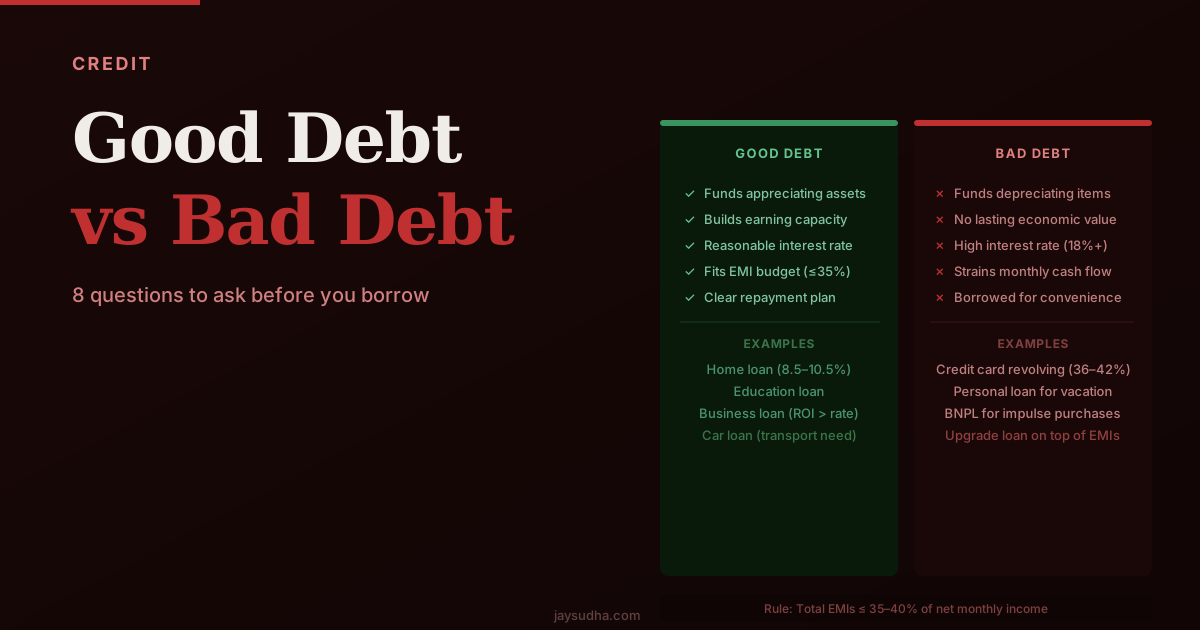
Good Debt vs Bad Debt: 8 Questions to Ask Before You Borrow Money
Not all debt is equal. Understanding good debt vs bad debt in India helps you make borrowing decisions with clarity, before you sign and regret it.

Guarantor Risks in India: What You're Actually Agreeing To
Signing as a loan guarantor means you're fully liable if the borrower defaults. Before signing, understand exactly what you're taking on.

Home Loan Balance Transfer: When It Saves You Lakhs
A home loan balance transfer moves your loan to a cheaper lender. Done at the right time it saves lakhs; done late it barely helps. Here is the real math.

Home Loan Eligibility: What Banks Actually Look At Before Approving
Banks check more than income before a home loan. Learn the six factors that decide your eligibility, how to improve each, and what you can expect.
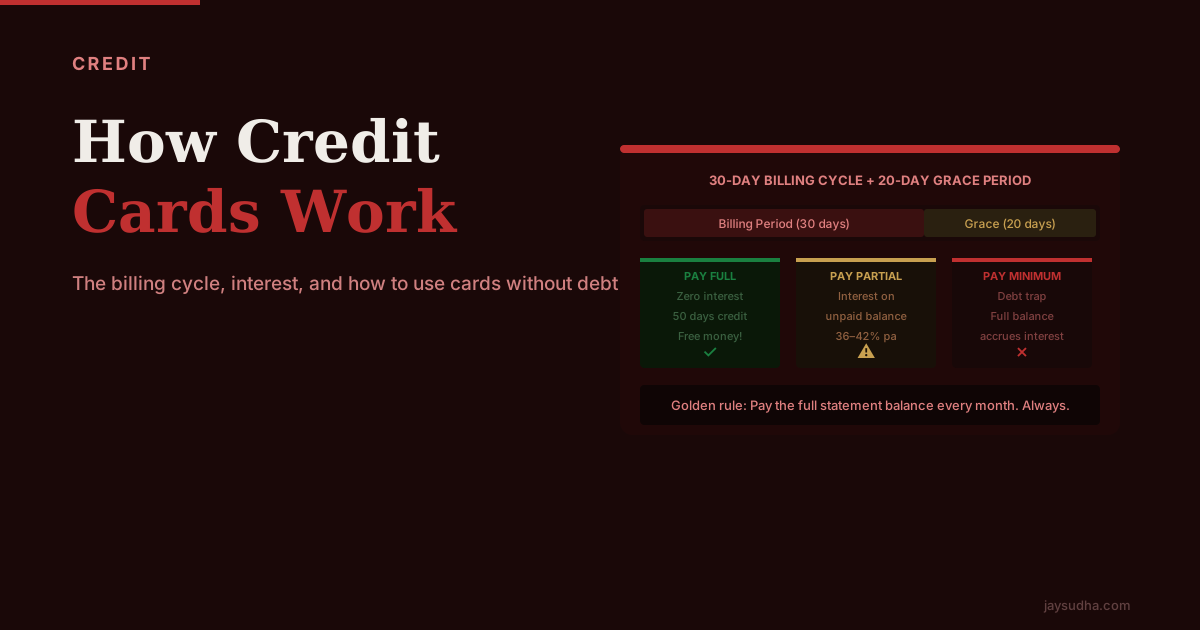
How Credit Cards Work: Billing Cycles, Interest, and What First-Time Users Need to Know
Credit cards are useful tools if you understand how billing, interest, and credit limits actually work. Here's the complete picture for Indian users.

How Your CIBIL Score Is Calculated — and What Actually Moves It
Your credit score is a formula with specific inputs. Knowing them tells you which levers to pull and which common money myths you can safely ignore.

How Credit Utilization Affects Your Credit Score
Credit utilization is a top factor in your CIBIL score. Learn how it is calculated, what the thresholds mean in India, and how to manage it well.

How Many Credit Cards Should You Actually Have?
There is no magic number of credit cards. The right count depends on your discipline, spending, and credit goals. Here is how to decide what is right for you.

How to Build a Credit Score From Scratch in India
No credit history makes loans hard to get, yet you cannot build history without credit. Here is the exact step-by-step path to a strong CIBIL score from zero.

How to Close a Credit Card Without Hurting Your Score
Closing a credit card can quietly drop your CIBIL score by raising utilisation and cutting history. This guide shows how to close one safely, step by step.

Loan Against Mutual Funds and Shares in India
A loan against mutual funds or shares lets you borrow without selling your investments. Learn how the pledge, LTV, and margin calls work before you use it.

Loan Against Property: Cheap Credit With High Stakes
A loan against property offers large amounts at low rates by pledging your home or shop. Here is how it works, what it costs, and the risk you must respect.

Loan Foreclosure and Prepayment Charges: What to Know Before You Pay Off
Paying a loan off early saves interest, but prepayment and foreclosure charges can eat the savings. Here is how the rules and the math really work.

Loan Prepayment Strategy: When and How to Pay Off Debt Early
Prepaying a loan saves interest but only makes sense after checking prepayment charges, tax benefits lost, and opportunity cost of that money.

The Credit Card Minimum-Due Trap, With the Numbers
Paying only the minimum due on a credit card can take years to clear and cost more than you spent. Here is the trap, with full Indian numbers shown.

NBFC vs Bank Loans: What's the Real Difference?
NBFCs approve faster and lend to thinner profiles; banks are cheaper and tightly regulated. Understand the real trade-offs before you pick where to borrow.

Personal Loan vs Credit Card India: When to Use Which and the Real Cost Difference
Compare personal loan (10–24% p.a.) vs credit card (36–42% p.a.) costs in India. Learn when each makes sense and how each affects your CIBIL score.

Secured Credit Cards: Building Credit From Zero
A secured credit card backed by a fixed deposit is the most reliable way to build a CIBIL score from scratch in India. Here is how to use one well.

Secured vs Unsecured Loans: Key Differences and When Each Makes Sense
Secured loans need collateral like property or gold; unsecured loans rely on your creditworthiness. Knowing the difference helps you borrow smarter.

CIBIL, Experian, Equifax, CRIF: India's Four Credit Bureaus
India has four RBI-licensed credit bureaus, not just CIBIL. Learn how they differ, why your scores vary, and why you should check all four every year.

Top-Up Loan on Your Home Loan: Cheap Credit or Trap?
A top-up loan rides on your existing home loan at a low rate. It is cheaper than a personal loan, but it stretches debt against your house. Here is the math.

Two Credit Cards Strategy: How to Use Multiple Cards Wisely
Two credit cards, used correctly, lower utilisation, maximise rewards, and build credit. Used carelessly, they double the risk.

Advance Tax When You Have Salary Plus Side Income
Your employer's TDS covers salary, but freelance, rent and capital gains slip through. Here is how salaried people with side income calculate advance tax.
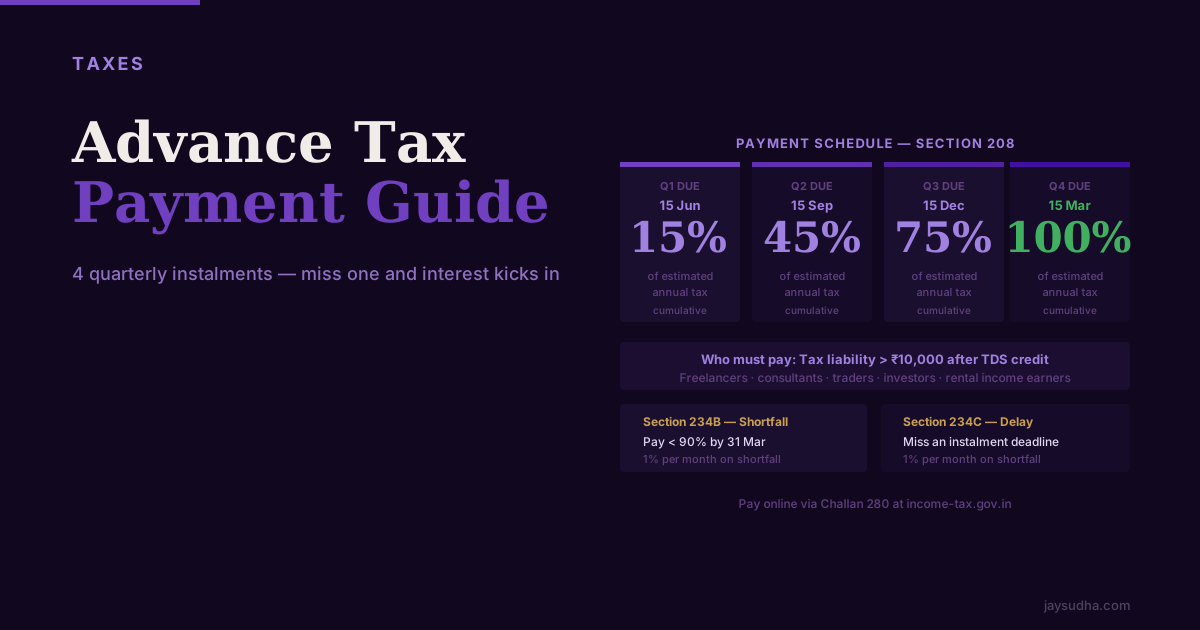
Advance Tax: Who Needs to Pay It, When, and How
If annual tax exceeds ₹10,000 after TDS, you must pay advance tax in quarterly instalments. Missing them attracts interest under Sections 234B and 234C.
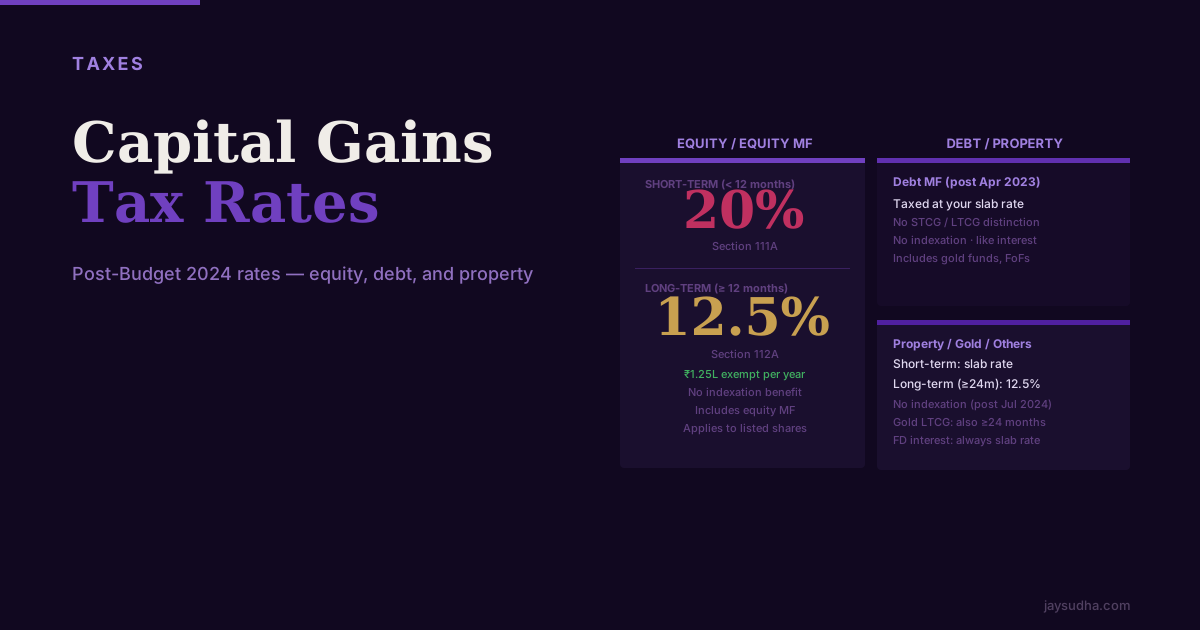
Capital Gains Tax in India: What You Owe When You Sell Investments
Selling shares, mutual funds or property triggers capital gains tax. Learn how STCG and LTCG work by asset type, current rates, and how to plan for them.
Crypto Tax in India: The 30% Rule and 1% TDS Explained
Crypto and other virtual digital assets are taxed at a flat 30% with no loss set-off and a 1% TDS. Here is how it works for FY 2025-26 in India.
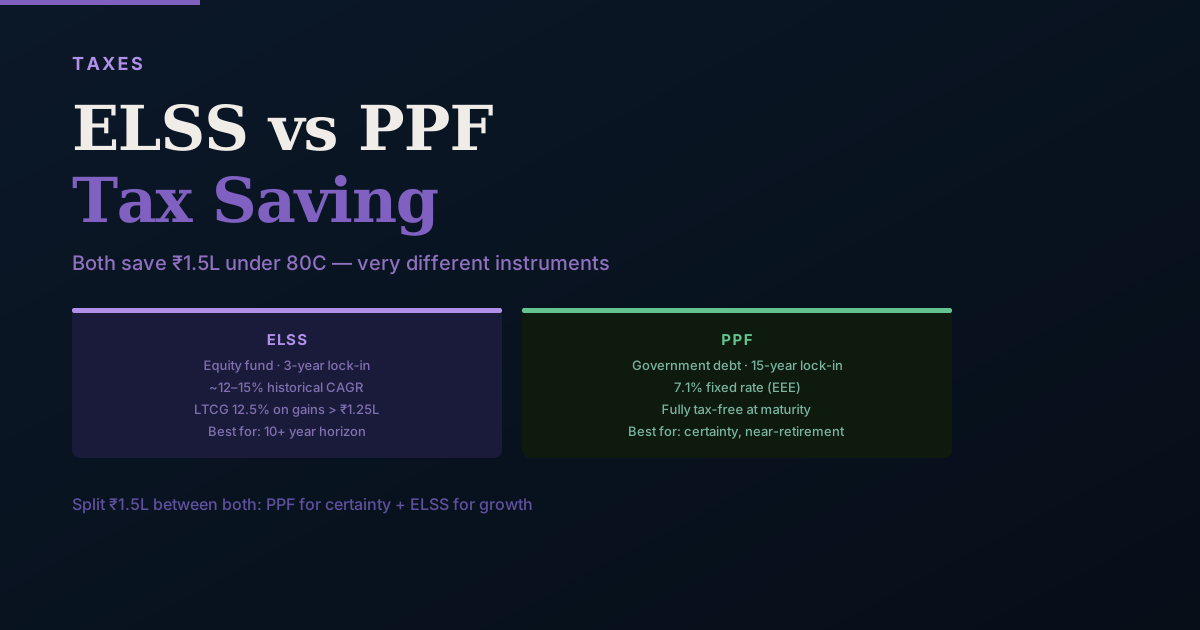
ELSS vs PPF: Which Tax-Saving Investment Should You Choose?
ELSS and PPF both save tax under 80C but are fundamentally different instruments. The right choice depends on your time horizon and return expectations.
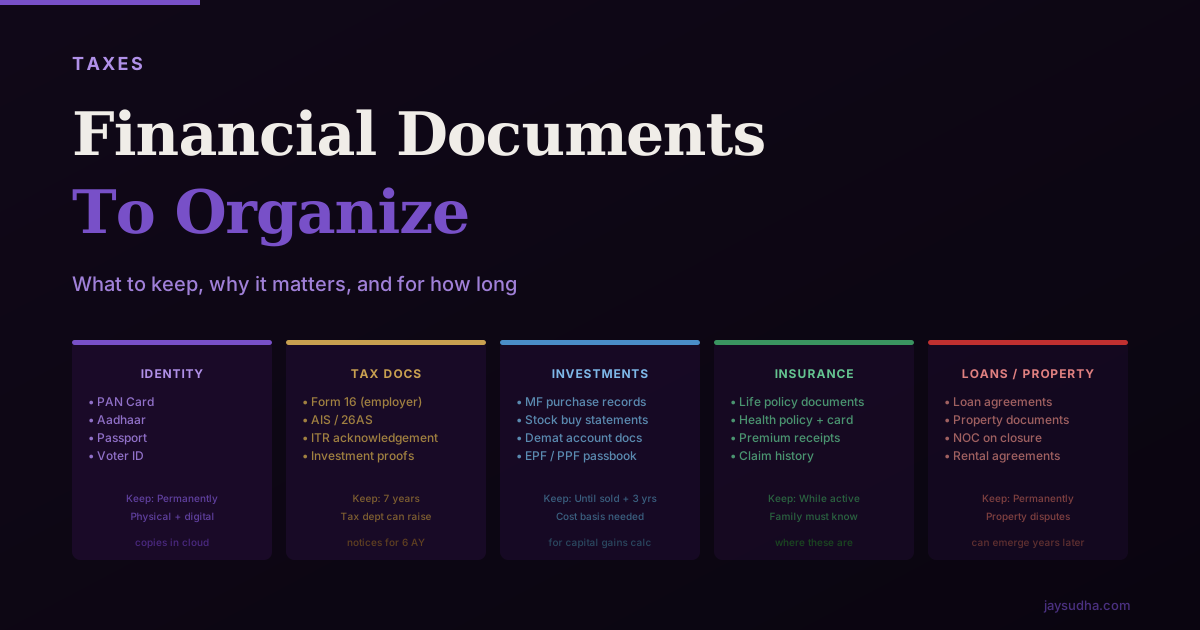
The Financial Documents Every Indian Household Should Keep — and Where to Keep Them
A disorganized document setup delays ITR filings, loses deductions and complicates loans and emergencies. What Indian households keep, why and how long.
Form 15G and 15H: Avoiding Unnecessary TDS
If your income is below the taxable limit, banks should not deduct TDS on your interest. Form 15G and 15H stop it. Here is who can file, when, and how.
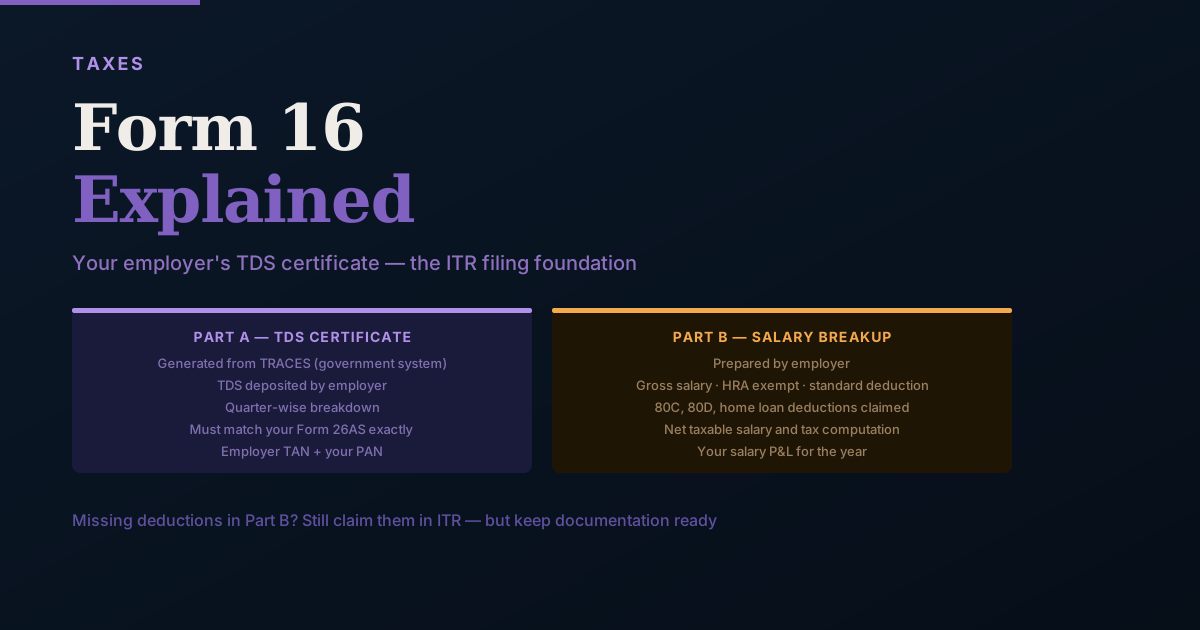
Form 16 Explained: What It Is and How to Use It for ITR Filing
Form 16 is the salary TDS certificate your employer must give you. Understanding its two parts helps you file your ITR accurately and claim deductions.
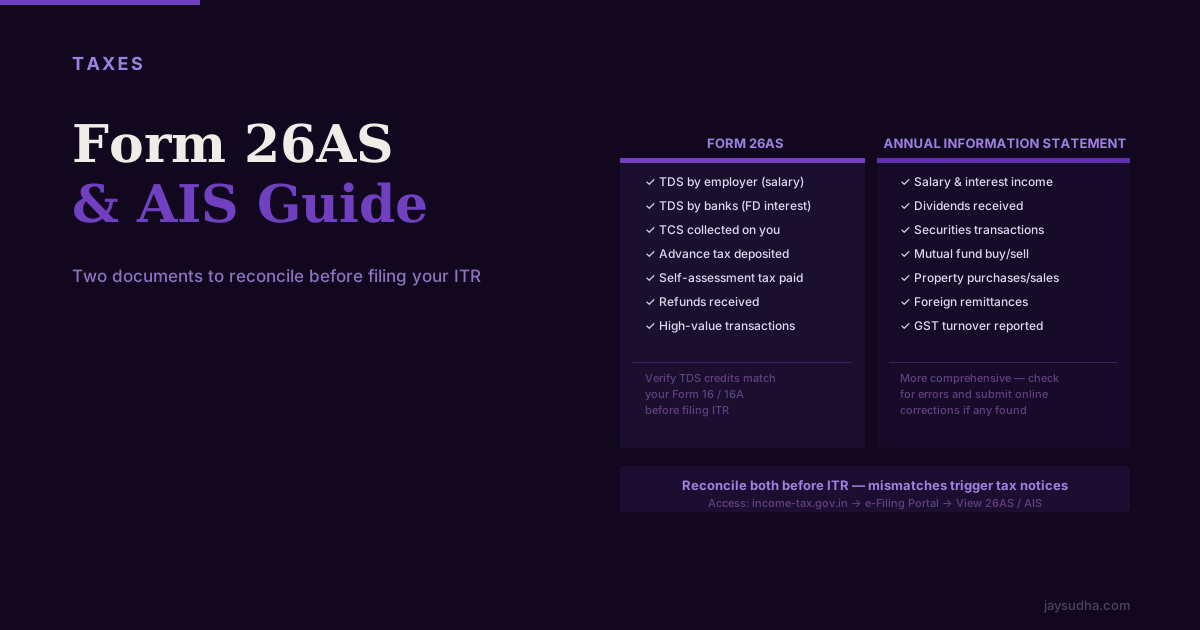
Form 26AS and AIS: Your Tax Credit Statement Explained
Form 26AS shows tax deducted on your behalf; the AIS shows your full financial activity reported to the department. Reconcile both before filing ITR.

Tax on Gratuity and Leave Encashment
Gratuity is exempt up to ₹20 lakh and leave encashment up to ₹25 lakh for private employees. Here is how these exemptions work when you leave a job.
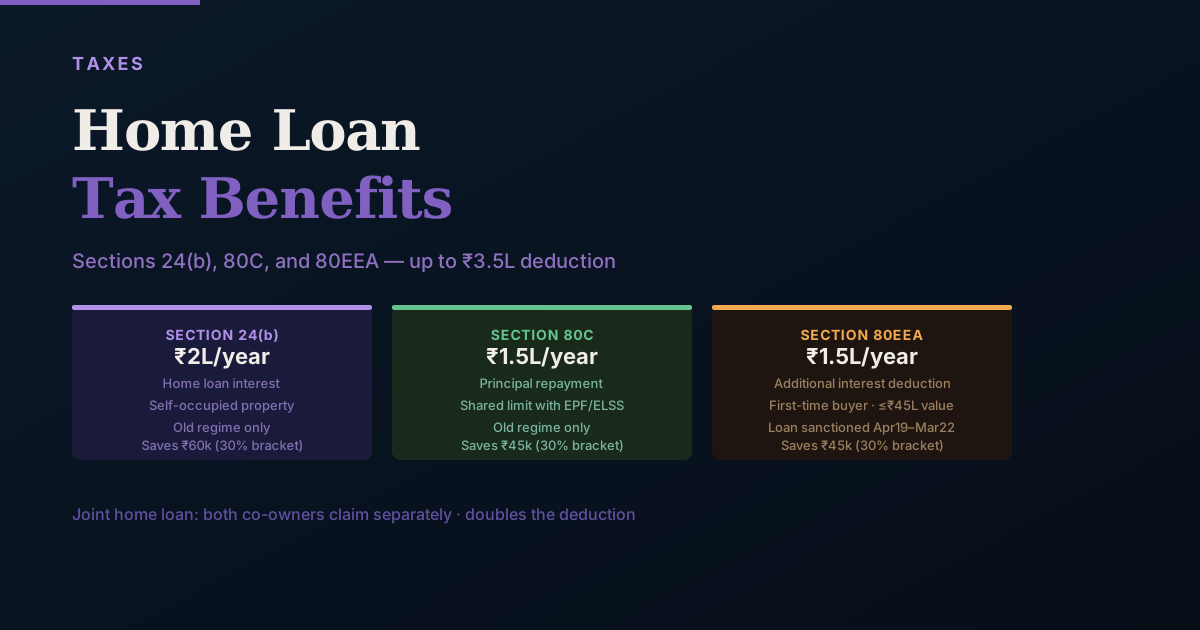
Home Loan Tax Benefits: Sections 24(b), 80C, and 80EEA Explained
A home loan provides tax benefits on both principal and interest payments. Understanding how each section works helps you maximise what you can claim.

How to File Your ITR Online: A Step-by-Step Guide
Filing your income tax return online is simple once you know the steps. A guide to documents, the right form, pre-filled data and e-verification.
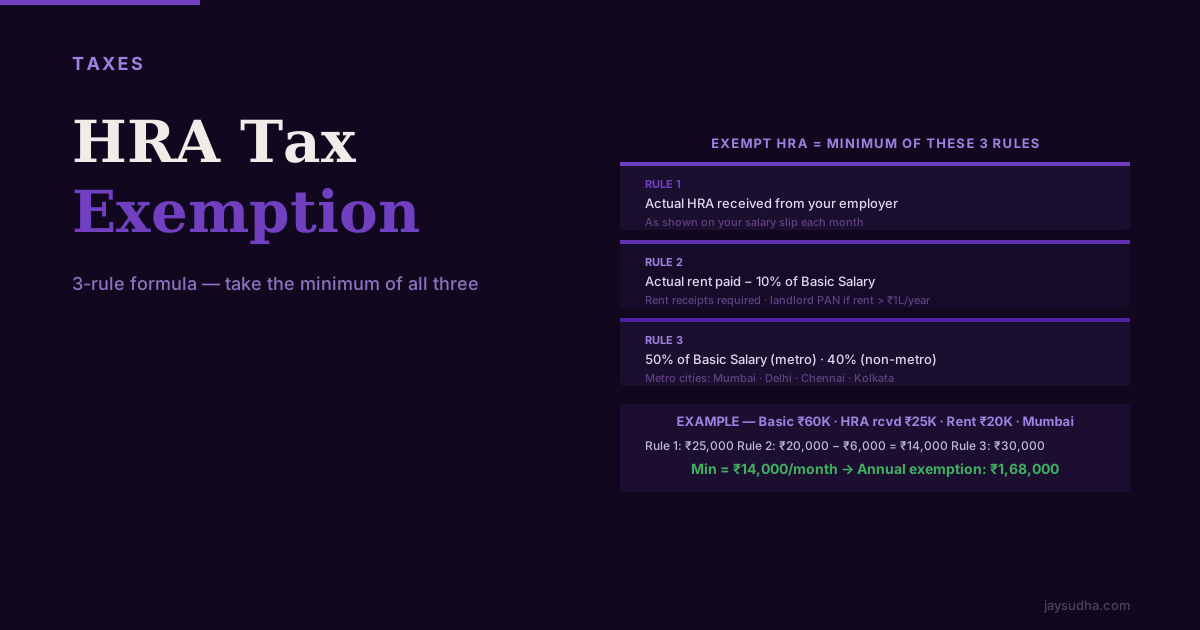
HRA Exemption: How to Calculate It and Maximise What You Keep
House Rent Allowance exemption can cut your taxable income if you pay rent. Learn the formula, the documents required and when HRA does not apply.

HUF: How a Hindu Undivided Family Saves Tax
An HUF is a separate taxpayer with its own PAN and basic exemption. Learn how it works, what income it can hold, the tax it saves, and the rules and pitfalls.
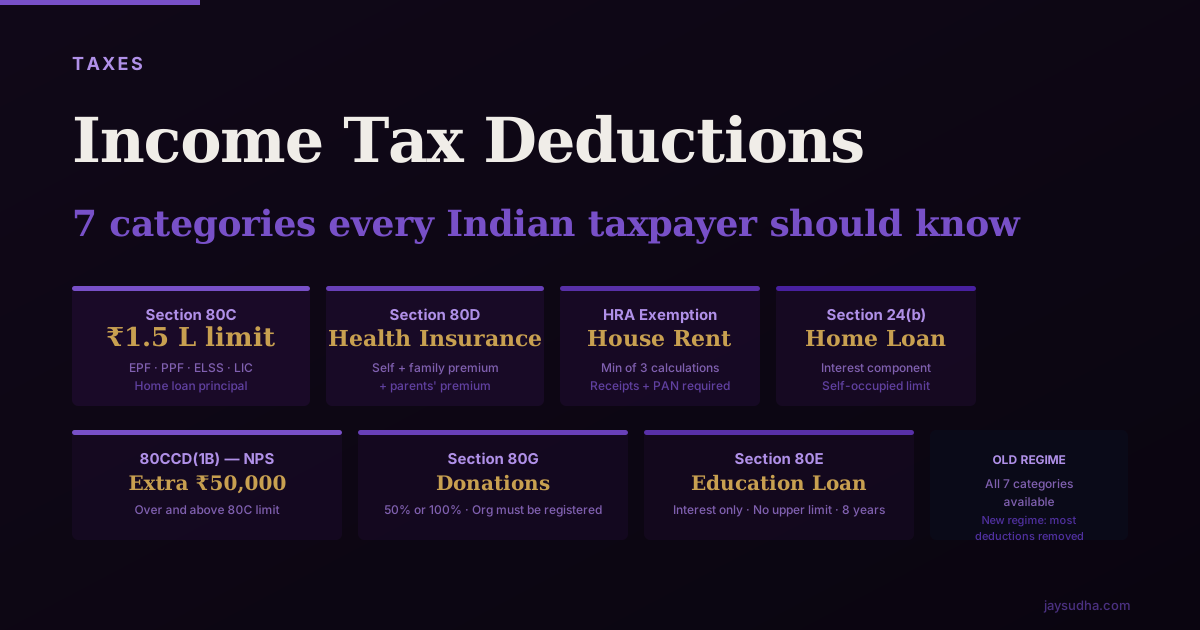
Income Tax Deductions: 7 Categories Every Indian Taxpayer Should Understand
Income tax deductions cut your taxable income legally. A clear guide to the major deduction categories under the old regime for Indian taxpayers.
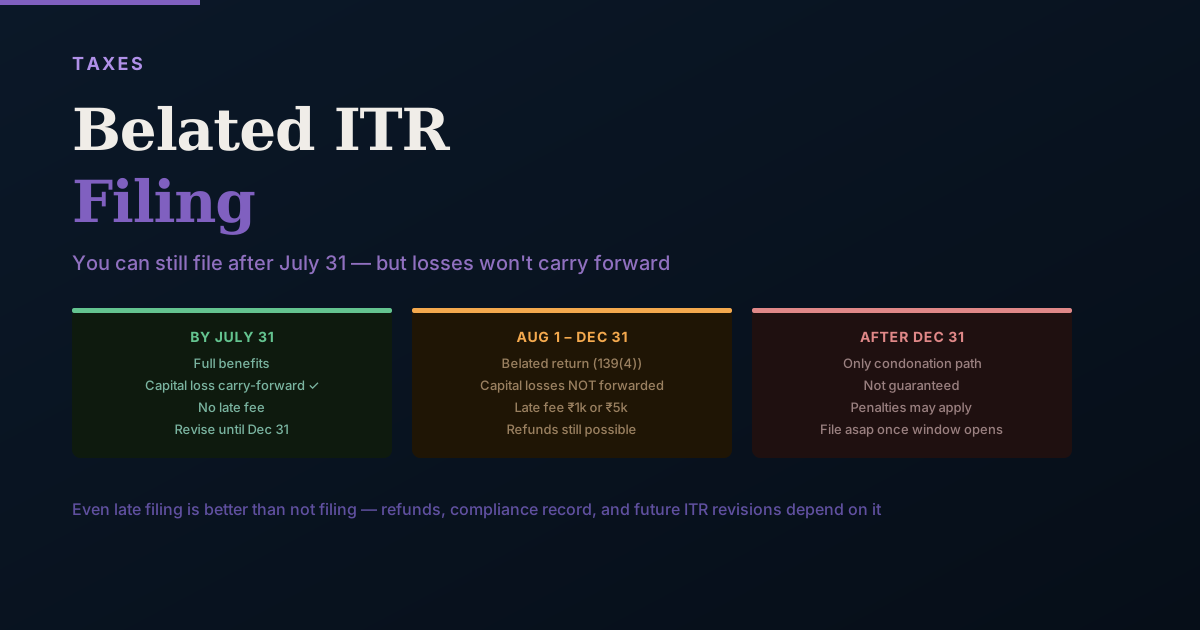
Belated ITR Filing: What You Lose and How to File After July 31
You can file your income tax return after the July 31 deadline, but you lose some rights and pay a late fee. Here is what changes and how to file.
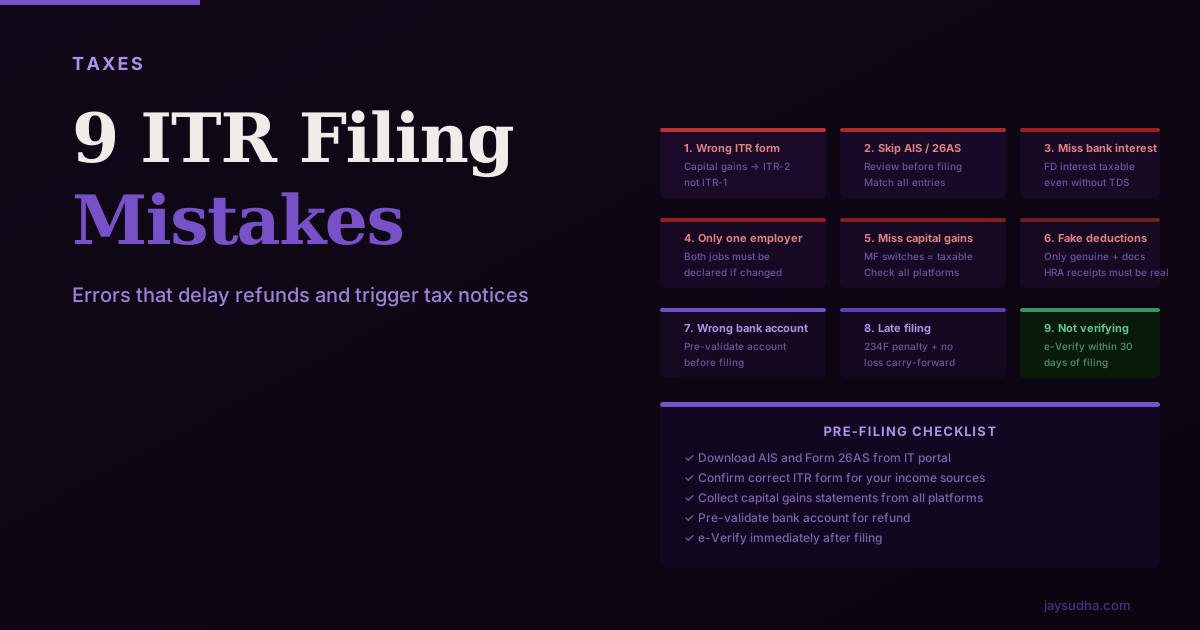
ITR Filing Mistakes 2026: 17 Errors That Can Delay Your Refund
Filing ITR for AY 2026-27? Here are 17 common ITR filing mistakes in 2026 that cause AIS mismatches, refund delays and notices — and how to fix each one.
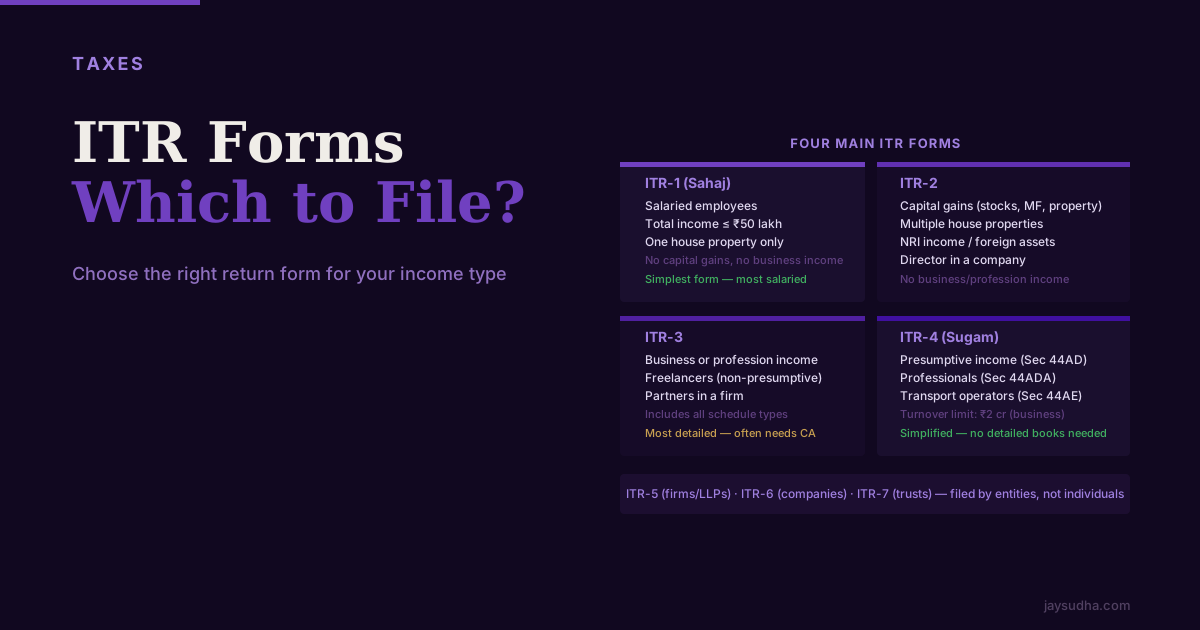
Which ITR Form Should You File? A Plain-English Guide for Individuals
ITR-1, ITR-2, ITR-3 and ITR-4 each apply to different income types. Find out which one you need based on your income sources and financial activity.

LTCG and STCG on Stocks and Mutual Funds: A Plain-English Guide
Selling shares or equity funds triggers capital gains tax. Understand the holding period, the ₹1.25 lakh LTCG exemption, and the 12.5% and 20% equity rates.
NPS Tax Benefits: 80CCD(1), 80CCD(1B) and 80CCD(2)
NPS offers three distinct tax deductions. The extra ₹50,000 under 80CCD(1B) and the employer route under 80CCD(2) are the most valuable. See how each works.

NRI Taxation in India: A Practical Primer
NRIs are taxed only on income earned or received in India. Learn how residential status works, NRE vs NRO accounts, NRI TDS rates, and DTAA relief rules.
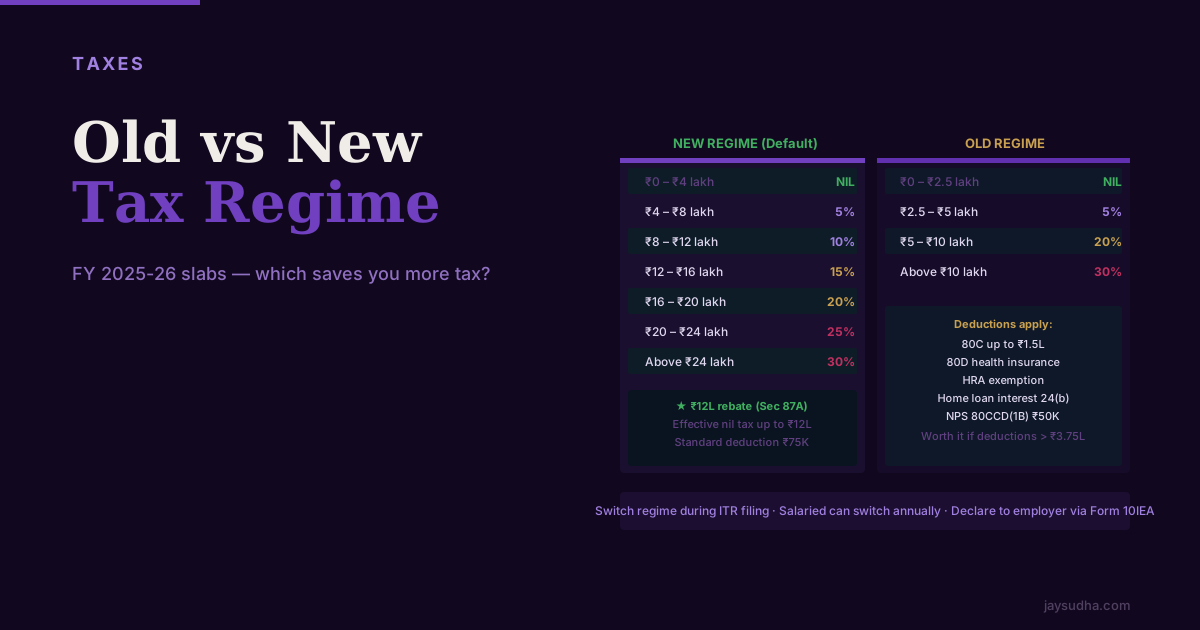
Old vs New Tax Regime: How to Choose the One That Saves You More
The new tax regime has lower rates but few deductions; the old allows 80C, HRA and more. The right choice depends on your income and deductions claimed.

Presumptive Taxation (44AD & 44ADA): Simpler Tax for Freelancers and Small Business
Sections 44AD and 44ADA let small businesses and professionals declare income at a fixed rate and skip audited accounts. How they work for FY 2025-26.
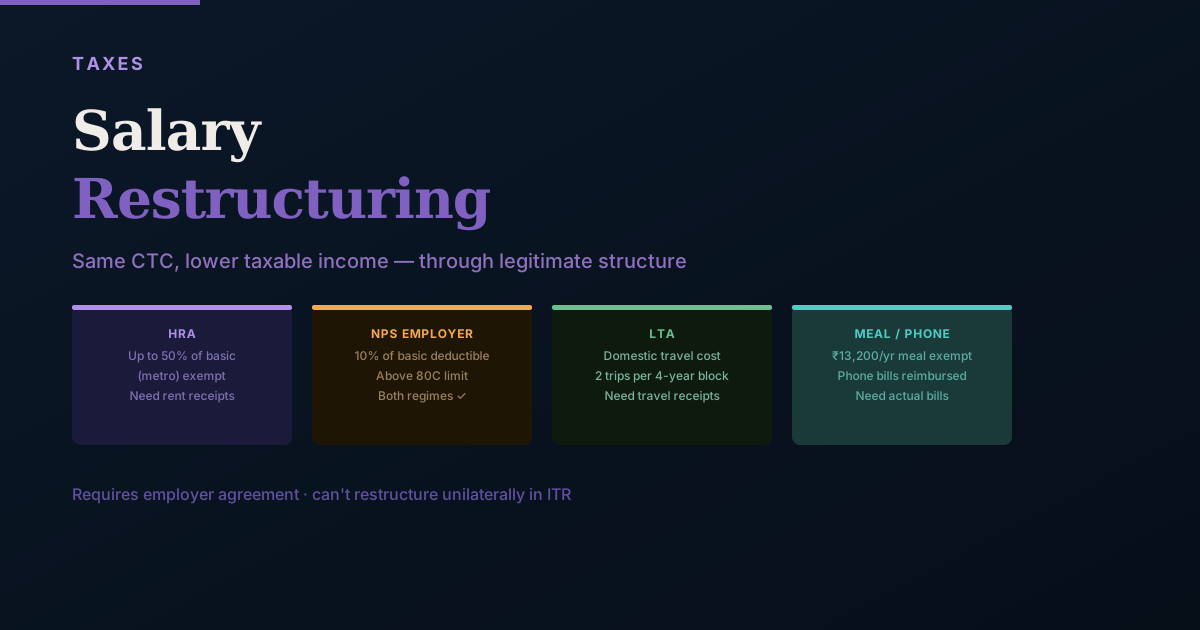
Salary Restructuring for Tax Savings: What Employees Can Legitimately Do
Your salary structure decides how much tax you pay. Knowing which components are tax-exempt helps you negotiate smarter, within what the law allows.
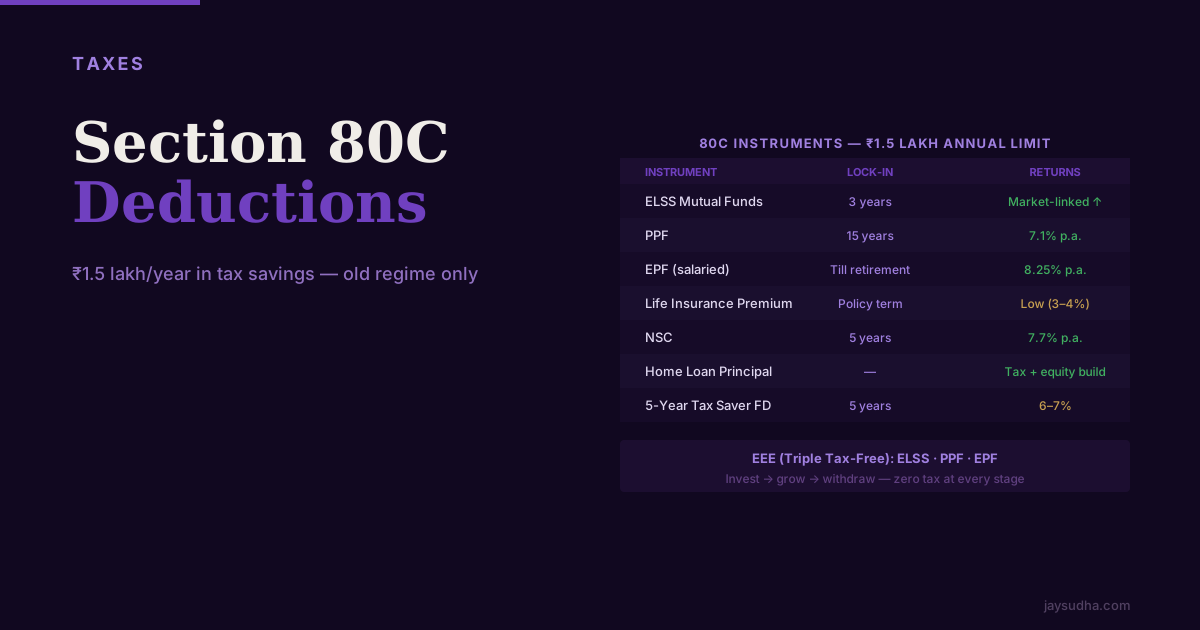
Section 80C Deductions: The Complete Guide for Salaried Indians
Section 80C lets you cut taxable income by up to ₹1.5 lakh via investments and expenses. Learn what qualifies and how to use it without locking up cash.

Section 80D: Maximise Your Health Insurance Tax Deduction
Section 80D lets you deduct health insurance premiums from taxable income. The exact FY 2025-26 limits, the senior-citizen rules, and what people miss.
Section 80G: Tax Deduction on Donations
Donations to approved funds and charities cut taxable income under Section 80G. Learn the 50% vs 100% rules, the qualifying limit and the cash limit.
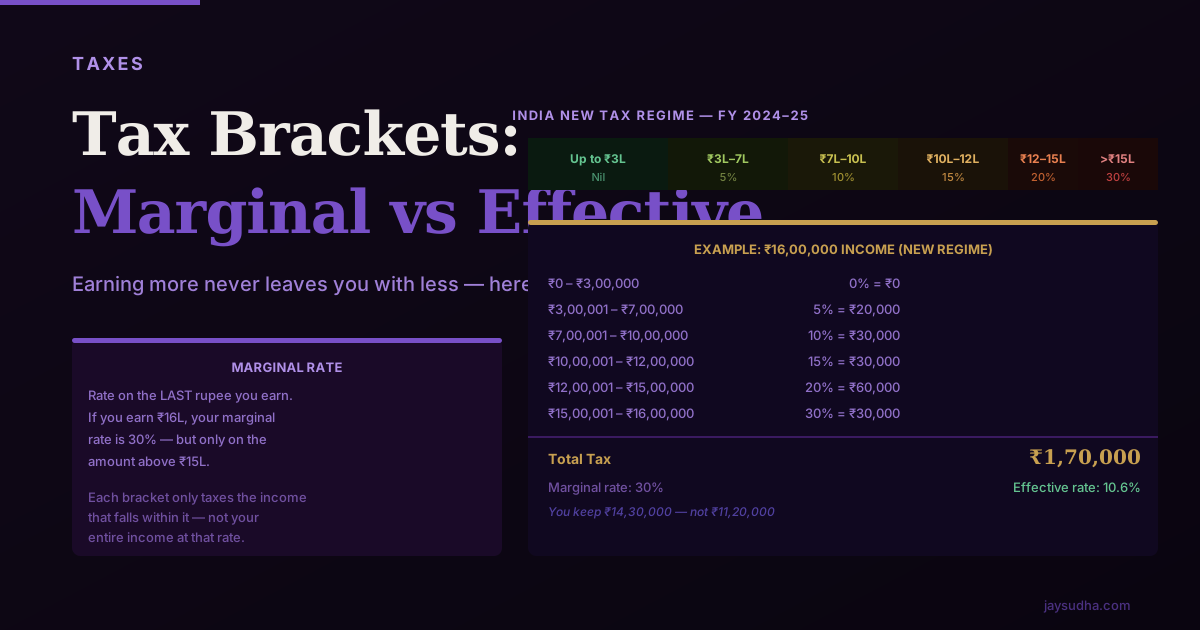
Tax Brackets Explained: Marginal vs. Effective Rate in India
A common myth is that a higher tax slab can leave you worse off. It cannot. How India's marginal slabs work and why marginal vs effective rate matters.

Tax-Loss Harvesting: Cutting Capital Gains Tax Legally
Booking losses to offset capital gains is fully legal in India — there is no wash-sale rule. Learn the set-off rules, carry-forward limits, and timing.
How Dividends Are Taxed in India Now
Since 2020, dividends are taxed in your hands at slab rates, with 10% TDS above ₹5,000. Learn how it works for shares and mutual funds, plus deductions.
How ESOPs Are Taxed in India
ESOPs are taxed twice: as a salary perquisite when you exercise, and as capital gains when you sell. Here is how each stage works, with a worked example.
Tax on FD and Savings Account Interest in India
Fixed deposit interest is fully taxable at your slab rate, and savings interest gets a small exemption. Here is how TDS, 80TTA and 80TTB actually work.

Tax on Gifts in India: What Is Exempt and What Is Not
Gifts above ₹50,000 from non-relatives are taxable, but gifts from relatives, on marriage, or by inheritance are exempt. Here it is with clear examples.

Tax on Selling Gold and Jewellery in India
Selling gold, jewellery, or gold ETFs triggers capital gains tax — long-term after 24 months at 12.5%. Learn how to compute gains and claim exemptions.

Tax on Mutual Funds in India: A Complete Guide
Mutual fund taxation depends on fund type and holding period. Knowing the rules helps you plan exits, avoid surprises, and keep more of your returns.

Tax on Rental Income in India: How It's Taxed and What You Can Deduct
Rental income is taxable, but the 30% standard deduction and home loan interest cut it. How to compute house property income and claim deductions.

Tax When You Sell Property in India
Selling a house triggers 12.5% LTCG after 24 months. Learn how to compute the gain, claim Section 54 and 54EC exemptions, and handle the 1% TDS.
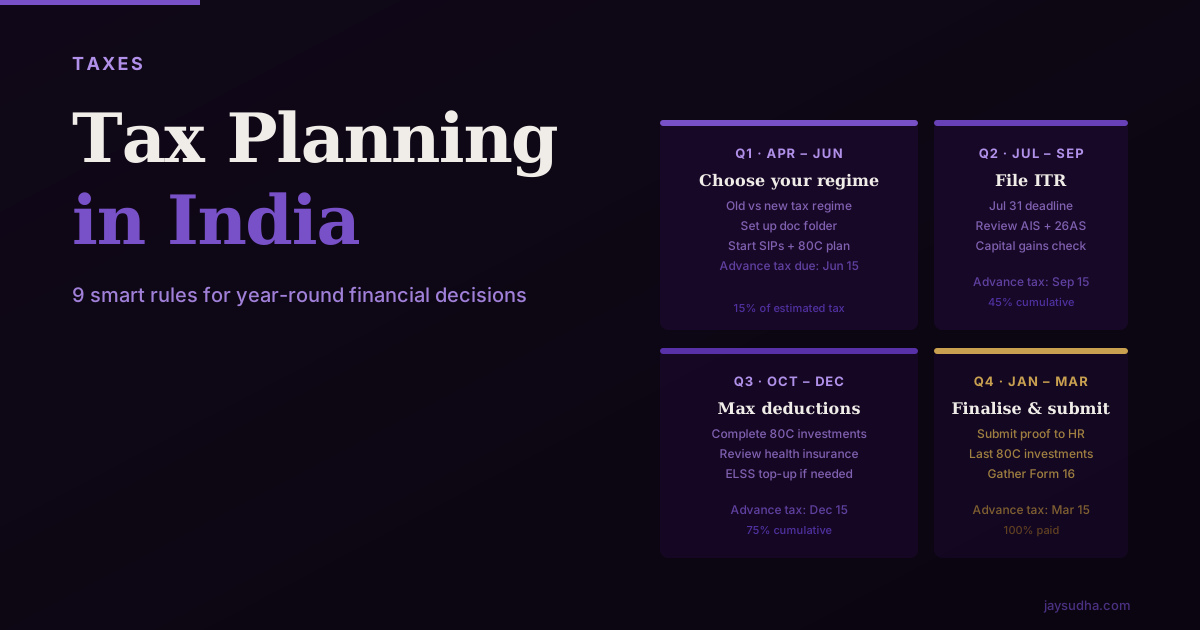
Tax Planning in India: 9 Smart Rules for Cleaner Financial Decisions
Tax planning in India means informed, year-round decisions on income, deductions and investments, not a February scramble. Here is how to do it right.

Tax Planning vs Tax Saving: Why Most People Do the Wrong One
Most Indians scramble to save tax in January and February. Tax planning is different: it runs all year and gives better outcomes with far less stress.

Tax Saving Beyond 80C: 8 Deductions People Forget
Section 80C is just the start. NPS, health insurance, home loan and education loan interest, and donations cut tax further for FY 2025-26 in India.

Form 16A and TDS Certificates Explained
Form 16A is the TDS certificate for non-salary income like interest, rent, and fees. Learn how it differs from Form 16 and how to use it when filing your ITR.

TDS on Property Purchase: Section 194-IA Explained
Buying property worth ₹50 lakh or more? You must deduct 1% TDS and deposit it via Form 26QB. Here is who deducts, how to file, and what causes penalties.
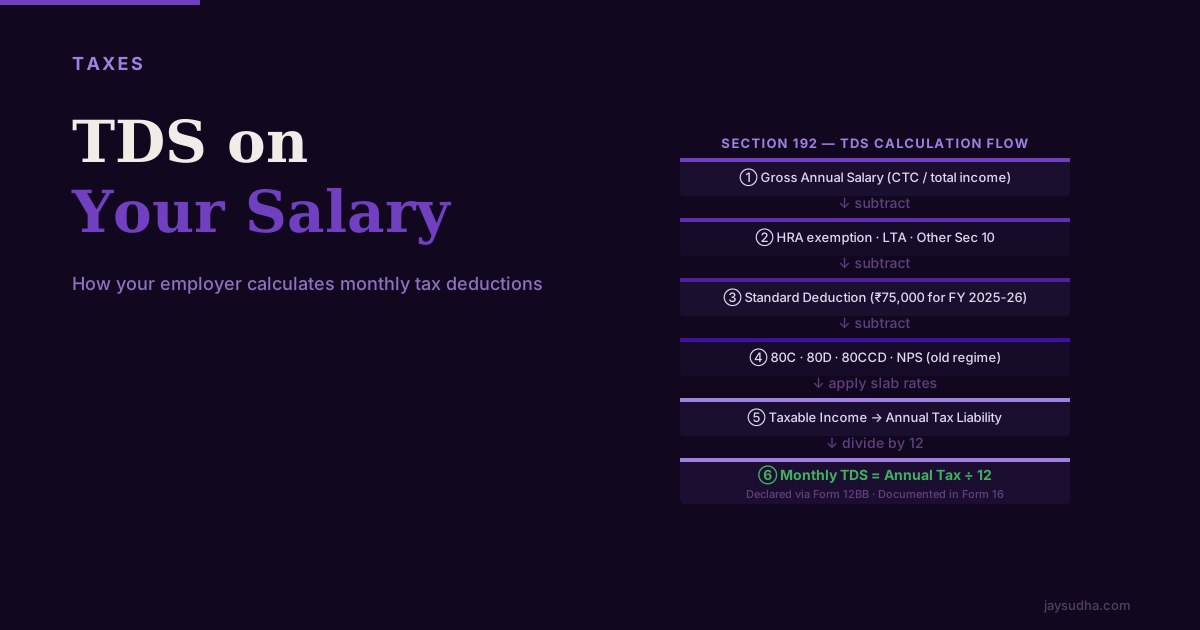
TDS on Salary: How It's Calculated and What You Can Do About It
Your employer deducts TDS from salary monthly based on projected annual income. How it is calculated, what to declare to reduce it, and excess refunds.

Managing Aadhaar, PAN and KYC Across Your Finances
A practical system for managing Aadhaar, PAN and KYC across your Indian accounts — keeping details consistent, updated, and secure to avoid frozen accounts.
The Account Aggregator Framework, Explained Simply
What the Account Aggregator framework in India really is, how consent-based financial data sharing works, where it helps you, and how to use it safely.
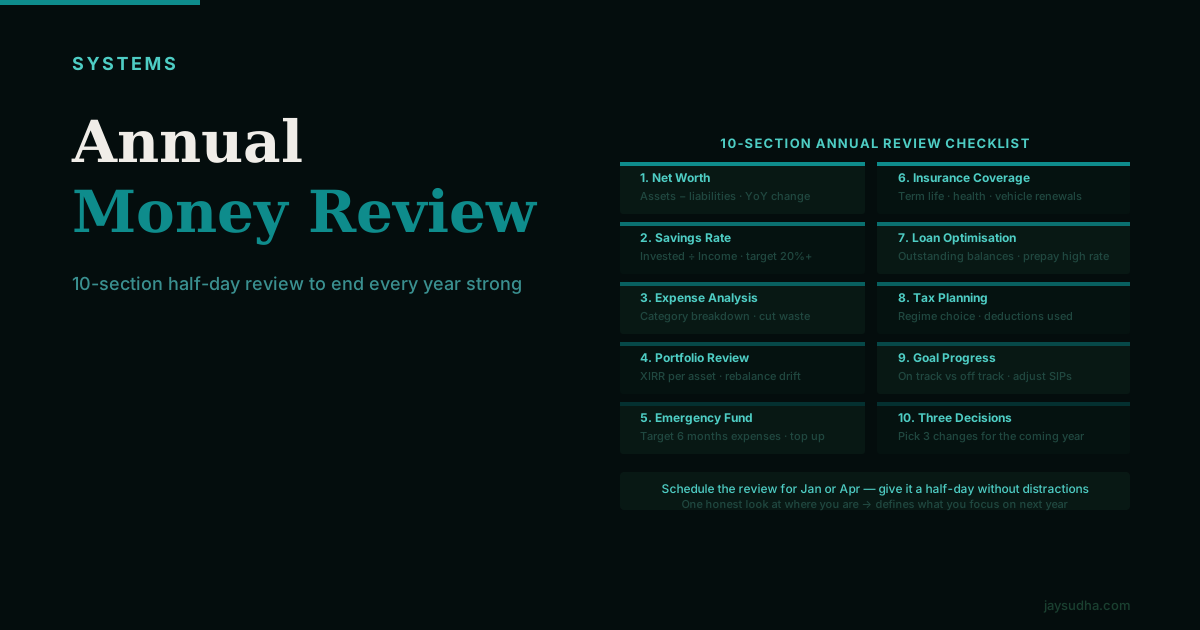
How to Do Your Annual Financial Review: A Step-by-Step Template
An annual financial review is a structured half-day that gives your money direction for the year ahead. Here's what to review and what to decide.

How to Automate Your Savings in India: Set It Up Once
Automation removes willpower from the equation. With the right setup, your savings and investments happen on salary day — before you can spend the money.
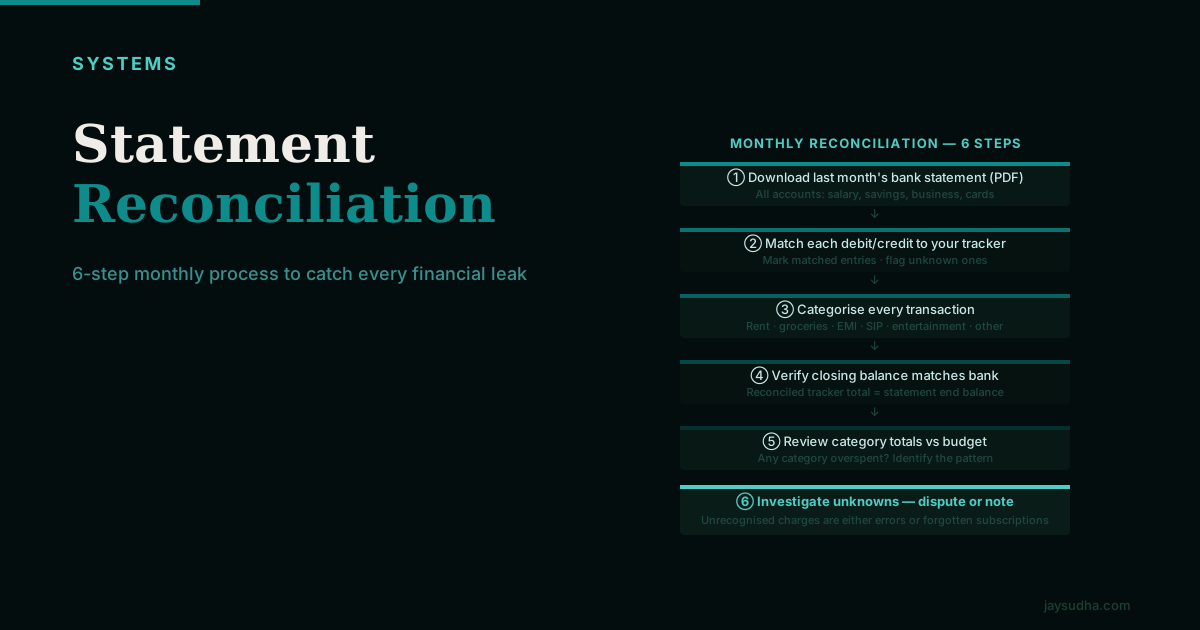
Bank Statement Reconciliation: How to Do It and Why It Matters
Reconciling your bank statement monthly takes 20-30 minutes and catches errors, unauthorised charges, and spending gaps. Here's the full process.
Personal Finance Apps in India: Features, Limits, and When a Spreadsheet Wins
An honest guide to personal finance apps in India for budgeting, tracking and investing, plus the times a simple spreadsheet beats every app out there.

Building a Bill-Payment System So Nothing Slips
A calm system for paying every bill on time in India — what to autopay, what to keep manual, how to use BBPS and UPI AutoPay, and how to catch failures.
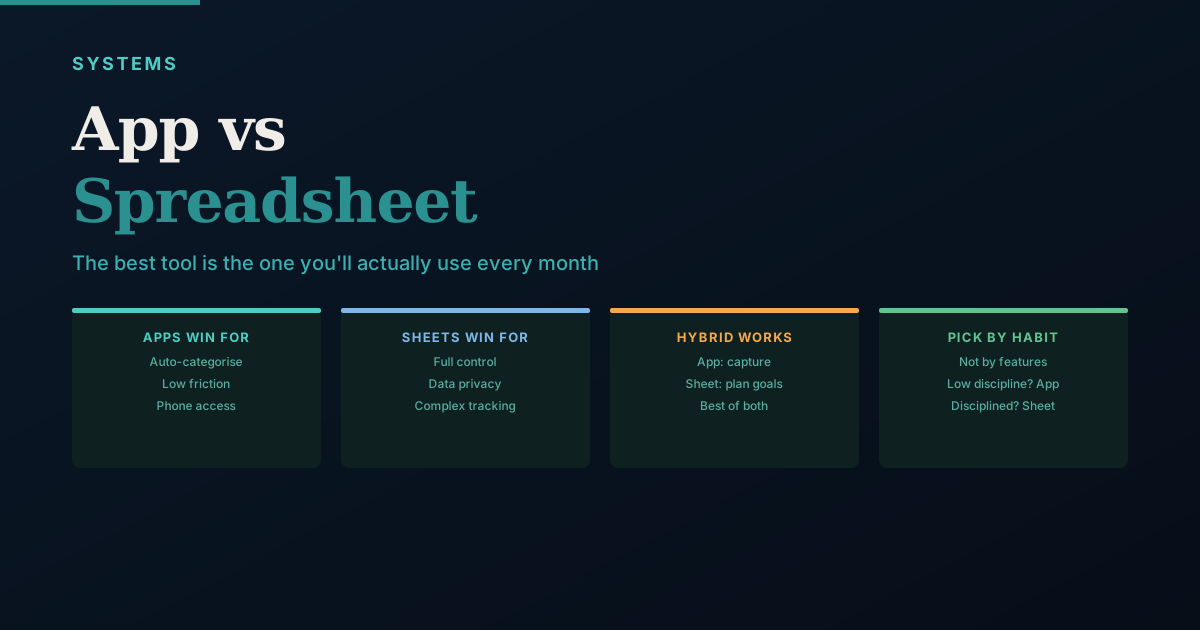
Budget App vs Spreadsheet: Which One Should You Use?
Both budget apps and spreadsheets work for different people, habits, and levels of financial complexity. Choose based on what you'll actually use.

Consolidating Your Mutual Fund Folios and CAS
How to consolidate scattered mutual fund folios in India, read and use your Consolidated Account Statement (CAS), and keep one clean, trackable portfolio.

A Shared Money System for Couples
A practical money system for couples in India — structuring shared and personal accounts, splitting expenses fairly, and running a monthly money date.
DigiLocker and a Document Vault for Your Finances
How to pair DigiLocker with a private vault to keep every financial document findable in seconds — what belongs where, and what DigiLocker cannot do.
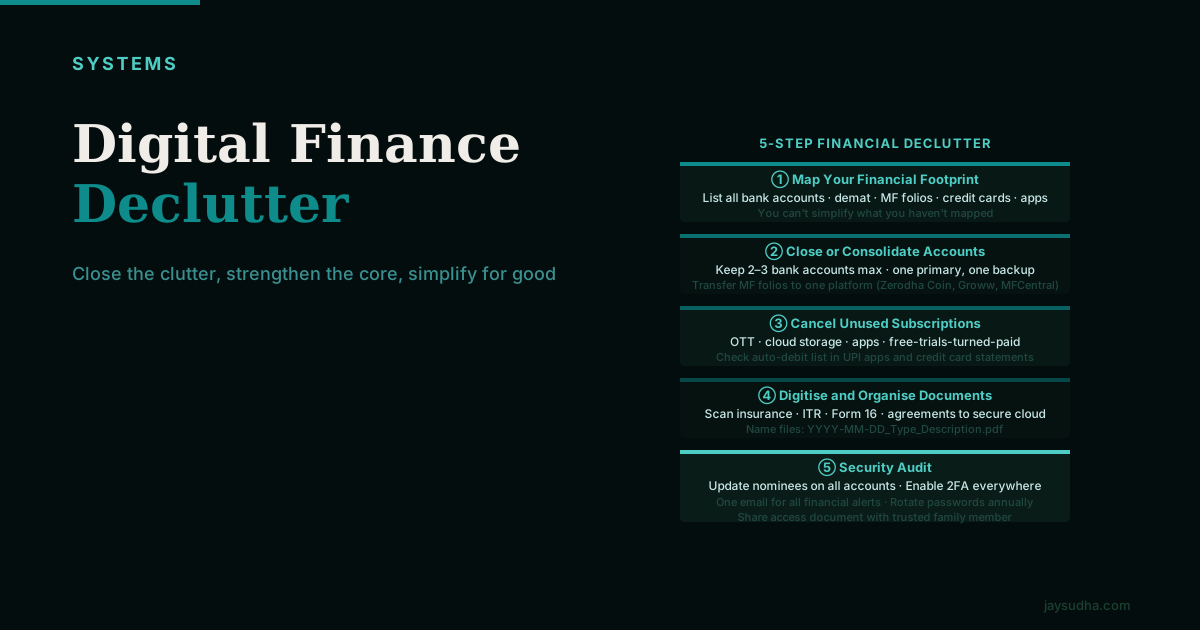
Digital Financial Declutter: How to Simplify Your Accounts, Apps, and Documents
Too many accounts, apps, and scattered documents? A digital financial declutter cuts confusion, catches inactive fees, and gives a cleaner picture.

UPI vs Cards vs Wallets vs Net Banking: What to Use When
A practical comparison of UPI, debit and credit cards, wallets and net banking in India — the strengths, costs, and safety of each, and when to use which.

The One Document Your Family Needs in an Emergency
An emergency information document lists everything your family needs to find your accounts, policies and documents if you are suddenly gone. How to build one.
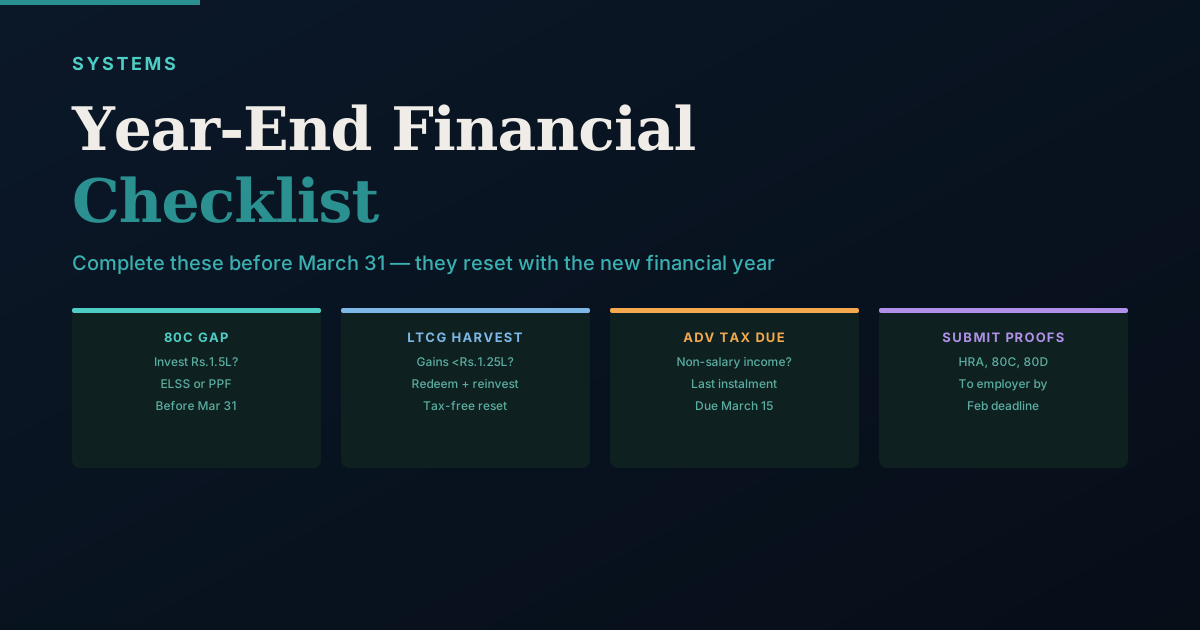
End-of-Year Financial Checklist: What to Do Before March 31
The Indian financial year ends March 31. Finish these time-sensitive financial tasks before the reset so you don't miss deductions or trigger penalties.
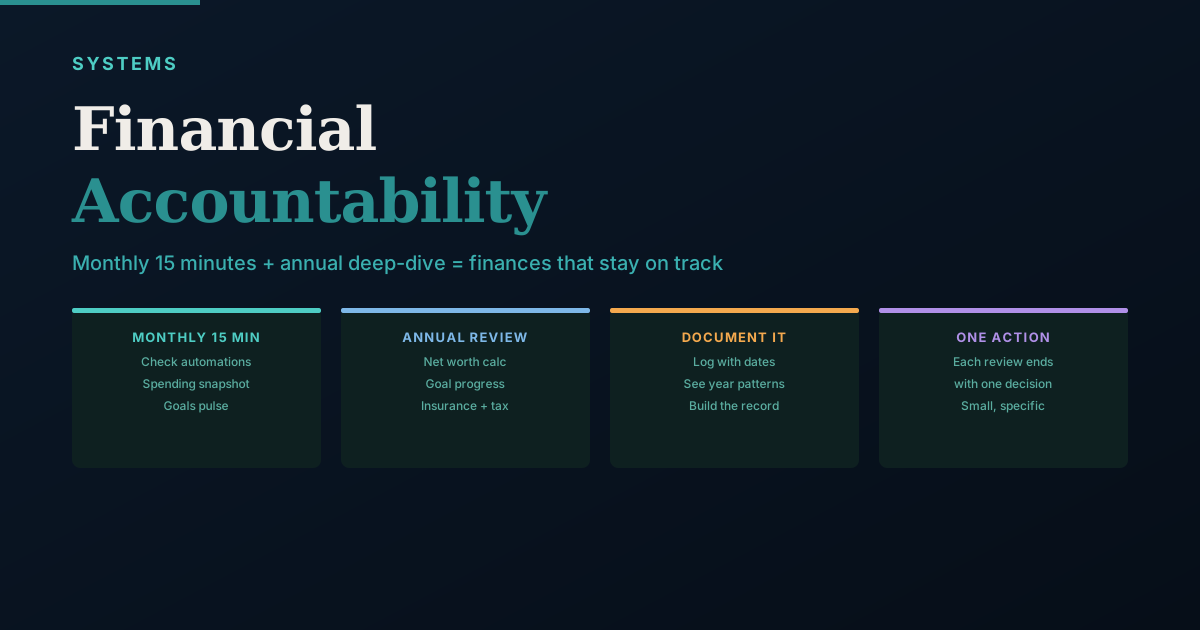
Building a Financial Accountability System That Actually Works
Goals without review are wishes. A simple monthly and annual review system keeps your finances on track without turning it into a full-time job.

How to Automate Your Entire Financial Life in India
A step-by-step guide to automating savings, SIPs, bills, EMIs, and credit cards in India using autopay, NACH mandates, and the right account structure.

Financial Calendar: A System for Tracking Tax, EMI, and Renewal Deadlines
Missing a financial deadline like advance tax, insurance renewal, or ITR filing has real costs. A financial calendar prevents this with little effort.
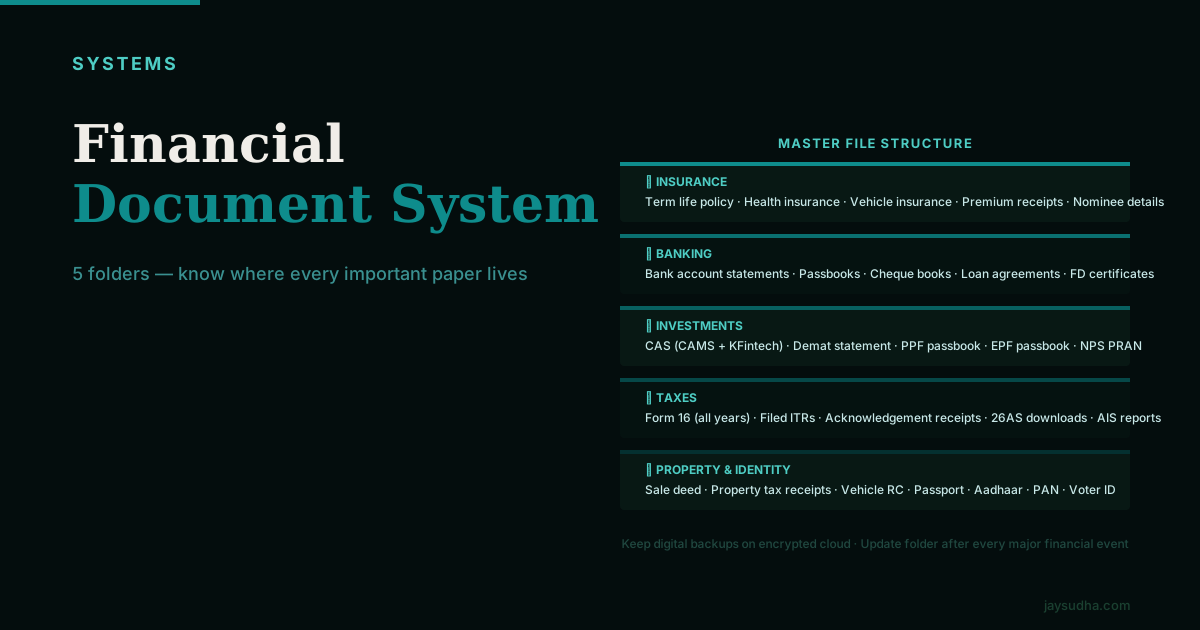
How to Organise Your Financial Documents: A Digital Filing System
Most people scatter financial documents across email, phone, WhatsApp, and random folders. Here's a clean filing system you can set up in an afternoon.

Financial Goals Framework: How to Set, Price, and Track Goals
A financial goal without a number and a deadline is a wish. This framework turns vague goals into fundable targets with monthly investment amounts.

Setting Up Your Financial Goals in a Spreadsheet
Turn vague money goals into a working spreadsheet — target amounts, timelines, monthly contributions, and a clear progress view you will actually update.

Financial Power of Attorney in India
What a financial power of attorney is in India, how general and special PoA differ, when registration is required, and how to scope and set one up safely.
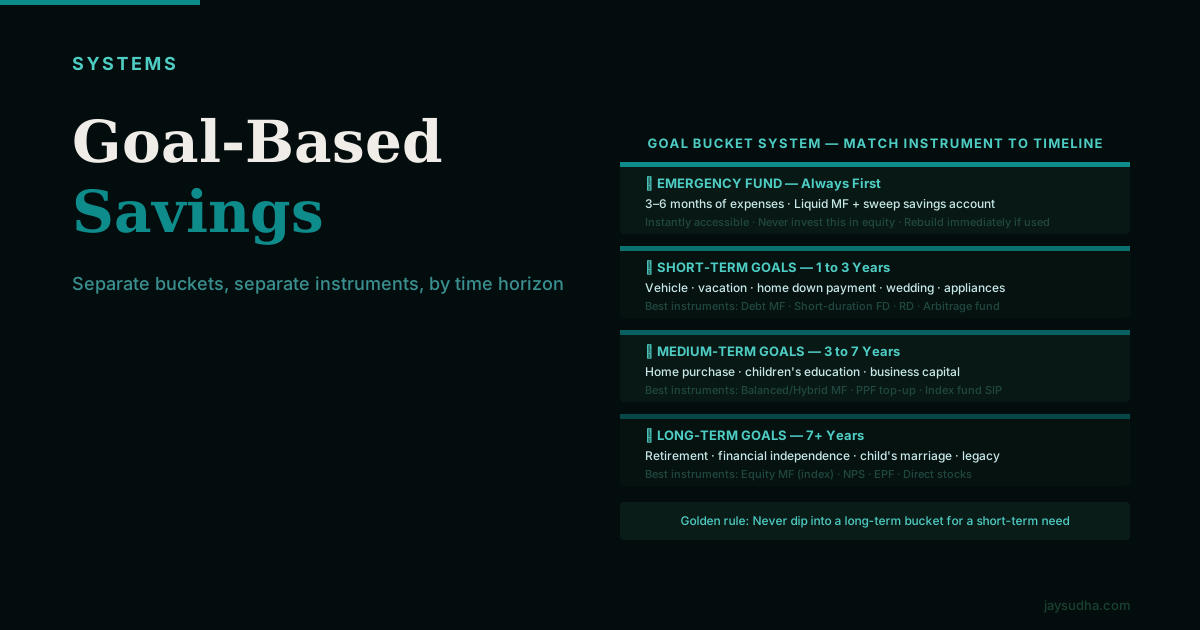
Goal-Based Savings: How to Set Up Separate Buckets for Each Financial Goal
Pooling savings into one account creates confusion about what's safe to spend. Goal-based savings gives each goal its own account, so you always know.
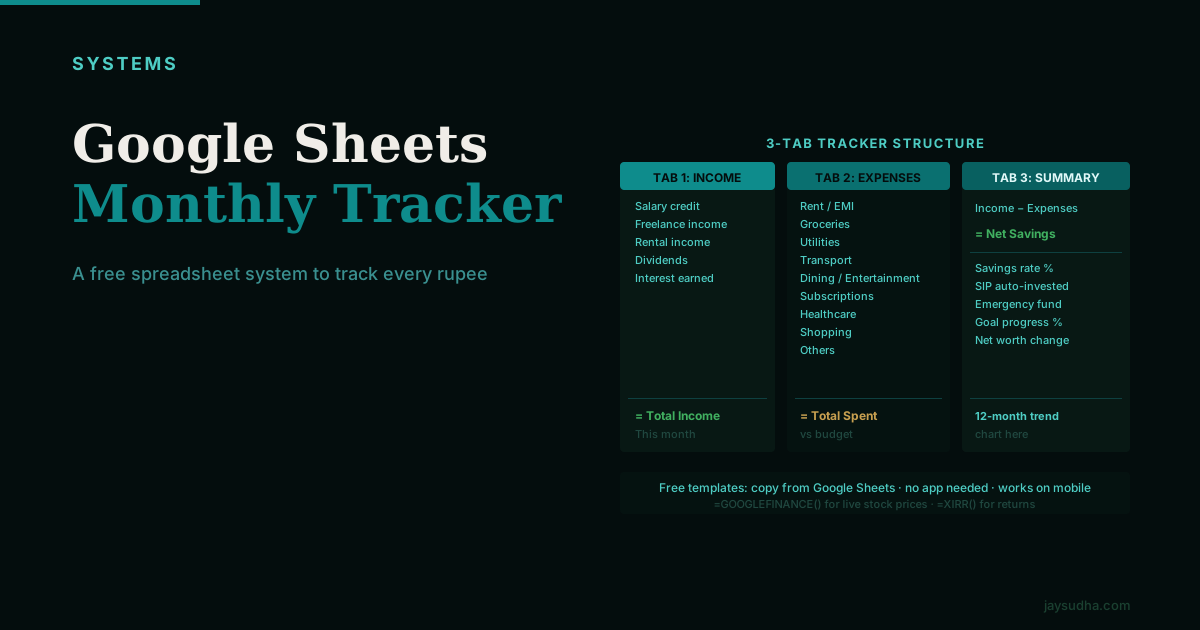
Google Sheets Monthly Finance Tracker: A Simple Build That Works
A minimal Google Sheets finance tracker that takes 30 minutes to set up and 30 minutes per month to maintain. No macros. No complexity.
How to Consolidate Multiple Bank Accounts and Simplify Your Money
A practical guide to consolidating multiple bank accounts in India — how to decide what to keep, close the rest safely, and avoid the traps that cost money.

How to Write a Will in India: A Practical Guide
A practical guide to writing a valid will in India: what it must contain, the two-witness rule, whether to register it, and mistakes that cause disputes.

Annual Insurance Review Checklist: What to Check Every Year
Insurance needs change as your life changes. An annual review ensures you're not underinsured, overinsured, or paying for coverage you no longer need.

How to Build an Investment Portfolio Tracker in Google Sheets
A portfolio tracker gives one view of all your investments across mutual funds, stocks, EPF, PPF and NPS. Here's how to build one that actually works.

Joint Accounts and Nominations: Getting Them Right
How joint bank accounts and nominations work in India — operating modes, survivorship, why a nominee is a trustee not an owner, and how to set both up well.
The 30-Minute Monthly Money Review That Keeps You on Track
A simple 30-minute monthly money review routine for Indian households — what to check, in what order, and how to turn it into a habit that actually sticks.
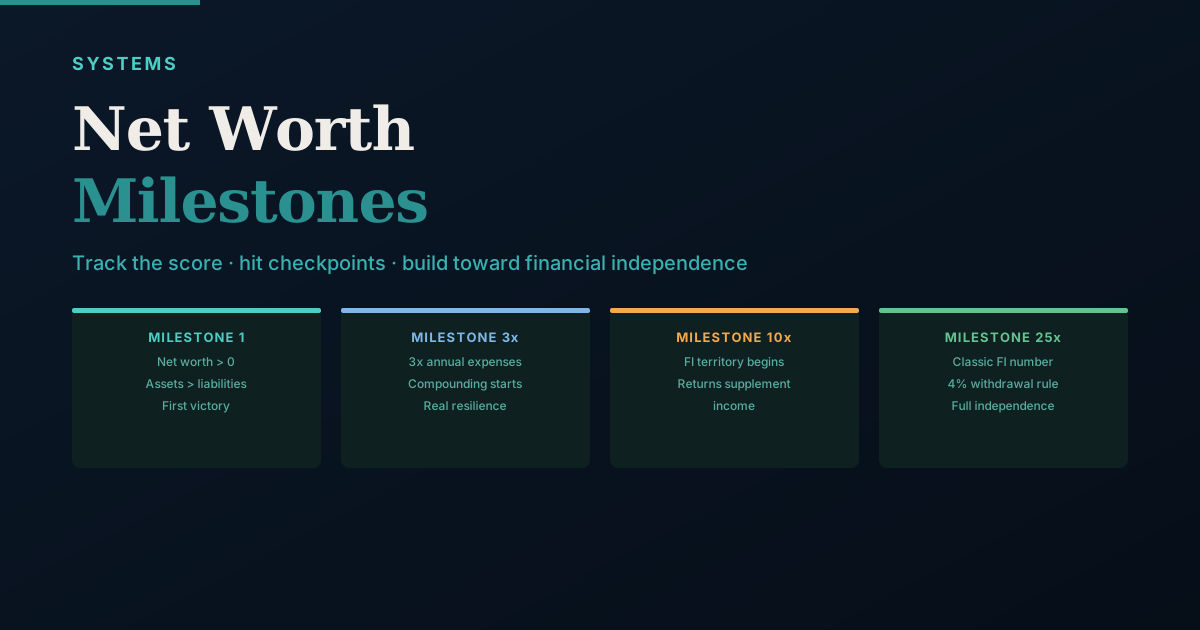
Net Worth Milestones: What They Mean and How to Track Progress
Net worth is the number that tells you where you actually are financially. Milestones give you concrete checkpoints to aim for across different life stages.
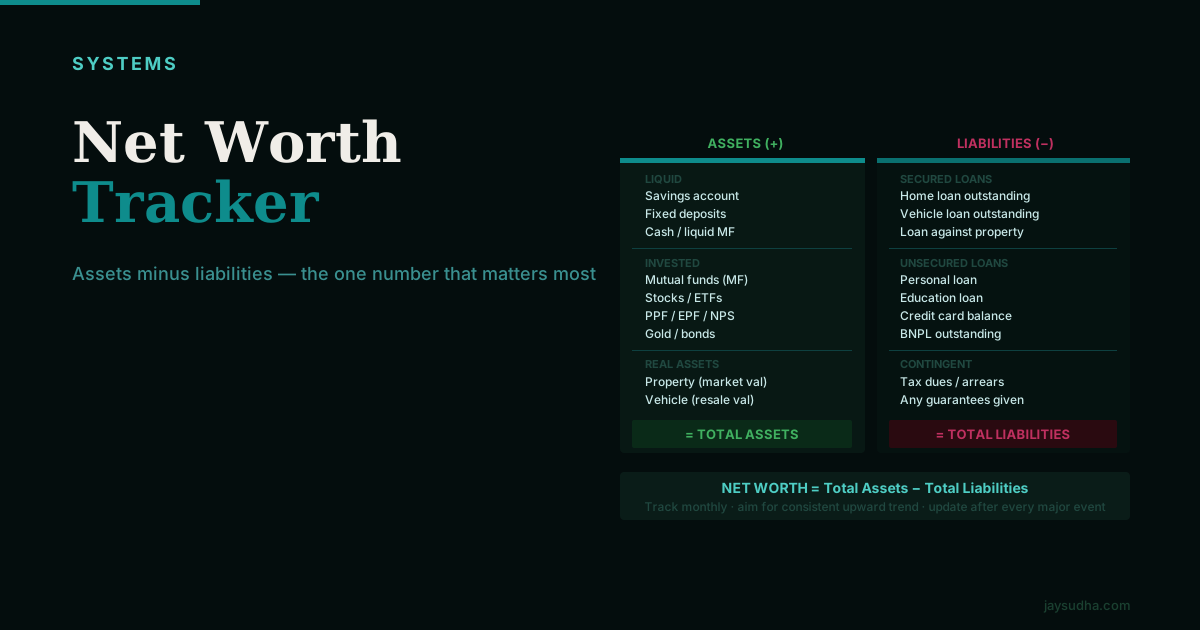
How to Build and Maintain a Net Worth Tracker in Google Sheets
Net worth is the most comprehensive measure of financial progress. Here's how to build a tracker for all assets and liabilities, and read the trend.

Nominee vs Legal Heir: Who Actually Gets Your Money?
In India a nominee usually receives your money but a legal heir owns it. Understand the difference for bank accounts, mutual funds, shares, EPF and insurance.
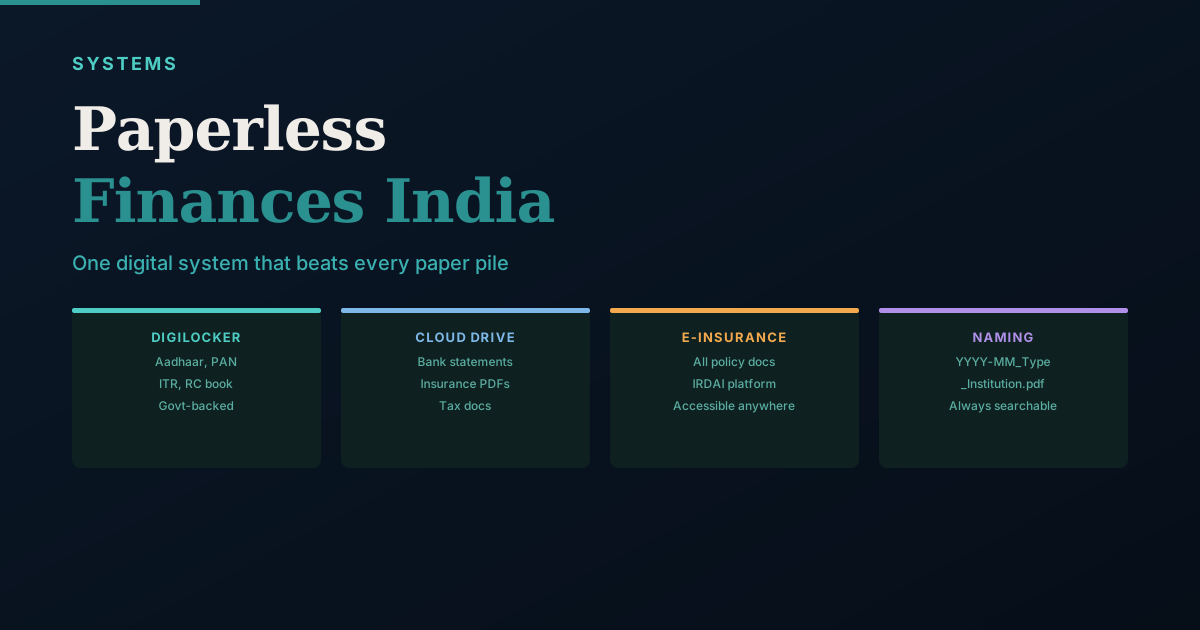
Going Paperless with Your Finances in India: A Practical Guide
Physical financial documents create clutter, get lost, and are hard to find in emergencies. Moving to digital with a simple system is safer and faster.

How to Build a Personal Finance Operating System
A personal finance operating system is a set of recurring processes that keeps your money organised, tracked, and intentional — without daily effort.

Protecting Yourself From Financial Fraud in India
A practical defence against financial fraud in India — the common scams, the habits that block them, and how to report fraud to 1930 and your bank in time.
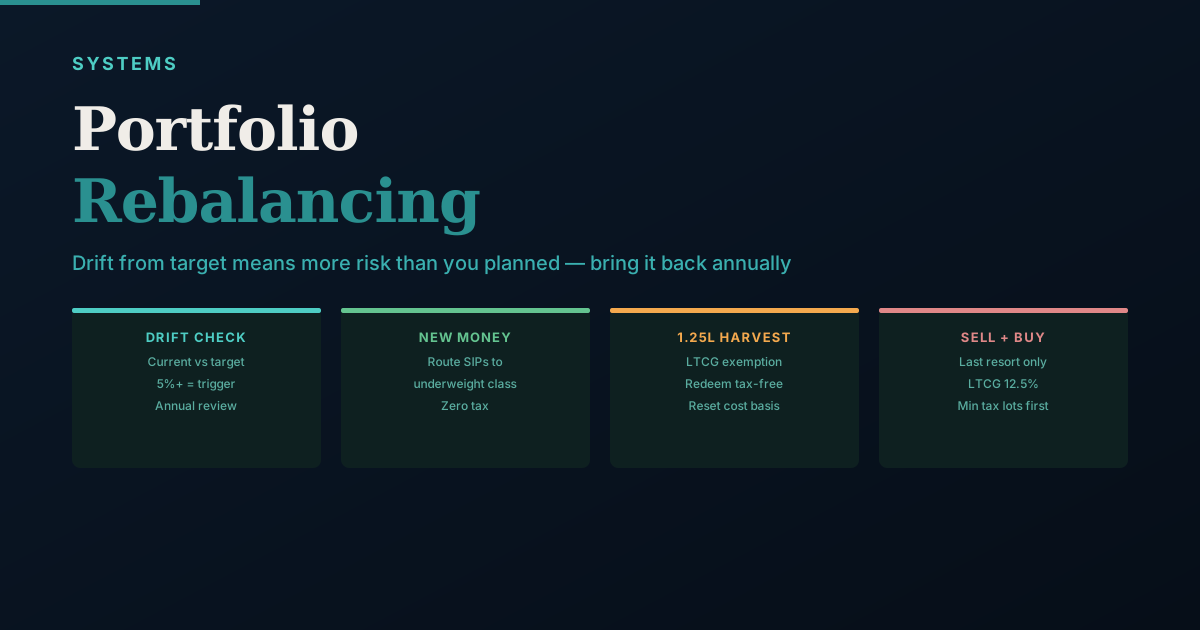
Portfolio Rebalancing: When and How to Realign Your Asset Allocation
Markets drift your portfolio away from your target allocation. Rebalancing brings it back — at low cost, with low tax impact, and without market timing.
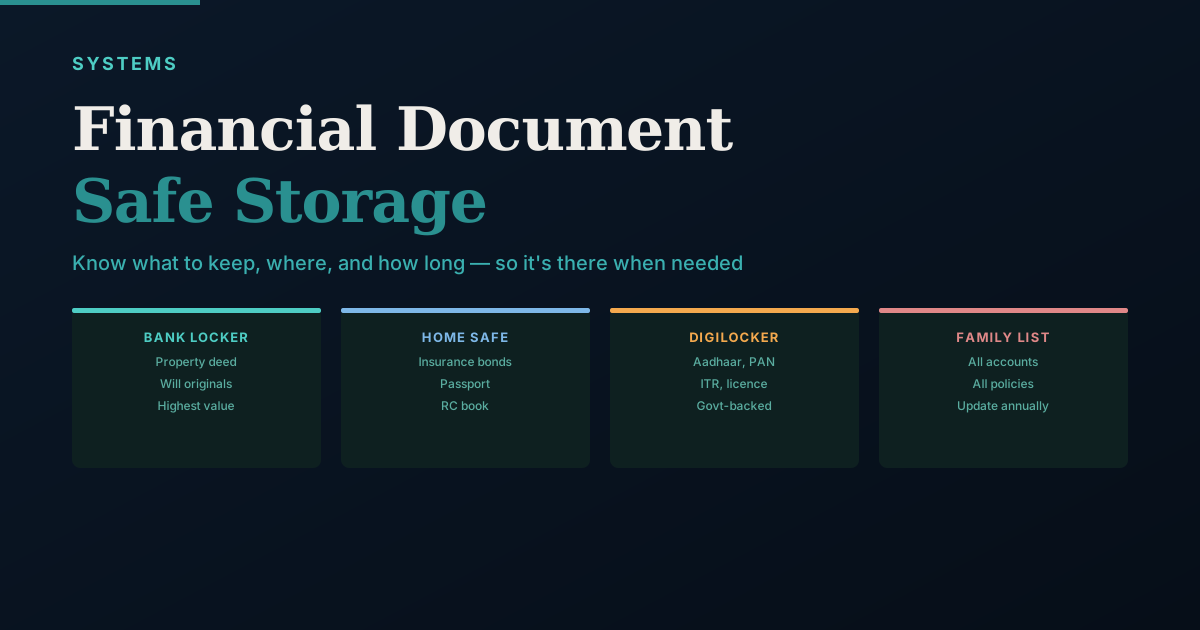
Safe Storage of Financial Documents: What to Keep and How Long
The right documents need to survive emergencies, be accessible to family in a crisis, and be findable when needed. Here's the complete storage framework.

Setting Up Autopay, NACH and e-Mandates Safely
A clear guide to autopay, NACH mandates and UPI e-mandates in India — how each works, what to automate, and how to keep control with limits and reviews.

A Subscription and Renewal Tracker That Pays for Itself
A simple tracker for every recurring charge and renewal in India — it flags exactly what to cancel and usually pays for itself in the very first month.
A System for Tracking Multiple Bank Accounts
A calm system to track several bank accounts on purpose — a clear role per account, one dashboard view, and a routine so balances never surprise you.
UPI and Net Banking Safety: A Setup Guide
A practical setup guide for UPI and net banking safety in India — the account settings, habits, and limits that block fraud before it reaches your money.
Year-End Financial Housekeeping: A Checklist
A calm year-end housekeeping checklist for Indian households — tidy accounts, documents, nominees, subscriptions, and records to start the year clean.

Accepting Digital Payments: UPI, Gateways, and the Real Costs
UPI, cards, wallets, and gateways all cost different amounts to accept. A clear guide to digital payment options and the fees that quietly eat your margin.

Advance Tax for Businesses and the Self-Employed
If your tax for the year exceeds Rs.10,000, you must pay advance tax in four instalments. Learn the due dates, how to estimate it, and how to avoid interest.
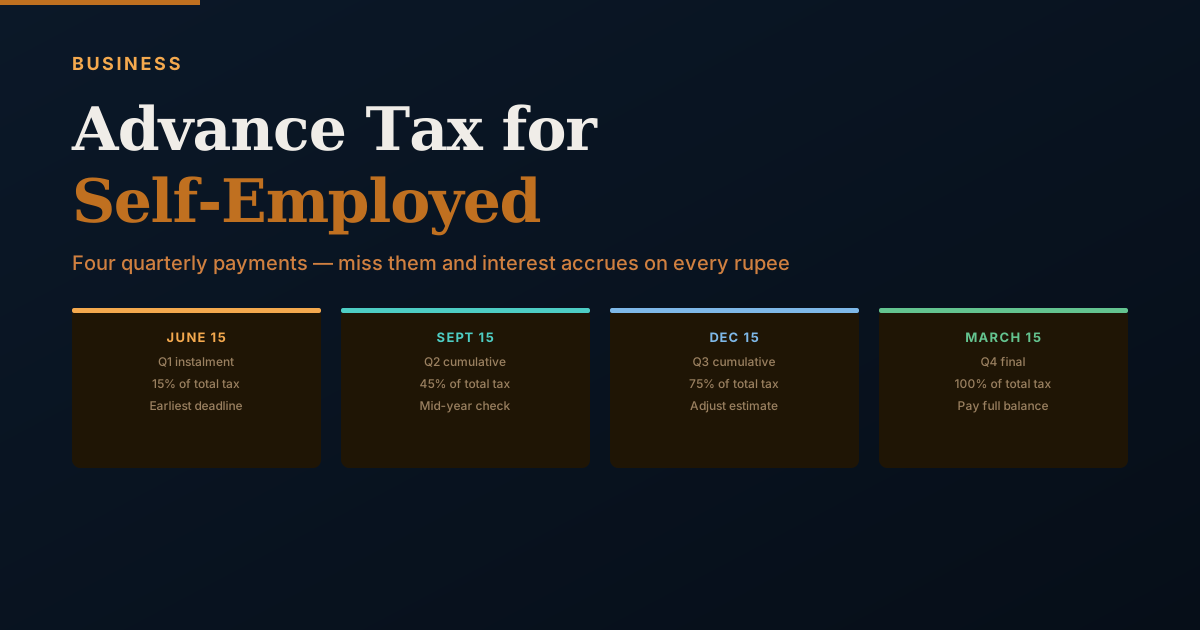
Advance Tax for Self-Employed: How to Calculate and Pay on Time
Self-employed, freelancing, or running a business? Advance tax is mandatory and missing deadlines costs interest. Here's how to calculate and pay it.

Business Cash Flow for Indian SMEs: Why Profit Doesn't Equal Cash
A profitable business can still run out of cash. Knowing the difference between profit and cash flow, and tracking both, keeps your business healthy.

Business Emergency Fund: Why Freelancers Need One Separate from Personal
A business emergency fund shields your work from cash flow gaps such as client delays, slow months, or equipment failures. Keep it separate from personal.
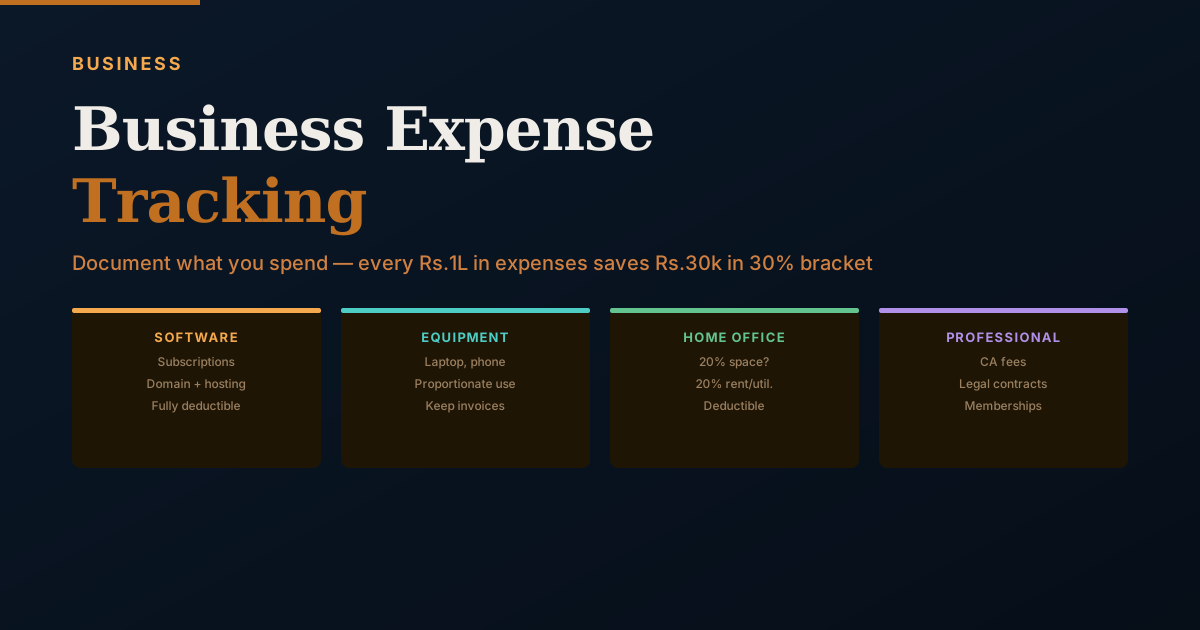
Business Expense Tracking for Freelancers and Small Businesses
Tracking business expenses correctly reduces taxable income and protects you in a tax audit. Here's what counts as a business expense and how to document it.

Business Insurance Basics for Indian SMEs
One fire, lawsuit or key-person illness can wipe out years of profit. The core business insurance covers Indian SMEs actually need, and how to size them.

Getting Your Small Business Loan-Ready
Loan readiness starts before you apply. Learn what Indian lenders check — credit, cash flow, GST filings, documents and loan purpose — so your application is easier to underwrite.

Cash Flow Forecasting: The Skill That Keeps Small Businesses Alive
Profitable businesses still go under when they run out of cash. Build a simple 13-week cash flow forecast and spot shortfalls weeks before they hit you.

How to Choose a CA or Accountant for Your Business
The right CA saves far more than they cost; the wrong one brings notices and missed deadlines. How to choose, what to pay, and what work to keep in-house.

Client Contract Basics for Freelancers: What to Include
A simple written agreement protects both you and your client. These are the essential clauses every freelance contract should cover — in plain language.
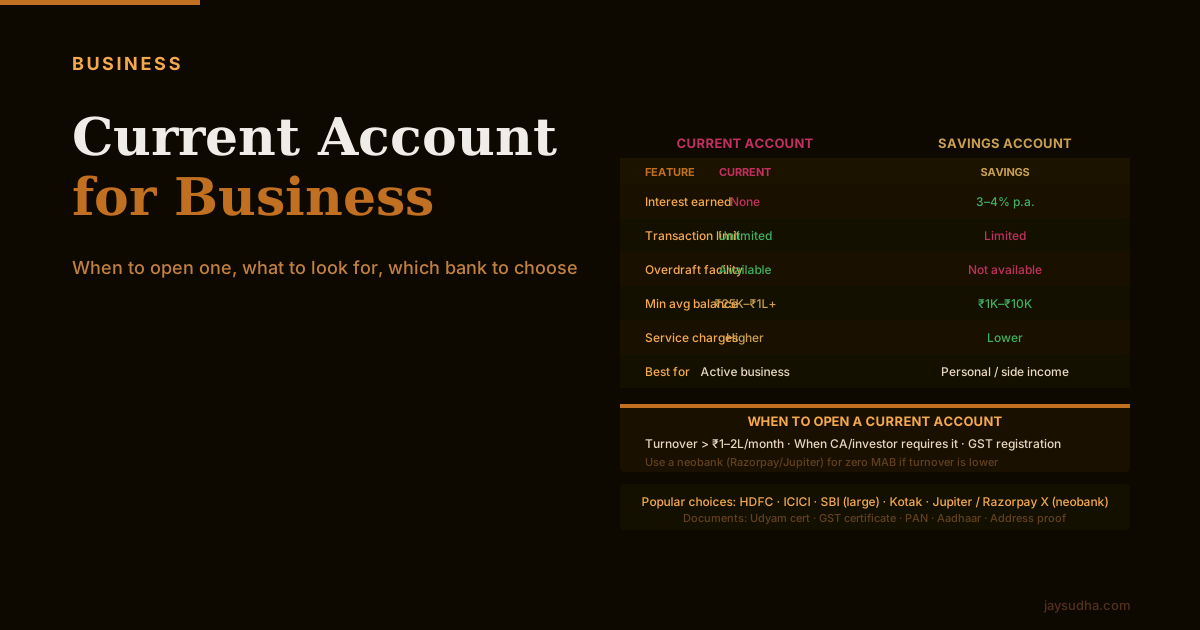
Current Account for Your Business: What It Is, When You Need One, and How to Choose
A current account is the foundation of business banking in India. Learn how it differs from savings, when to open one, and what features to seek.

Depreciation and Fixed Assets: A Small-Business Primer
Depreciation spreads equipment cost over its useful life and cuts taxable profit. Learn WDV vs straight-line and the Income Tax vs Companies Act methods.

E-Way Bill: When You Need One and How to Generate It
Moving goods worth over Rs.50,000 usually needs an e-way bill. Learn when it applies, who generates it, validity by distance, and costly mistakes.

Export Finance Basics for Small Indian Businesses
Exporting needs more than a buyer abroad. An IEC, the right GST treatment via LUT, and export credit explained for small Indian exporters in plain English.

Freelancer Accounting in India: Records, Invoices, and What You Must Track
Freelancing in India creates specific tax and accounting duties. Here's the full picture of what to track, what to invoice, and how to stay compliant.

Freelancer Invoice Guide India: What to Include and How to Get Paid
A professional invoice is your legal proof for getting paid. Indian freelancers must include specific elements to stay compliant and avoid disputes.

GST Composition Scheme: Is It Right for Your Small Business?
The GST composition scheme trades input tax credit for a low flat rate and quarterly filing. Learn the eligibility limits, costs, and when it fits.

GST for E-Commerce Sellers in India
Selling on Amazon, Flipkart or Meesho? GST registration is mandatory regardless of turnover, and platforms deduct TCS. What every online seller must know.
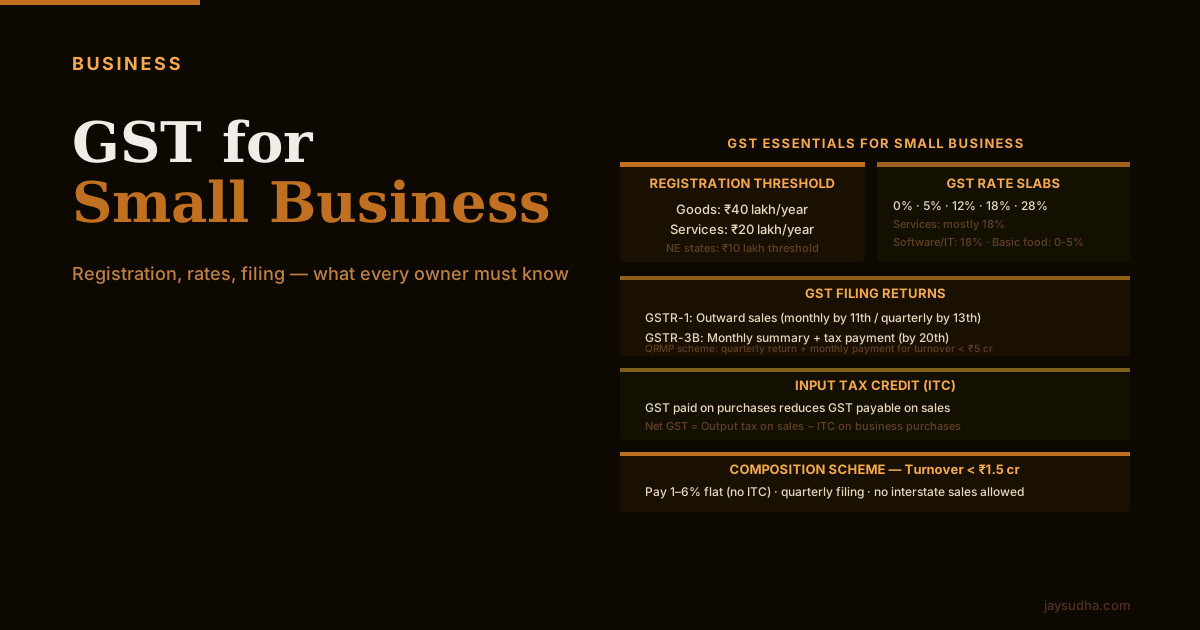
GST for Small Business in India: What You Actually Need to Know
GST compliance for a small business is simpler than it looks once you grasp the basics: registration thresholds, return filing, and input tax credit.
GST on Services vs Goods: What Actually Changes
GST treats goods and services differently on rates, place of supply, and codes. Learn what genuinely changes between the two, with examples for SMEs.

GST Returns for Small Businesses: Which Forms to File and When
GST needs regular filing even in months with no sales, or late fees and interest pile up. This is the minimum you need to know to stay compliant.

How to Pay Yourself as a Business Owner in India
Salary, drawings, or dividend? How you pay yourself depends on your structure and affects tax and TDS. A guide for proprietors, partners, and directors.
Input Tax Credit (ITC) Explained for Small Business Owners
Input tax credit offsets GST paid on purchases against GST you owe, but only if four conditions are met. A plain guide to claiming ITC without notices.

Managing Vendor Payments and Credit Terms
How you pay suppliers shapes cash flow as much as how you collect. Learn to negotiate credit terms, time payments, and stay onside with MSME payment rules.

MSME Amendment Bill 2026: Proposed Changes to the 45-Day Payment Rule and Delayed-Payment Recovery
The verified status of the MSME Amendment Bill 2026, the existing 45-day payment rule, delayed-payment interest, the ODR/MSEFC claim process, and Section 43B(h).

MSME Loans in India: Types, Eligibility, and How to Apply
Government-backed MSME loans offer collateral-free credit and lower rates. Here's what's available, who qualifies, and how to apply step by step.
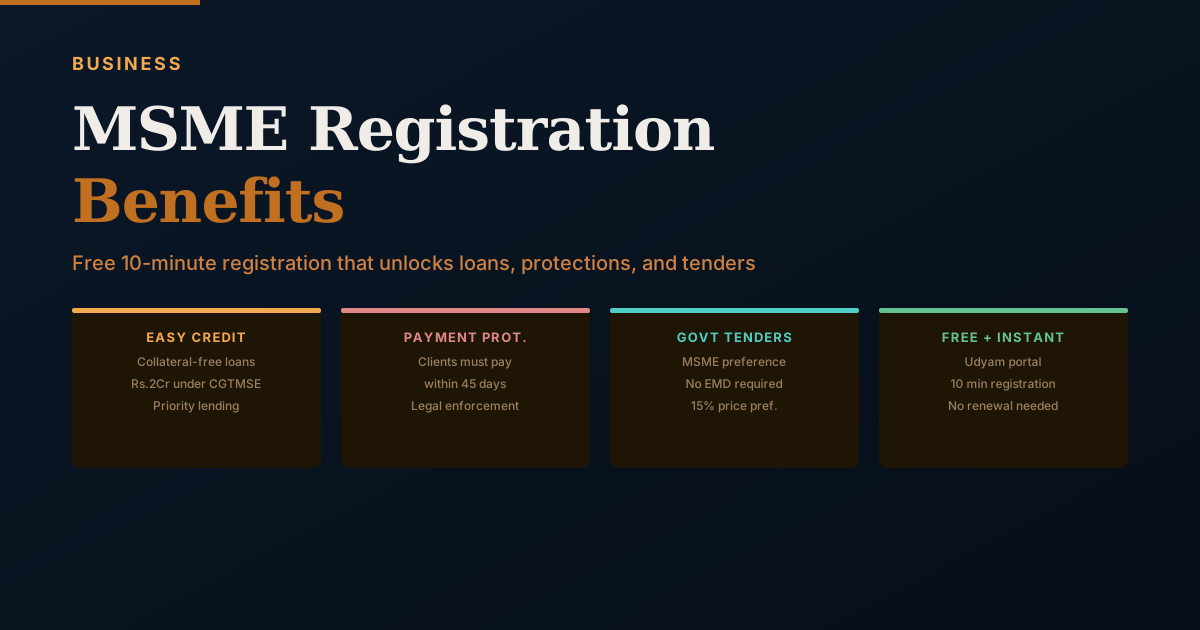
MSME Registration Benefits: Is Udyam Registration Worth It?
MSME (Udyam) registration is free, takes 10 minutes, and unlocks real benefits: priority loans, payment protections, government tenders, and patent subsidies.

Partnership Deed Basics: Protecting the Business and the Friendship
Most partnerships break over money and roles, not bad intentions. A clear partnership deed fixes profit share, duties, exits and disputes well in advance.

Petty Cash and Expense Management for Small Business
Small cash payments quietly leak money and break your books. A simple imprest float, vouchers and regular reconciliation keep every rupee accounted for.
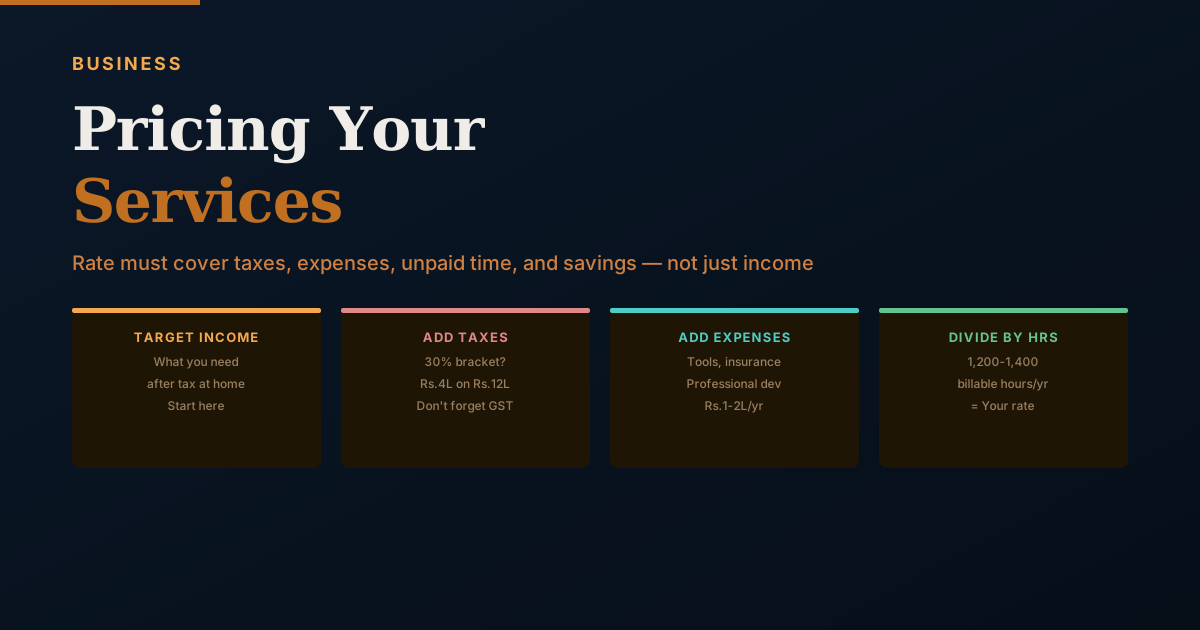
Pricing Your Services as a Freelancer: How to Set Rates That Work
Underpricing is the most common freelancer mistake. Your rate must cover taxes, business costs, unpaid time, and savings, not just match a salary.
Private Limited vs LLP vs Proprietorship: Which Structure Fits You?
Compare proprietorship, LLP, and private limited on liability, compliance, tax, and fundraising. A practical guide to choosing the right business structure.
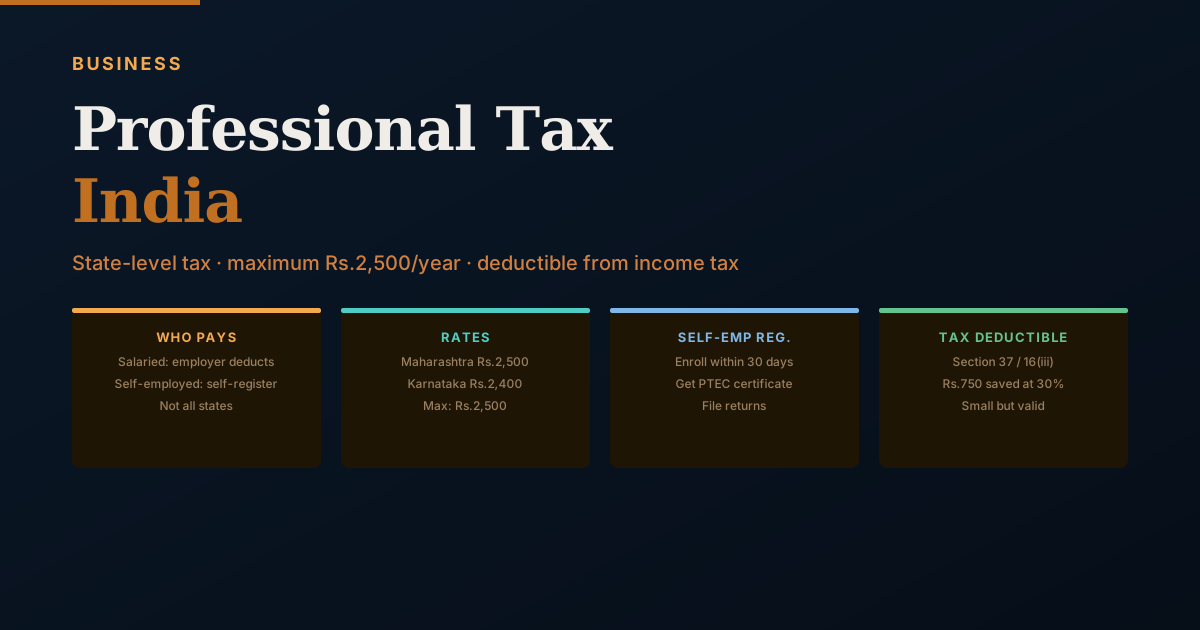
Professional Tax in India: Who Pays, How Much, and When
Professional tax is a state-level tax on employment and self-employment income. It's small but mandatory, and the rate and method vary by state.
Proforma Invoice vs Tax Invoice: The Difference
A proforma invoice is a quote, not a GST document. A tax invoice is GST-compliant and lets clients claim input tax credit. Why the difference matters.
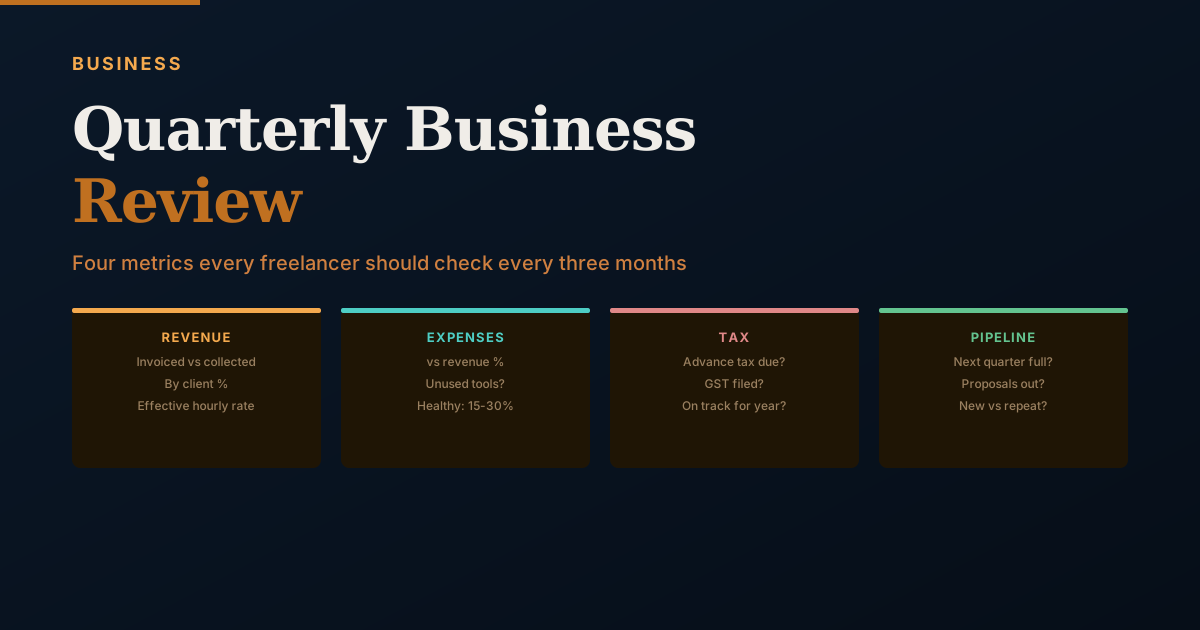
Quarterly Business Review for Freelancers: What to Measure
A quarterly financial review for freelancers and solopreneurs stops small problems from growing. These are the numbers that matter every three months.
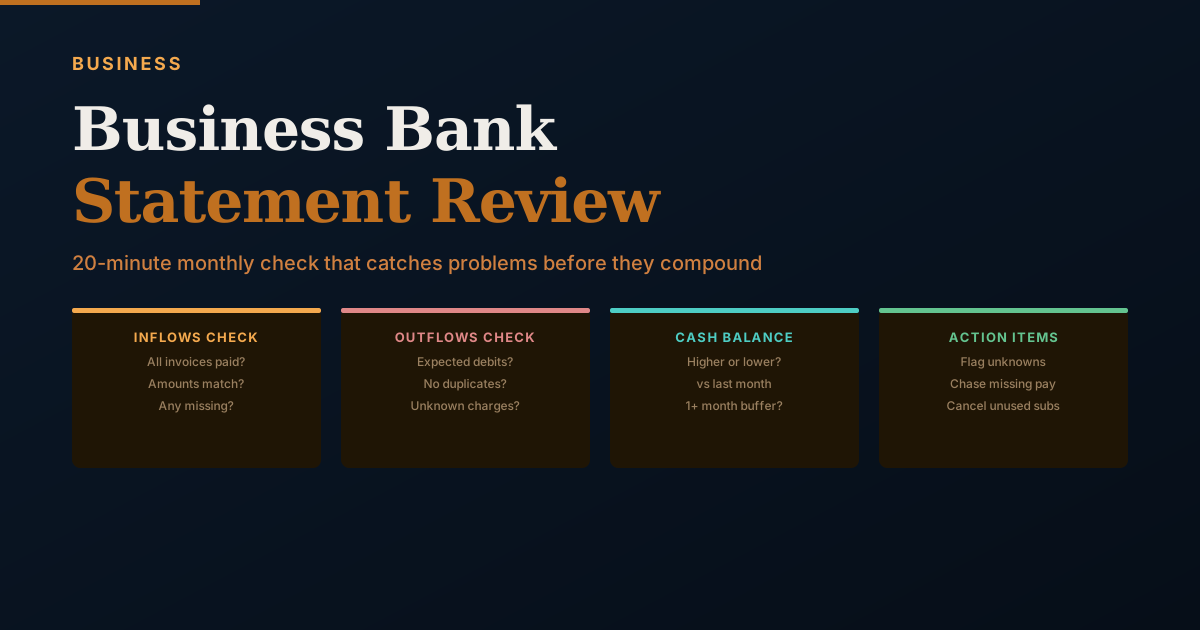
Reading Your Business Bank Statement: What to Look For Each Month
A monthly bank statement review takes 20 minutes and reveals cash flow patterns, unauthorized debits, and receivables gaps before they hurt you.
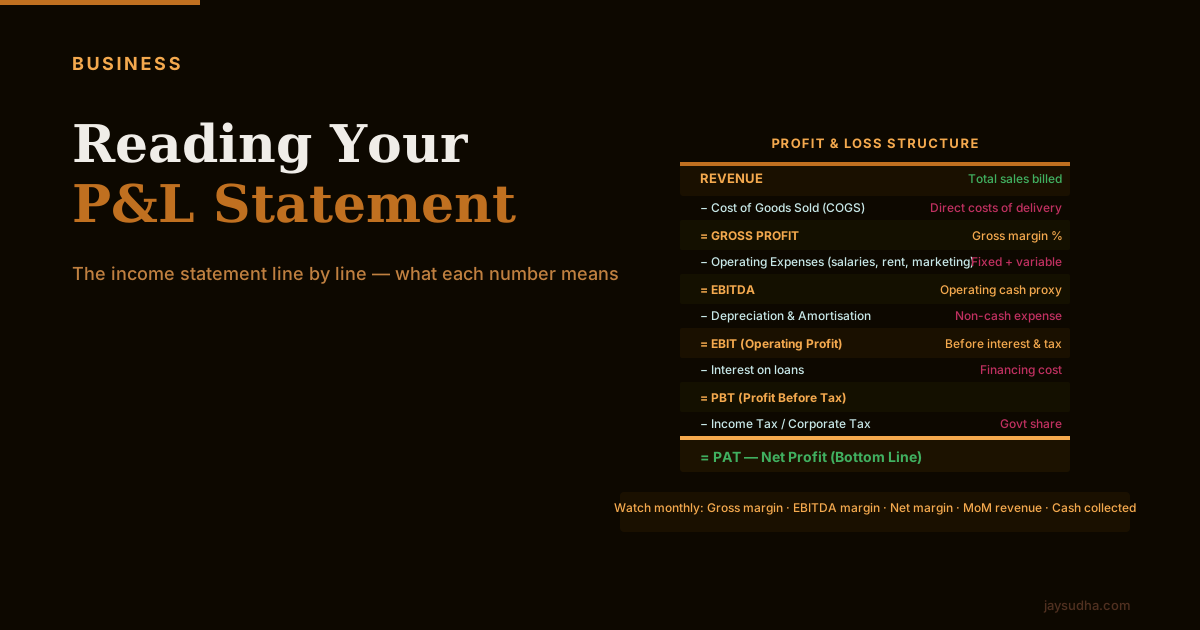
How to Read a Profit and Loss Statement: A Guide for Indian Business Owners
Your P&L shows whether your business made money and why. Learn to read the key lines, understand margins, and use it to make better business decisions.

Registering a Trademark for Your Small Business
A trademark protects your brand name and logo. Learn the classes, the TM versus R symbol difference, the application steps via ipindia.gov.in, and the costs.
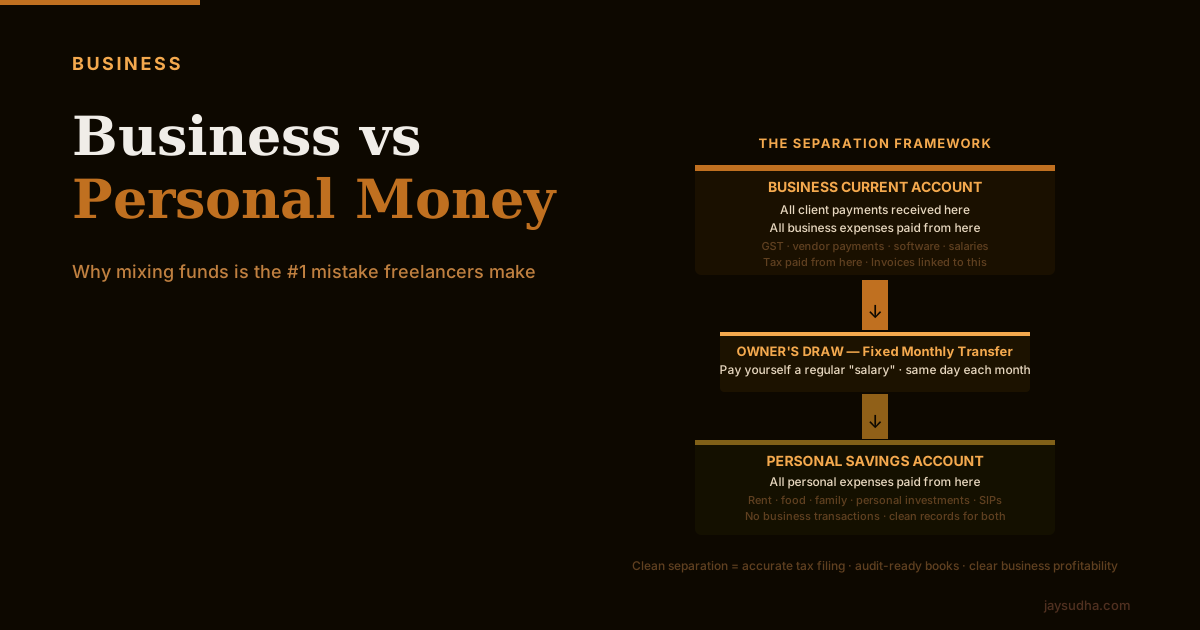
Why You Must Separate Business and Personal Finances (And How to Do It)
Mixing personal and business money is a common mistake for Indian freelancers and owners. Separation makes accounting, taxes, and health clearer.

Sole Proprietor vs LLP vs Private Limited: Choosing Your Business Structure
Your business structure affects tax, liability, compliance, and fundraising. The right choice depends on your business scale and risk appetite.
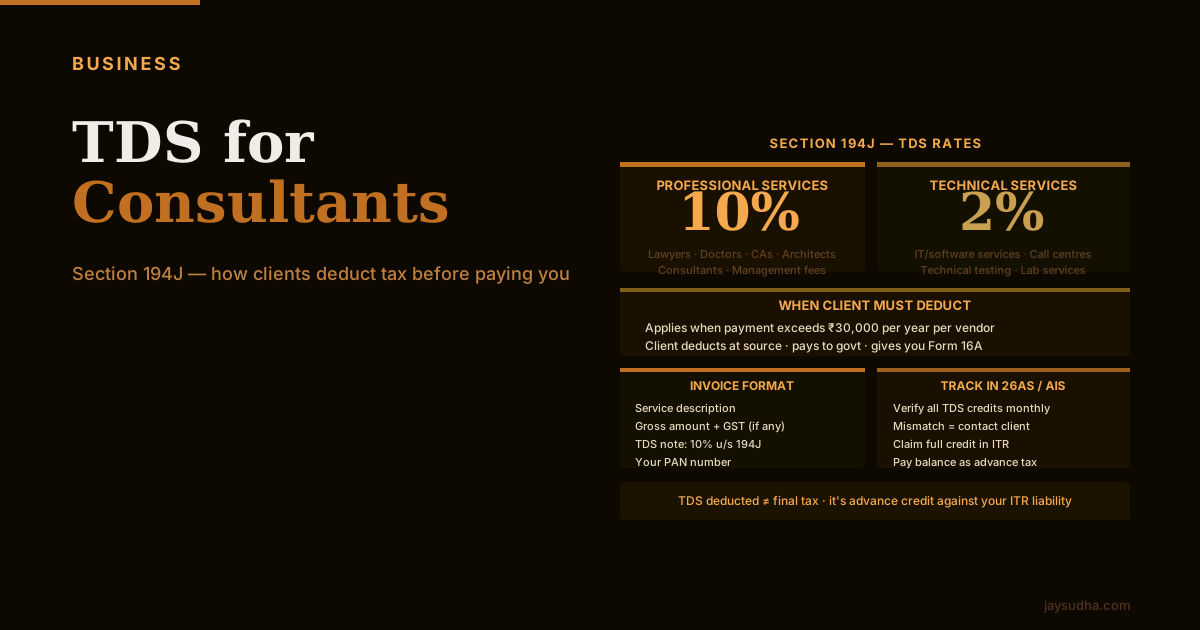
TDS for Consultants and Freelancers in India: What Gets Deducted and What to Do
When a company pays you as a consultant, it deducts TDS under Section 194J. Learn the rate, how to track it, and how to claim the credit in your ITR.

TDS vs TCS for Small Business: The Difference That Trips People Up
TDS is tax you deduct on payments out; TCS is tax you collect on certain sales. Learn which applies to you, the rates, due dates, and how to stay compliant.

Udyam Registration: How to Register Your MSME (Step by Step)
Udyam registration is free and takes minutes, unlocking priority loans, lower interest, and 45-day payment protection. Here is the exact step-by-step process.